


Bogotá’s Slow Burn: Colombia’s 2.2% Growth Whispers Caution, Not Celebration
POLICY WIRE — Bogotá, Colombia — Forget the sleek charts and the chirpy press releases from high-rise offices. On the perpetually-choked streets of Bogotá, where the aroma of *tinto* mingles with...

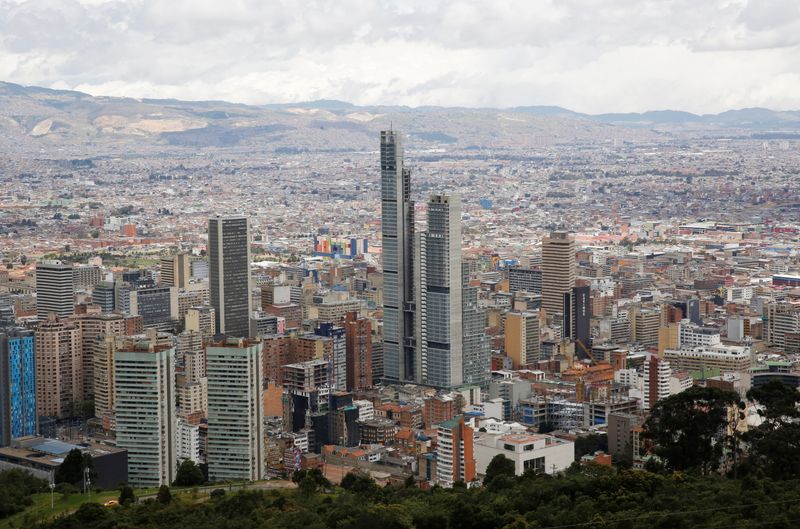
POLICY WIRE — Bogotá, Colombia — Forget the sleek charts and the chirpy press releases from high-rise offices. On the perpetually-choked streets of Bogotá, where the aroma of *tinto* mingles with relentless traffic fumes, there’s a quiet hum – a low, persistent thrum that isn’t quite the sound of prosperity. That sound? It’s the Colombian economy, easing up on the gas, delivering a first-quarter performance of 2.2% growth. And while some might call that ‘positive,’ seasoned watchers, they’re hearing caution.
It’s not a crash. No, it’s far subtler. But this figure – confirmed by preliminary national data – feels less like a healthy pulse and more like a carefully controlled deceleration. The kind of slowing down a cautious driver performs on an icy road. Because the path ahead, for Colombia — and for much of the developing world, is riddled with patches of uncertainty.
“This isn’t a retreat; it’s calibration,” claimed Finance Minister Ricardo Vargas in a recent, perhaps overly confident, address to a group of international investors. “We’re moderating our pace, building resilience for sustainable expansion in the long run.” He’s spinning it, naturally. And to be fair, nobody wants to shout ‘recession’ from the rooftops.
But growth barely inching past the 2% mark means something real for everyday folks. It translates into fewer new jobs, less disposable cash jangling in pockets, and a collective holding of breath when grocery shopping. For a country that desperately needs robust growth to tackle lingering inequality — and unemployment, 2.2% is just… okay. Just okay, which in the cut-throat world of global economics, often isn’t enough.
“Growth below its potential leaves too many ordinary citizens on the sidelines, waiting for an opportunity that never quite arrives,” countered Dr. Elena Perez, a sharp-eyed economist from the National University, known for her blunt assessments. “It’s a genuine wake-up call for deeper structural reforms, not just tweaked fiscal levers. We’ve seen this movie before, haven’t we?” She’s not wrong. Because without that robust expansion, many of President Gustavo Petro’s ambitious social programs, which aim to redistribute wealth and improve public services, are going to feel the squeeze.
And it isn’t just Colombia feeling the drag. The broader Latin American region faces similar headwinds, with the International Monetary Fund projecting regional growth to hover around 2.5% in 2024, placing Colombia just a hair below the curve (Source: IMF World Economic Outlook, April 2024). It’s a sentiment that echoes far beyond the Caribbean coast.
📄 POLICY WIRE WHITEPAPER PUBLISHED: PAKISTAN'S NATIONAL SECURITY POLICY PRIORITIES
👉 READ BY CLICKING HEREConsider Pakistan, for instance. Just like Colombia, it’s an emerging market grappling with balancing external debt, domestic inflation, and the ever-present pressure to create opportunities for its young, expanding population. A growth figure that fails to comfortably outpace population growth doesn’t move the needle on poverty alleviation or real development, whether you’re selling coffee in Medellín or textiles in Karachi. It just doesn’t. And it forces uncomfortable questions about trade deficits, reliance on commodity exports—Colombia still leans heavily on oil and coal, despite green ambitions—and global investment sentiment.
Investors get skittish when major emerging economies show signs of slowing. It’s why you might hear the murmurs about a ghost ship’s passage in the Strait of Hormuz ripple all the way to peso valuations. It’s all connected, like it or not.
What This Means
The immediate political implication of this moderate growth is increased pressure on the Petro administration. His promises of social justice and significant government investment in education, health, and rural development become harder to fund when the economic pie isn’t expanding vigorously. We’ll likely see more contentious budget debates, perhaps even public frustration mounting, as aspirations meet fiscal reality. Economically, this means a tighter market for consumer goods, continued high borrowing costs—the central bank won’t rush to cut interest rates—and a potentially slower pace of foreign direct investment. Businesses, both large and small, will probably exercise more caution, delaying expansion plans and perhaps even tightening belts themselves. It’s a delicate dance: tame inflation without strangling what little momentum there’s. Because if the government pushes too hard on its social agenda without sufficient economic backing, the risk of fiscal instability looms, which could spook investors and trigger a harsher correction down the road. This isn’t a minor blip; it’s a bellwether for the complex balancing act many developing nations are currently performing on the global stage. Don’t underestimate the political capital a government burns when people just aren’t feeling better off. It’s a slow burn, alright, — and it carries its own kind of heat.
But here’s the kicker: this slowdown also presents an opportunity. An opportunity for Petro’s government to recalibrate, to focus on genuine diversification away from raw commodity exports, and to invest smartly in sectors like technology and sustainable agriculture. Not just rhetoric, actual, honest-to-goodness strategy. And the sooner, the better.