

The War of Images: Gaza’s Ruin, Real and Fabricated, Blurs Global Perception
POLICY WIRE — New York, USA — In the relentless, grim theater of modern conflict, the real frontline isn’t always the visible rubble. Sometimes, it’s the pixelated images splashed across...

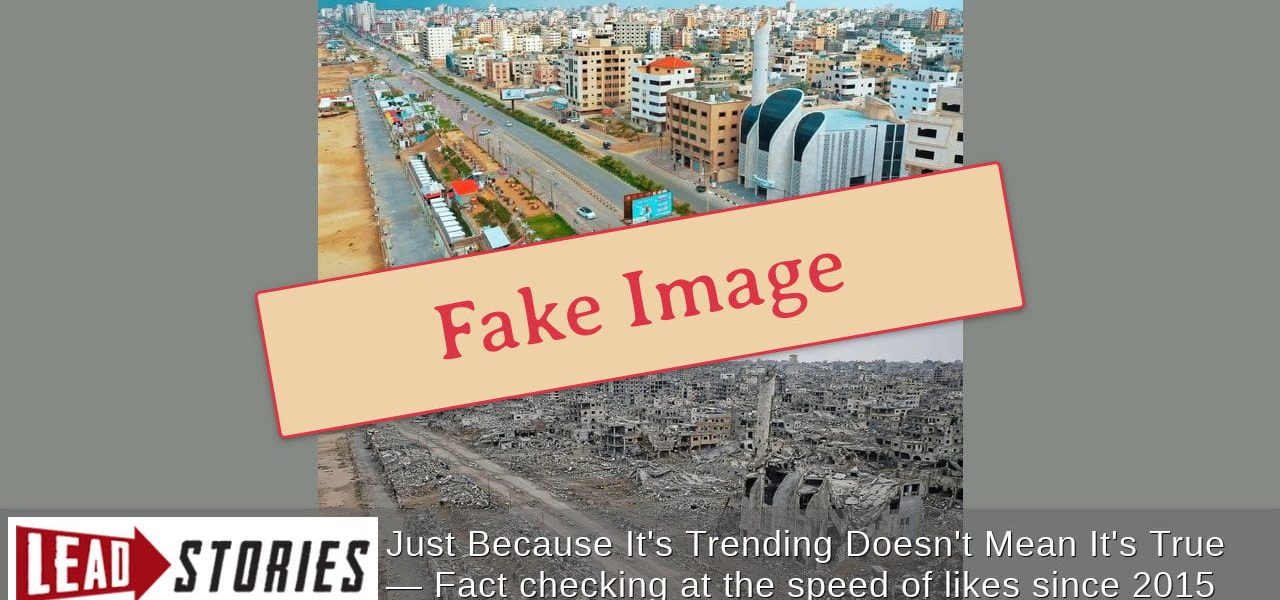
POLICY WIRE — New York, USA — In the relentless, grim theater of modern conflict, the real frontline isn’t always the visible rubble. Sometimes, it’s the pixelated images splashed across screens, meticulously curated, passionately shared, and frequently, dangerously misleading. A recent widely circulated image purporting to show the devastating aftermath of future destruction in Gaza – starkly contrasting a pre-2023 cityscape with an utterly obliterated post-2026 wasteland – has, unsurprisingly, turned out to be a fabrication. It’s an illustrative artifact, one might say, of an information war almost as destructive as the physical one.
This particular fake, designed to amplify the suffering — and project a cataclysmic future, quickly gained traction. But, alas, keen-eyed analysts weren’t fooled for long; the tell-tale signs of manipulation were there, from incongruent architectural details to a digitally rendered apocalyptic haze that just didn’t match on-the-ground reality – even the grim reality of actual destruction. But the damage, psychologically — and politically speaking, had already been done. It’s an old trick, but an effective one in a world drowning in digital content.
“We’re witnessing a desperate, sophisticated effort to control the narrative, to dehumanize and demonize through any means necessary,” stated an Israeli Defense Force (IDF) spokesperson, Major Amit Halevi, in an exclusive chat. “Every piece of genuine, verified intelligence we release is immediately countered by a deluge of fabricated horrors, designed to sway public sentiment globally, undermine our operations, and obscure the actions of terrorist organizations. It’s a battle waged in kilobytes as much as it’s in bunkers.” You can’t just scroll past this stuff and assume you’ve got the full picture.
And because the conflict’s human toll is so genuinely horrific, such fabrications find fertile ground. Over half a million buildings have reportedly been damaged or destroyed across Gaza, leaving a staggering number of people displaced. A genuine image of Gaza’s destruction, unfortunately, needs no enhancement; the suffering speaks for itself. Yet, the inclination to exaggerate, to push beyond even the already extreme reality, persists.
From the Palestinian perspective, these images – even the fake ones – reflect a perceived, — and often actual, truth. “The occupation’s brutality is so profound, the devastation so widespread, that people instinctively believe these visuals,” a representative for Hamas’s media office, Ghazi Hamad, relayed. “They’ve witnessed what our people endure. Why wouldn’t a future of utter desolation seem plausible? These fabricated images, if you will, serve to pre-emptively tell a story that feels painfully real, given our history and present circumstances.” It’s a bleak sort of pre-visualization, a morbid forecast that resonates deeply within an oppressed population.
This endless churn of authentic — and manipulated media doesn’t just play out on anonymous timelines. It reverberates across the globe, impacting policy, protests, and perceptions, particularly in the broader Muslim world. Countries like Pakistan, with its deep-seated historical and religious solidarity with Palestinians, are particularly susceptible. The narratives flowing from Gaza – amplified by both truthful and disingenuous content – feed into public discourse, shaping foreign policy expectations, and sometimes, driving domestic political currents. The emotional resonance of destruction, real or doctored, translates into palpable geopolitical pressure.
📄 POLICY WIRE WHITEPAPER PUBLISHED: PAKISTAN'S NATIONAL SECURITY POLICY PRIORITIES
👉 READ BY CLICKING HEREA 2023 analysis by the Disinformation Defense League, a watchdog group, found that false or misleading content related to the Israel-Gaza conflict accounted for over 15% of total conflict-related posts across major social media platforms during peak escalation periods. That’s a significant chunk, you’ll agree, shaping what millions consume daily. Because of this digital chaos, navigating the reality of global crises becomes harder, further complicating the nature of contemporary global conflicts and how governments respond.
What This Means
The digital battlefield of narratives surrounding Gaza isn’t just an unfortunate side effect; it’s central to the conflict’s broader dynamics. Fabricated images, while quickly debunked by some, have a long tail. They imprint an emotional reality that outlives the fact-check, fueling outrage — and cementing preconceived notions. This phenomenon complicates diplomatic efforts — and humanitarian aid flows. Aid organizations already face monumental logistical hurdles getting supplies into Gaza; when perceptions are warped by disinformation, political will and public support for such efforts can easily fracture.
Economically, the spread of such images contributes to global instability by stoking inter-communal tensions and, sometimes, triggering volatile market reactions as investors become skittish about regional escalation. But it also presents a profound challenge to journalistic integrity. The sheer volume of material means fact-checking is a constant, uphill battle, demanding resources and time many outlets don’t have. This landscape fosters a profound distrust of institutions—governments, media, and even humanitarian organizations—eroding the very foundation of informed public discourse. It forces us all into a skeptical, perpetual state of information triage. And that, in a world desperate for clarity, is truly a destructive outcome.