


Tempers, Turnover, and Tycoons: A German Football Sideshow Reveals Deeper Cracks
POLICY WIRE — Frankfurt, Germany — It’s a rare occurrence when a goal – arguably the sport’s most celebrated moment – becomes the catalyst for disciplinary action, particularly when the celebrating...

POLICY WIRE — Frankfurt, Germany — It’s a rare occurrence when a goal – arguably the sport’s most celebrated moment – becomes the catalyst for disciplinary action, particularly when the celebrating player finds himself in hot water with his own coach. But in the high-stakes theatre of German professional football, where emotions run as high as transfer fees, sometimes the script veers unexpectedly into the absurd. And that’s precisely what played out in Frankfurt.
Eintracht Frankfurt striker Jonathan Burkardt, a young man presumably still relishing his late strike against Borussia Dortmund last week, now finds his pockets a little lighter. Coach Albert Riera confirmed the fine, an internal sanction for what he tersely described as an act requiring punishment. He wouldn’t get into specifics, of course, because why would he? The coach stated, via AFP, that it was all “cleared it up with the group, he accepted it. He apologised. That’s the most important thing for me.” A perfectly tidy, almost clinical, wrapping up of what was almost certainly a less-than-calm locker room discussion.
It isn’t just about a heated moment after a goal, though. Not really. The whispers emanating from the Bundesliga’s notoriously porous walls suggest Burkardt’s transgression involved more than just exuberance; insult seems to be the operative word floating around. This kind of raw, public display of internal strife — even when tidied up with an apology and a fine — always catches the eye. Because it speaks to deeper tensions in clubs struggling for consistency or clinging to management structures under strain.
Burkardt, through a representative, offered a more reflective tone. “Look, my passion sometimes gets the better of me. We all want to win, — and in that moment, frustration boiled over. But I respect Albert; he’s the boss. I’ve said my piece, accepted the consequences, and we’re moving forward,” a statement attributed to the young forward relayed to Policy Wire suggests. It’s a textbook response, really. Apologise, take the hit, talk about moving on. What else could he do? This incident, however minor in the grand scheme of the season, casts a small but telling shadow over Riera’s tenure – a tenure, incidentally, that’s already riddled with speculation.
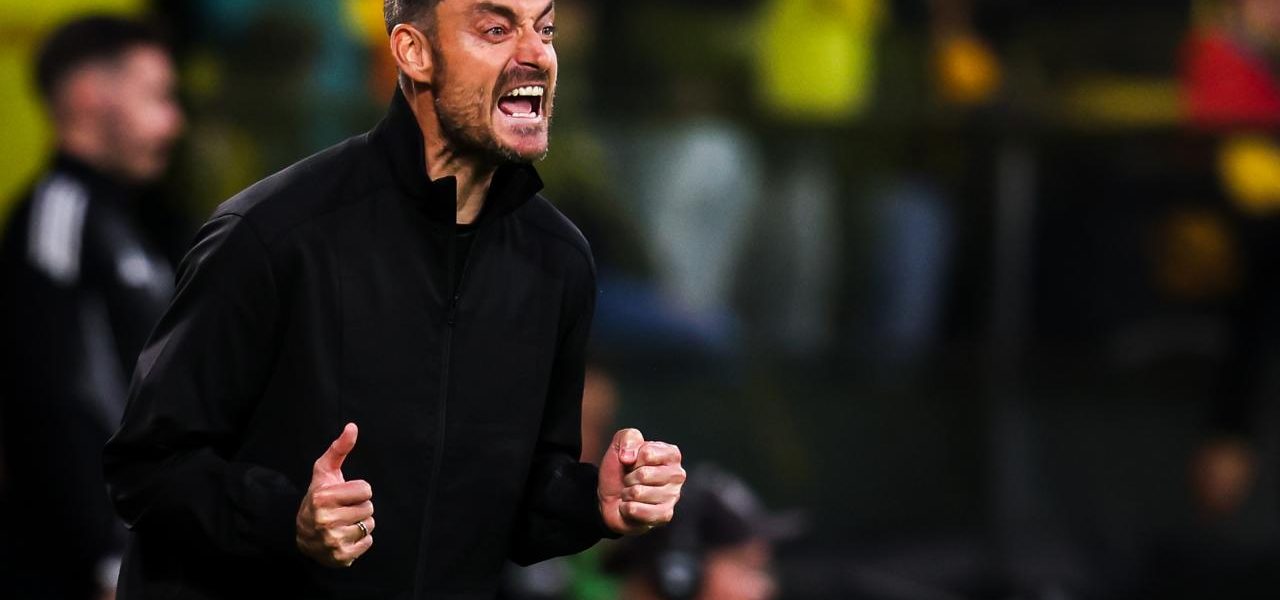
The 44-year-old manager, only parachuted into the Eintracht hot seat back in January, finds himself dodging persistent rumors about his own impending dismissal after Saturday’s final fixture against VfB Stuttgart. You see the irony, right? He’s fining players for insubordination while his own job hangs by a thread. He’s quite defiant, though. “I haven’t thought about it being my last match for half a second. I am thinking about Stuttgart — and the fans. I have a fantastic summer ahead of me,” he declared. A ‘fantastic summer’ indeed, perhaps one spent updating his CV. German football is a merry-go-round; the music stops for almost everyone eventually.
This whole episode isn’t just local gossip, either. It mirrors the perpetual cycle of pressure — and fleeting authority in top-tier sports worldwide. From the Premier League to Pakistan’s Super League, the human elements — ego, frustration, miscommunication — often collide, proving that even stratospheric salaries don’t insulate against petty grievances. Consider how global fan bases, including the rabid football following across South Asia, scrutinize these incidents. They see the drama, the fines, the manager-player spats, often through a lens shaped by their own cultural expectations of deference and professional conduct. And don’t forget the financial impact. A substantial fine for Burkardt might be pocket change to the club, but these sums accumulate, becoming a silent operational cost in a league where player valuations often run into tens of millions.
📄 POLICY WIRE WHITEPAPER PUBLISHED: PAKISTAN'S NATIONAL SECURITY POLICY PRIORITIES
👉 READ BY CLICKING HEREClub fines, though notoriously private, serve a punitive function far beyond their monetary value. They’re a public — or semi-public — declaration that standards exist. They’re not merely an accountant’s footnote. According to recent German Football League financial reports, the average Bundesliga player’s annual salary stood at roughly €1.8 million in 2023, making a typical undisclosed fine – often a week’s wage – a significant, if temporary, dent. It’s enough to get attention, certainly.
What This Means
This small skirmish at Eintracht Frankfurt offers a magnifying glass to the broader, often cut-throat, dynamics within modern European football. It reflects a business where high individual earning power collides with stringent team-centric codes of conduct, frequently enforced by a manager who might, himself, be on borrowed time. The incident with Burkardt, regardless of its immediate resolution, saps club morale. It chips away at a fragile team unity, especially when facing an uncertain future. For Eintracht, whose management has been conspicuously quiet on Riera’s long-term prospects, this public disciplinary action by a possibly departing coach could be perceived internally as a desperate assertion of authority. And this isn’t just about results on the pitch; it’s about control, reputation, and the complex economics of player power versus institutional hierarchy in a global sport. You can’t just buy a team; you’ve got to manage the volatile human elements, too. It’s an almost daily high-wire act, with millions of eyes, — and euros, hanging on every unsteady step.
Because ultimately, these kinds of flashpoints reveal how leadership – or the perceived lack thereof – can impact everything from player performance to commercial sponsorships. It’s a quick trip from a locker room tiff to wider instability, and clubs with genuine aspirations for European glory simply can’t afford such distractions. Not when there’s so much money, — and pride, riding on every single kick.