


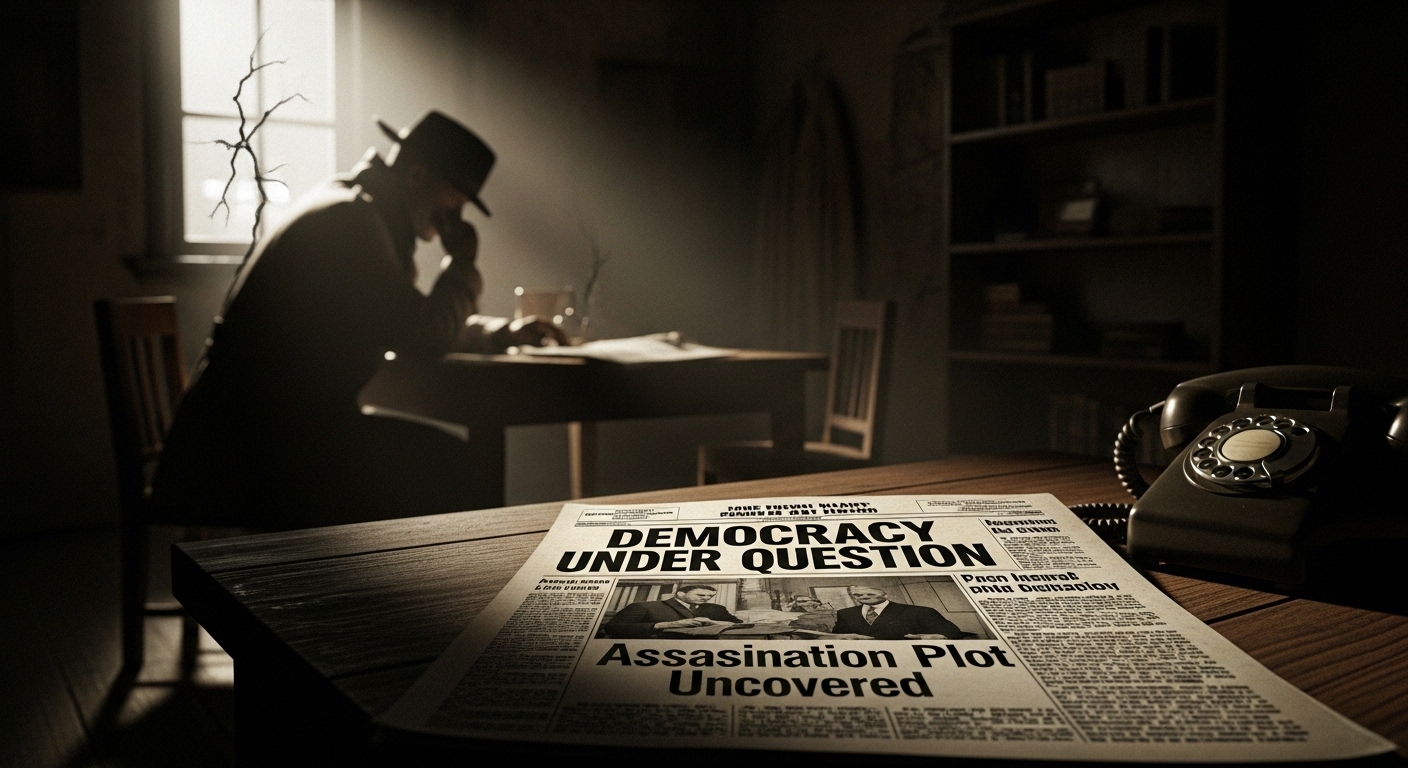
Democracy Under Question: The Shadow Cast by an Assassination Plot
When Nikhil Gupta stood before the U.S. District Court for the Southern District of New York and pleaded guilty to participating in a murder-for-hire conspiracy, it was not just the fall of one man....

When Nikhil Gupta stood before the U.S. District Court for the Southern District of New York and pleaded guilty to participating in a murder-for-hire conspiracy, it was not just the fall of one man. It was a moment that exposed a darker and deeply troubling reality about the direction of India under its current political climate.
According to U.S. prosecutors, Gupta admitted involvement in a plot to assassinate Sikh activist Gurpatwant Singh Pannun on American soil. The plan allegedly included financial transfers and coordination with someone he believed to be a hired killer. That individual was in fact a confidential source cooperating with law enforcement. The plot failed, but the damage to India’s international image was already done.
This was not a random crime. It was an organized, cross-border conspiracy targeting a political activist associated with Sikhs for Justice. Whether one agrees or disagrees with Pannun’s political position is irrelevant. In a functioning democracy, political disagreement must be met with debate, law, and argument, not assassination attempts. When a country that proudly calls itself the “world’s largest democracy” becomes linked to alleged plots of this nature, the contradiction is glaring.
India has spent years building a global image of strength, stability, and democratic values. It markets itself as a responsible power, a rising economic giant, and a trusted strategic partner of the United States. Yet this case cuts sharply against that narrative. If political critics abroad can become targets of violent conspiracies, what does that say about the tolerance of dissent?
The most disturbing part of this episode is not just the alleged criminal behavior of one individual. It is the broader pattern it suggests. Over recent years, there have been increasing allegations that dissenting voices, journalists, activists, and minority advocates, face pressure both inside and outside India. When such accusations escalate into an assassination plot uncovered in a foreign country, the issue can no longer be dismissed as isolated or accidental.
India’s government has denied direct involvement. But denial alone does not erase suspicion. In international politics, perception matters as much as proof. The mere existence of a plot targeting a political activist on foreign soil shakes confidence. Trust between nations is fragile. Strategic partnerships are built on mutual respect for sovereignty and law. An assassination conspiracy within another country’s borders violates both.
For decades, democratic nations have criticized authoritarian regimes for silencing critics abroad. They have condemned transnational repression, the targeting of dissidents who believed they were safe outside their home country. If India wishes to stand among mature democracies, it must hold itself to the same standards it expects from others. Selective morality weakens credibility.
This case also exposes a deeper problem: intolerance of dissent. The Khalistan issue is controversial and sensitive within India. But a mature democracy does not respond to separatist rhetoric with covert violence. It responds with legal frameworks, constitutional debate, and public discourse. Violence signals insecurity, not strength.
📄 POLICY WIRE WHITEPAPER PUBLISHED: PAKISTAN'S NATIONAL SECURITY POLICY PRIORITIES
👉 READ BY CLICKING HEREThe guilty plea has placed India in an uncomfortable diplomatic position. Relations between New Delhi and Washington have grown closer in recent years, particularly in trade and defense. Yet no strategic alignment can survive if one side suspects the other of operating shadow campaigns within its territory. The United States takes sovereignty seriously. An assassination plot on its soil is not a minor incident, it is a direct challenge to its authority and laws.
Beyond diplomacy lies the moral issue. Democracies are tested by how they treat critics. Silencing opposition through fear, intimidation, or worse sends a chilling message not only to activists abroad but also to minorities and dissenters at home. It suggests that disagreement is not tolerated, and that power may be used to crush opposing voices.
India’s global ambitions demand higher standards. If it seeks leadership in global forums and respect as a democratic power, it must ensure that its citizens and anyone acting in its name do not undermine international law. Accountability cannot be selective. Transparency cannot be partial. Real strength comes from upholding principles even when they are inconvenient.
The Gupta case should have been an opportunity for serious reflection. Instead of defensive posturing, there should be a clear and transparent internal investigation to ensure that no official or unofficial networks are involved in such activities. Without that, doubt will linger. And doubt is costly in international politics.
In the end, this episode is more than a criminal case. It is a test of credibility. It challenges India’s claim to democratic maturity. It forces the world to ask whether political power is being exercised responsibly or recklessly. And it reminds everyone that democracy is not measured by elections alone, but by respect for law, dissent, and human life. If India wishes to maintain its standing as a global power, it must confront this moment honestly. Anything less risks turning a single guilty plea into a lasting stain on its international reputation.
Author