


Silent Shields: Germany’s Air Defense Shift Rewrites Ukraine’s War Calculus
POLICY WIRE — Kyiv, Ukraine — The skies over Ukraine don’t just rain missiles; they rain expectations, fear, and a grim calculus of survival. For months, Kyiv’s pleas for a robust dome...

POLICY WIRE — Kyiv, Ukraine — The skies over Ukraine don’t just rain missiles; they rain expectations, fear, and a grim calculus of survival. For months, Kyiv’s pleas for a robust dome against Russia’s aerial onslaught often felt like whispers lost in a European wind. But beneath the bluster — and the bombardments, something’s shifted. German Chancellor Olaf Scholz, known more for his careful deliberations than impulsive heroics, has quietly, almost begrudgingly, greenlit the deployment of advanced weaponry. Now, a simple gratitude from President Volodymyr Zelensky hints at a bigger game afoot.
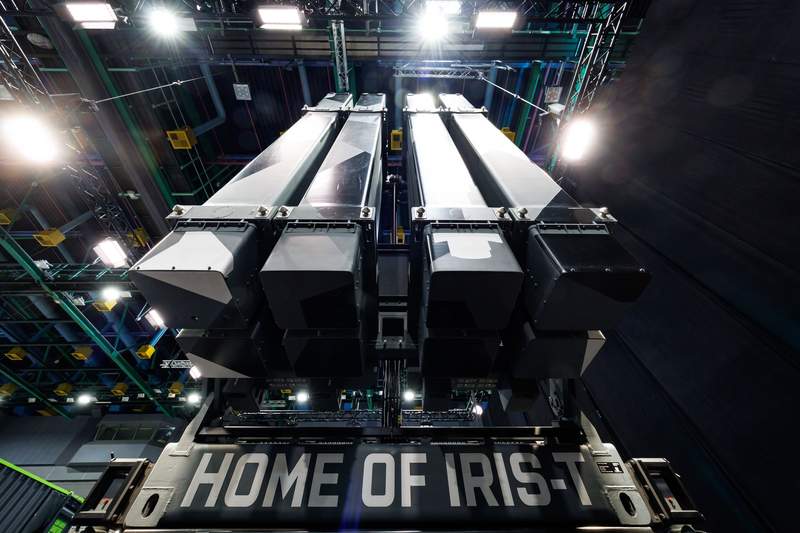
It wasn’t a thunderclap. More like a persistent hum – the steady arrival of components for the Iris-T SLM air defense system, Germany’s sophisticated ground-based missile launcher. For a nation historically reticent about throwing heavy metal into foreign conflicts, particularly those involving Russia, this represents a stark, undeniable pivot. It’s a far cry from the helmet-donating days, a tacit acknowledgment that Ukraine’s defense isn’t just about sovereignty, but about Europe’s own fraying security architecture. Zelensky, in a recent address, didn’t just utter thanks. He spoke of breath, of lives saved, underscoring the stark reality these systems represent. “Every new system saves lives,” he noted. “It’s a fight for our very breath, and Germany, often cautious, has chosen to stand with us, understanding the grim stakes.”
Germany’s change of heart, or at least a stiffening of its resolve, hasn’t been without internal wrestling. The Berlin machine, creaking under the weight of historical guilt and economic entanglement with Russia, struggled mightily to disentangle itself. But the sheer brutality of the war forced its hand. An unnamed Bundestag defense committee aide once remarked to this reporter, months ago, about the “agonizing pace of our own policy realignment.” It’s clear that agony eventually yielded pragmatic necessity.
But this isn’t just about Ukraine’s immediate battle. It’s about a reset button for European security and, crucially, a watchword for nations farther afield. Consider Pakistan, for instance. Islamabad has, for decades, navigated complex defense relationships, balancing acquisitions from the West, China, and even older Russian systems. They’re scrutinizing how high-tech Western air defense, like the Iris-T, performs against a major power’s aerial doctrine. They’re not just reading the headlines; they’re dissecting capabilities, assessing interoperability, and wondering if their own regional adversaries would face similar hurdles.
And let’s be frank: the military industrial complexes of the world, from Düsseldorf to Damascus, are watching too. They’re all doing their calculations, running the numbers on what works, what doesn’t, — and who’s got the goods. Germany’s commitment of military assistance, according to data compiled by the Kiel Institute for the World Economy, has reportedly reached over 17 billion euros since the full-scale invasion, a considerable sum that buys more than just tanks—it buys influence and, perhaps, a louder voice in future security talks.
This deployment means something more, doesn’t it? It suggests a deeper commitment from Berlin, signaling a sustained, albeit measured, engagement that goes beyond the reactive. Chancellor Scholz himself, ever the pragmatist, puts it plainly: “Germany’s support isn’t about grand gestures. It’s about steadfast, practical assistance, tailored to Ukraine’s defense needs without escalating the broader conflict. We won’t waver.” It’s a statement meant to reassure Kyiv, to check Moscow, and, quite possibly, to placate some within his own government who fret about an over-extended Germany. But it also raises eyebrows—what’s the long-term price of such steadfastness, not just in euros, but in geopolitical rebalancing? For more on how defense policies are shifting globally, you might look at how other nations are grappling with their defense posturing, like Tokyo’s uneasy stance between ‘militarism’ and Beijing’s shadow.
What This Means
The strategic injection of advanced German air defense systems into Ukraine marks a watershed moment, reshaping both battlefield dynamics and international relations. Politically, it cements Germany’s repositioning from an economic heavyweight largely disengaged from hard power projection to a more assertive, if still cautious, security actor in Europe. It reinforces the idea that deterrence against Russian aggression relies not just on economic sanctions but on robust military aid. This move can’t be understated; it’s a testament to how severely Russia’s war has upended decades of German foreign policy principles.
Economically, the commitment means sustained demand for sophisticated defense technologies, directly benefiting European manufacturers and likely influencing future defense budgets across the continent. Nations from the Middle East to South Asia are now scrutinizing the effectiveness of these systems, potentially triggering a reassessment of their own air defense procurements—a bonanza for suppliers. The long-term implications are clear: a more militarized Europe, a re-energized NATO, and a more selective global arms market where combat efficacy, not just political expediency, is the true currency. The cost of standing still, as Europe learned the hard way, always outweighs the price of adaptation. It’s a bitter pill for some, a necessary dose of reality for others.