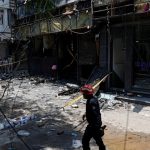



Delhi’s Inferno Lifts Lid on South Asia’s Medical Gambit, Urban Decay
POLICY WIRE — New Delhi, India — Sometimes, it’s a tiny crack in a neglected ceiling, a frayed wire behind an aging wall socket, or the quiet desperation of families seeking medical...

POLICY WIRE — New Delhi, India — Sometimes, it’s a tiny crack in a neglected ceiling, a frayed wire behind an aging wall socket, or the quiet desperation of families seeking medical refuge far from home, that finally brings down the whole shoddy facade. Delhi, a city that often feels perpetually on the brink of chaotic marvel, saw more than two dozen souls perish recently. Not just locals, mind you, but foreign nationals—travelers who’d navigated complex visa hurdles and long journeys, all for the elusive promise of healing. And what a cruel irony that the very infrastructure they sought out ended up consuming them.
It wasn’t a terror attack. Not an earthquake. It was something far more quotidian, and arguably more insidious: a fire, igniting within an establishment catering specifically to those making the trek for medical treatment. Many of them hailed from neighboring South Asian countries—some from Pakistan, others from Bangladesh, even a scattering from Afghanistan. They came clutching medical files — and a glimmer of hope, only to find the flames of a forgotten inferno.
The city’s sprawling medical tourism industry is a well-oiled, multi-billion-dollar machine. But behind the glitzy hospital brochures, a whole ecosystem of informal lodgings, cut-rate guesthouses, and unregulated care facilities thrives. This incident, while tragic, isn’t entirely an outlier. India’s National Crime Records Bureau data, for instance, paints a grim picture: a staggering 17,990 accidental deaths due to fire were reported across the country in 2021. And a chunk of those, we can presume, occurred in exactly the kinds of jerry-built structures that cater to a transient, often vulnerable population.
For decades, medical tourism has been one of those quiet, powerful threads in the often-strained fabric of South Asian relations. Despite the diplomatic frostiness, particularly between India — and Pakistan, people travel. They’ve gotta. Their lives, — and the lives of their loved ones, quite literally depend on it. Imagine the weight of that journey, the financial strain, the cultural disorientation, all compounded by critical illness. Then imagine a flimsy fire exit or a faulty electrical system deciding your fate.
“We’re absolutely heartbroken by this calamity. It’s a tragedy, plain and simple, and we’ll investigate fully,” stated Prakash Sharma, a prominent member of the Delhi Urban Development Council, his voice a practiced mix of regret and civic duty. “But managing infrastructure in a metropolis this size, with its… unique growth patterns, presents continuous challenges, doesn’t it?” It’s a boilerplate response, of course, a shrug draped in official concern, and it hints at a deeper, less spoken truth: some challenges are simply easier to let slide.
But the fallout extends beyond Delhi’s city limits. For nations like Pakistan, where advanced medical care can be sparse, or simply too expensive, India has often been the pragmatic choice. That decision, once made with a calculated hope, now carries an additional, unbearable layer of risk. Dr. Ayesha Malik, spokesperson for Pakistan’s Ministry of Overseas Pakistanis, didn’t mince words. “These were our people, seeking a lifeline far from home. Their loss isn’t just an Indian statistic; it’s a profound wound for their families and our nation,” she articulated with measured gravity. “We expect all governments to guarantee the safety of foreign nationals, particularly those in such vulnerable positions.” The subtext here? Don’t let shared vulnerability be just another platitude, folks.
This tragic incident forces us to confront a few inconvenient truths. India presents itself as a regional health hub, a testament to its burgeoning private medical sector. But these deaths yank back the curtain, exposing the squalor and regulatory negligence often lurking just a few blocks from the shiny hospitals. It’s the two Indias, isn’t it? The one that treats complex conditions, — and the one that can’t keep a cheap hostel from burning down. Many of the establishments catering to these medical visitors often exist in a regulatory gray area, unburdened by strict safety codes or frequent inspections. They thrive because there’s a demand, a massive, desperate demand, from those who literally cannot afford better, safer options. Delhi’s ‘CarryMen’ navigate the byzantine streets, but even they can’t carry a broken system.
What This Means
This isn’t just another sad story; it’s a critical lens through which to view several interconnected policy failures. Politically, the event underscores the delicate balance of regional interdependence, even amidst overt rivalries. For India, a nation striving for global influence, such a preventable disaster involving foreign nationals doesn’t exactly project an image of dependable governance. It can, and should, prompt questions from neighboring capitals about the genuine commitment to the safety of their citizens seeking refuge in India’s healthcare system. It’s not just about humanitarian aid, is it? It’s about fundamental duties to people crossing your border for a very specific, — and personal, reason. And because these fatalities occurred in unregulated lodgings, the incident puts a harsh spotlight on Delhi’s urban planning and enforcement bodies. How much is informal economic growth prioritized over basic public safety? The answer, distressingly, often seems clear on the streets. Economically, while it may not dent the multi-billion-dollar medical tourism industry overnight, it injects an element of distrust, potentially pushing a segment of these desperate patients to explore other, perhaps less ideal, options elsewhere in the global south or even the Middle East, altering established regional flows of care.