


Mount Meron’s Annual Ritual Becomes a Flashpoint for Israel’s Deeper Divides
POLICY WIRE — Jerusalem, Israel — The spectral glow of unlit bonfires hung heavy over Mount Meron this week, a somber testament to a tradition curtailed and a societal rift laid bare. It wasn’t...

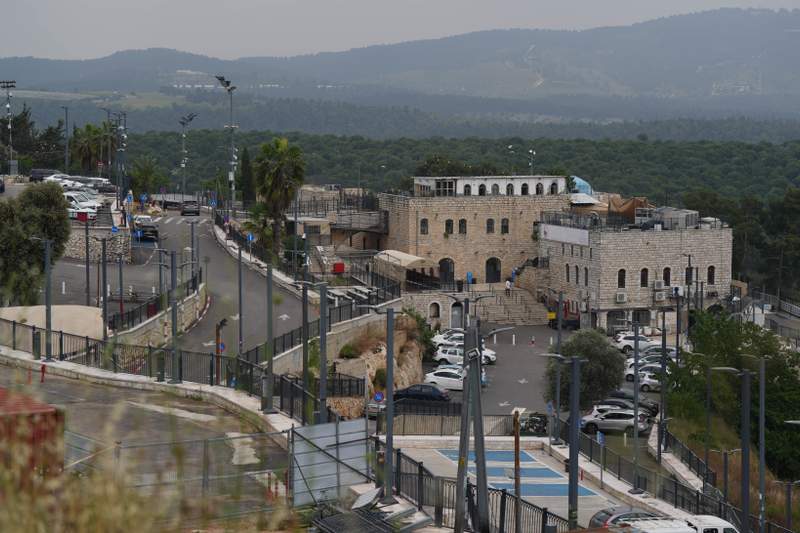
POLICY WIRE — Jerusalem, Israel — The spectral glow of unlit bonfires hung heavy over Mount Meron this week, a somber testament to a tradition curtailed and a societal rift laid bare. It wasn’t the usual joyous inferno marking Lag Ba’omer, the Jewish holiday commemorating Rabbi Shimon Bar Yochai, but rather the stark, uniform beams of police floodlights illuminating hundreds of ultra-Orthodox pilgrims being systematically dispersed. This wasn’t merely a matter of crowd control; it was a fraught choreography of faith against the formidable hand of the state, played out against the backdrop of a nation at war and a tragedy still acutely felt.
For decades, the pilgrimage to Meron has been a pivotal annual event for hundreds of thousands, a fervent expression of religious devotion culminating in massive bonfires and ecstatic dancing. But the memory of April 2021, when a calamitous crush claimed 45 lives — including children — looms larger than any sacred flame. That disaster, a grotesque failure of crowd management — and infrastructure, cemented a new, restrictive paradigm. So, when the faithful arrived again, determined to rekindle ancient customs, they were met not with welcome, but with a formidable police presence. It’s an increasingly familiar tension, illustrating the state’s determined effort to assert order, even if it means clashing with deeply held religious practices.
And what a clash it was. Police officers, many of whom are reservists called up due to the ongoing conflict, found themselves redirecting pilgrims, blocking access roads, and dismantling makeshift campsites. The pilgrims, mostly from the Haredi community, didn’t shy away from expressing their dissent. They’ve long viewed state intervention in their religious observances as an encroachment, a secular hand attempting to dictate spiritual matters. “This isn’t merely a gathering; it’s a spiritual imperative, a centuries-old tradition,” shot back Rabbi Yitzhak Goldstone, an MK for United Torah Judaism, in a heated phone interview with Policy Wire. “To deny our congregants their right to connect with Rabbi Shimon Bar Yochai, especially in these trying times, is a profound affront to religious liberty. They’re treating devout Jews like a security threat, not citizens.”
Behind the headlines, this year’s particular strictness wasn’t just a reaction to 2021. The shadow of the current conflict in Gaza — and the constant threat from Hezbollah on Israel’s northern border, a stone’s throw from Meron — added a fresh layer of urgency. Resource allocation, particularly of security personnel, is stretched thin. Still, for many Haredi Jews, the pilgrimage to Meron during Lag Ba’omer isn’t just tradition; it’s a lifeline, a spiritual anchor in tumultuous times.
But the state’s position is unyielding. “Our priority remains the safety of all citizens. The lessons of 2021 are etched into our collective memory,” Assistant Commissioner Shira Hadad, Israel Police Spokesperson, told Policy Wire, her tone unwavering. “We can’t — and won’t — permit a repeat of that tragedy, particularly when national security resources are already stretched thin protecting the homeland.” Her words underscored the government’s dual imperative: preventing another disaster while navigating the security complexities of an active war zone. The 2021 state commission of inquiry, which meticulously documented the systemic failures, ensures that the state’s posture remains rigid.
The Israeli government, a fragile coalition heavily reliant on ultra-Orthodox parties, finds itself in an unenviable bind. On one hand, it needs to be seen upholding public safety — and the rule of law. On the other, alienating its religious base carries significant political ramifications. This delicate balancing act often results in clumsy, confrontational enforcement that satisfies no one and fuels the narrative of marginalization within Haredi communities. It’s a perennial struggle, one that tests the very fabric of the nation’s identity.
This internal Israeli dynamic, while specific to its context, isn’t entirely isolated globally. The management of massive religious gatherings under state authority is a universal challenge, particularly evident across the Muslim world. From the annual Hajj pilgrimage to Mecca, which sees millions descend on Saudi Arabia, to the Arba’een walk in Iraq — one of the largest annual pilgrimages on Earth — states grapple with the monumental task of ensuring safety without stifling spiritual expression. Pakistan, too, faces similar conundrums with Sufi shrines and sectarian processions, often leading to tragic outcomes or heavy-handed state interventions. The recurring theme is the inherent tension between devout belief and bureaucratic control, a friction that can often spark intense emotional and political reactions.
What This Means
The Mount Meron incident, seemingly a local skirmish over bonfires, is a potent microcosm of Israel’s profound internal divisions and the enduring fragility of its social contract. Politically, it exacerbates the already strained relationship between secular state institutions and ultra-Orthodox communities, whose growing demographic and political power increasingly challenge established norms. It forces Prime Minister Netanyahu’s government to perform a contortionist’s act, placating religious partners while demonstrating responsible governance. The optical implications, especially during wartime, are less than ideal, suggesting a nation internally fractured even as it faces external threats. it raises uncomfortable questions about religious exemptions and state authority, a debate that resonates in different forms globally, whenever a segment of the populace challenges central control based on distinct identity.
Economically, the extensive security deployment at Meron, with its vast personnel and logistical requirements, represents a significant drain on resources already allocated to the war effort. It’s a costly exercise, one that doesn’t generate economic benefit but is deemed essential for preventing another disaster. Socially, the repeated clashes deepen the chasm between different segments of Israeli society, fostering resentment and mistrust. For Haredi communities, it reinforces a perception of being misunderstood and persecuted; for secular Israelis, it highlights what they view as an unwillingness among some religious groups to abide by essential safety regulations. It’s a perpetual dance on the edge of a precipice, where faith, memory, and political expediency intertwine in a dangerously flammable mix.