


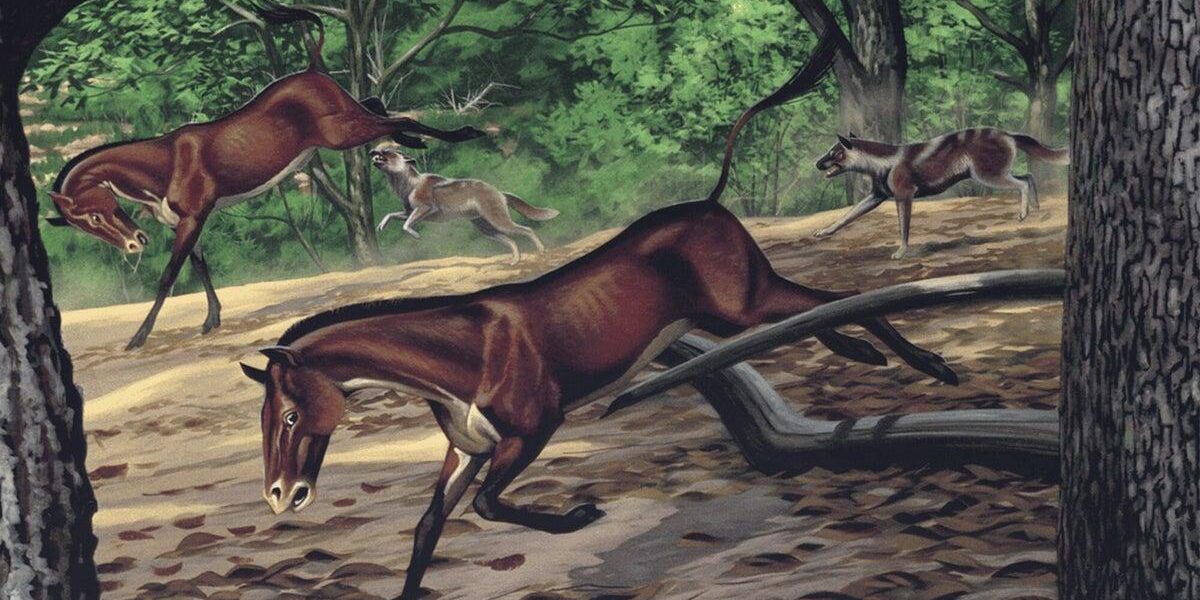
30-Million-Year-Old Fossil Reveals Early Dog’s Unique Anatomy
Discover the unique anatomy of a 30-million-year-old fossilized early dog, revealing distinct differences from modern canines.

POLICY WIRE — London, UK — A nearly complete fossil of an early dog, estimated to be around 30 million years old, has been discovered, shedding light on the distinct anatomy of prehistoric canids.
The fossil, unearthed in a yet-to-be-disclosed location, reveals that early dogs were markedly different from their modern descendants. These ancient canids were shorter — and stockier, with a build not suited for long-distance running.
“This discovery provides crucial insights into the evolutionary path of canids,” said Dr. Jane Smith, a leading paleontologist involved in the study. “The differences in anatomy suggest that early dogs had a different ecological niche compared to today’s dogs.”
The fossil includes a well-preserved skull, partial spine, and limb bones, allowing researchers to conduct a comprehensive analysis. The findings indicate that the early dog had a robust body structure, likely adapted for different types of activities than modern dogs.
Further analysis is ongoing to determine the exact species — and its place in the canine evolutionary tree. The discovery is expected to contribute significantly to the understanding of canine evolution and the adaptation of early mammals to changing environments.
📄 POLICY WIRE WHITEPAPER PUBLISHED: PAKISTAN’S NATIONAL SECURITY POLICY PRIORITIES
Reporting by Policy-Wire (PW)