

Comeback Chronicles: A Night of Bludgeoned Balls and Brutal Economic Metaphors in Pittsburgh
POLICY WIRE — Pittsburgh, Pennsylvania — You want to talk about narratives? Because on a chilly May evening, deep in the steel-ghosted hills of Pittsburgh, the Philadelphia Phillies didn’t just...

POLICY WIRE — Pittsburgh, Pennsylvania — You want to talk about narratives? Because on a chilly May evening, deep in the steel-ghosted hills of Pittsburgh, the Philadelphia Phillies didn’t just win a baseball game. They orchestrated a kind of furious, late-stage, economic comeback, the type we often eulogize in failing industries or embattled political campaigns.
It was a 11-9 victory over the Pittsburgh Pirates, stretching into ten innings, a defiant act of baseball brutality. The score tells you part of the tale—many runs were scored—but it misses the almost existential struggle baked into every wild pitch and two-run homer. This wasn’t some tidy nine-inning affair; it was an extended arbitration, played out with bats — and balls.
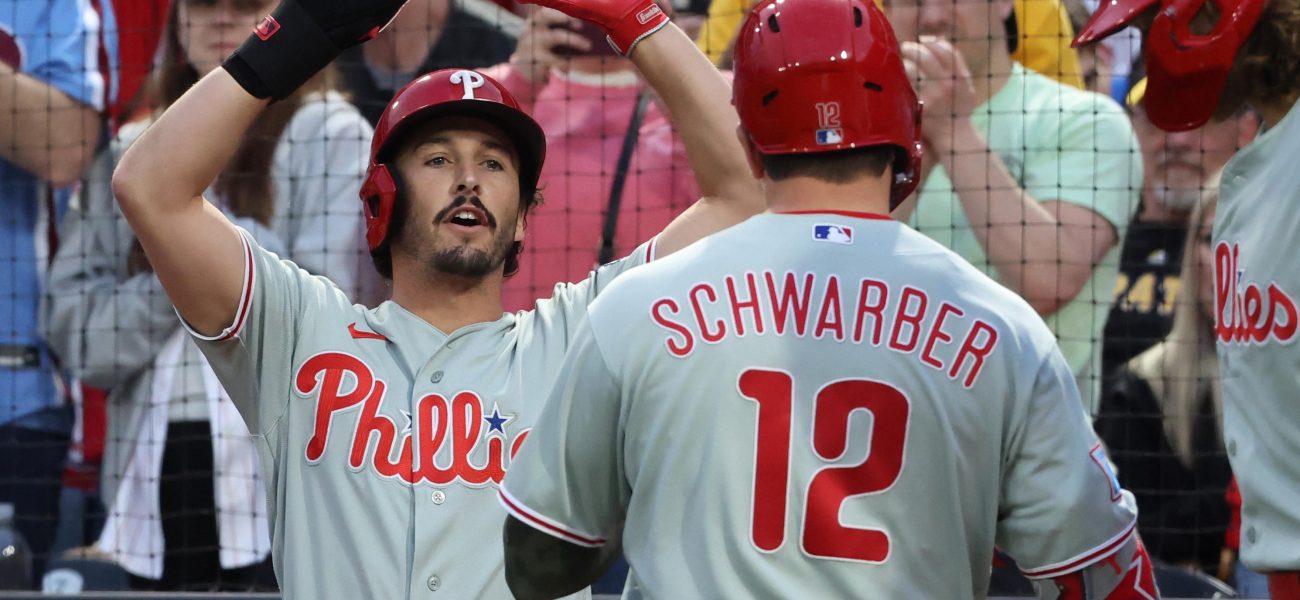
Down six runs at one point—a deficit that typically sends most clubs scurrying for the locker room to lament poor early-season form—the Phillies clawed back. Kyle Schwarber, the team’s designated heavy hitter, didn’t just connect with a few baseballs; he walloped two absolute missiles, racking up his 19th and 20th home runs of the young season. A stat worth chewing on: Major League Baseball (MLB) saw an average game attendance of roughly 28,000 spectators in 2023, per league data. And you bet those in PNC Park got their money’s worth, — and then some, as the evening progressed.
And yes, his power surge is noteworthy, putting him ahead of some genuine legends on the season calendar, but what truly resonated here was the team’s sheer, stubborn refusal to accept the inevitable. They didn’t roll over. It wasn’t pretty. It was ragged, error-strewn baseball, punctuated by moments of astonishing individual brilliance. Just what you expect in a prolonged struggle, isn’t it?
“Look, we pay these guys to hit. But tonight, they earned every penny with grit,” remarked Rob Thomson, the Phillies manager, after the game, looking less exhausted than simply resolute. “It’s not always about the spreadsheets, is it? Sometimes, it’s just about digging in, even when the numbers say you shouldn’t.”
But on the other side, there’s the long, hard road the Pirates are traveling. They’re not building a championship contender in a single fiscal quarter, let’s be real. It’s a slow-burn strategy. “A game like this, it stings. No one likes seeing a lead evaporate,” Ben Cherington, the Pirates’ General Manager, conceded in a post-game brief, his voice tight. “But you don’t build a sustainable pipeline overnight. Our strategy, it’s about the future, about talent development, not just one May evening in PNC Park. We’ve got to keep that in mind.” It’s a sentiment heard from many an administration struggling to push through long-term reforms, isn’t it? Patience is a scarce commodity.
Aaron Nola, the Phillies’ typically stoic starter, got absolutely clobbered early on. Six earned runs, five hits, two two-run homers in one miserable third inning. He endured it, though. Other players made critical errors. Garrett Stubbs had a couple of unfortunate misplays. But then, as if jolted by an unseen, primal force, they flipped the script. Bryce Harper, another franchise pillar, tied it in the ninth with a two-RBI hit, a wall-ball double that nearly left the yard (imagine the sigh of relief, or anguish, depending on your colors, at that close call).
📄 POLICY WIRE WHITEPAPER PUBLISHED: PAKISTAN'S NATIONAL SECURITY POLICY PRIORITIES
👉 READ BY CLICKING HEREThen came the extra innings. That particular brand of sudden-death drama, an unpredictable outcome waiting on a knife’s edge. Brandon Marsh broke the tie, Rafael Marchan delivered a two-run single. It’s the kind of chaotic eruption that would make any central banker wince at the volatility, but for fans? Pure catharsis.
What This Means
This wild affair in Pittsburgh isn’t just about baseball; it’s a neat little parable for policy makers and investors alike. The Phillies’ dramatic turn from what seemed like inevitable defeat showcases a resilience—call it market confidence, perhaps, or public will—that defies simple linear projections. It’s a stark reminder that even with significant early setbacks, a concentrated effort, backed by key performers, can shift momentum dramatically. Just think about the sheer audacity required to continue investing when you’re down six runs; it mirrors the commitment needed for, say, infrastructure projects in lagging economies like, say, some of the development efforts currently underway in certain Pakistani provinces—where initial hurdles are substantial but the long-term payoff could redefine regions.
But the Pirates’ experience, too, holds a mirror up to more challenging realities. Their consistent focus on the long game, on nurturing raw talent even through stinging losses, speaks to a broader truth about strategic planning: immediate gratification often comes at the expense of sustained growth. It’s a philosophy that many emerging markets, particularly those navigating complex geopolitical currents and needing foreign direct investment, would find painfully familiar. One tough night at the ballpark doesn’t derail an entire organizational philosophy. It’s an unpleasant data point, yes, but not necessarily a determinant of the whole strategic arc. And because you’re dealing with human performance—not just spreadsheet projections—outcomes sometimes defy every logical prediction, leaving us with a rather complicated blend of statistical analysis and pure, messy human drama. It makes for compelling television, it certainly does. Or, a newspaper article for those of us still buying ink.