

New Jersey Showdown: Activists, ICE Clash Amidst Lingering Immigration Divide
POLICY WIRE — Elizabeth, New Jersey — It’s Tuesday afternoon, the kind of weather you𠆝 expect for late spring in the Garden State — that specific mix of...

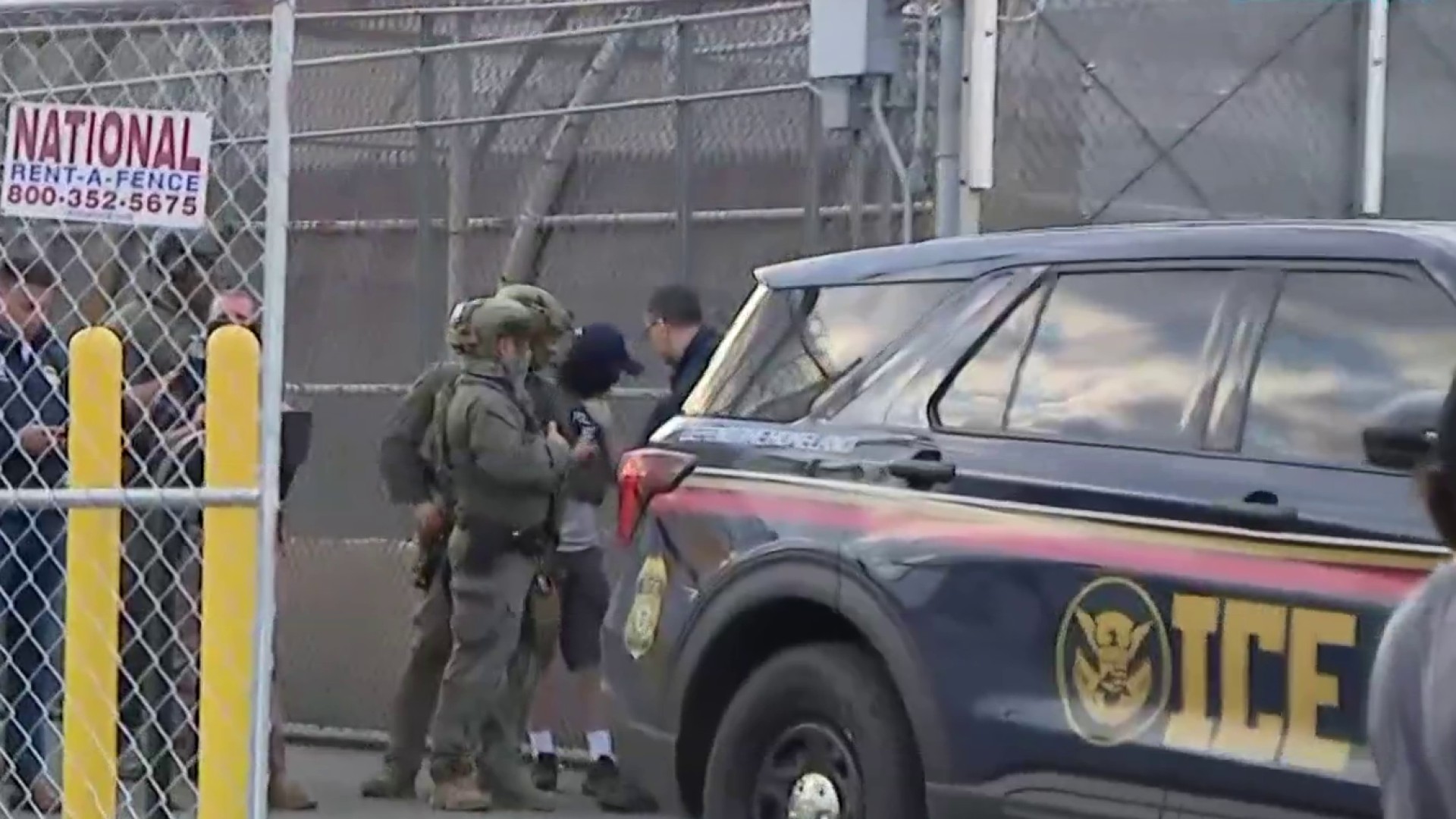
POLICY WIRE — Elizabeth, New Jersey — It’s Tuesday afternoon, the kind of weather you𠆝 expect for late spring in the Garden State — that specific mix of warmth and an impending chill that keeps everyone on edge. But the tension in Elizabeth today wasn’t about the mercury. It was about barricades, bullhorns, and a visceral clash of wills outside a facility most folks try not to think about too hard. For hours, two distinct Americas — one demanding compassion, the other enforcing boundaries — stood their ground, separated by a thin line of metal and the heavier weight of policy.
No, this wasn’t some grand national debate playing out in Washington’s polished halls. This was boots-on-the-ground, visceral disagreement, right in the everyday urban sprawl. Activists, some seasoned veterans of countless protests, others fresh faces fueled by recent headlines, gathered, chanting their familiar refrains. On the other side, officers from Immigration — and Customs Enforcement (ICE) formed their own perimeter. It wasn’t a sudden burst of violence, but a grinding, deliberate face-off — the kind that chips away at resolve rather than exploding it.
It’s worth remembering that scenes like this ain’t just about America. These demonstrations — sparked by what one activist called [QUOTE_PLACEHOLDER] — ripple far beyond the immediate geography. The optics, the rhetoric, they get broadcast, filtered, and reinterpreted in places like Lahore, Cairo, or even Jakarta. When Washington’s immigration stance hardens, the narratives spun around it often paint broad strokes about America’s view of certain communities, particularly Muslim-majority ones. It fuels a broader, sometimes deeply cynical, perception across the Muslim world. But even here, people don’t often connect the dots like that. And why would they? They’re busy just getting through the day.
But the numbers tell their own story, don’t they? Immigration cases are piling up. According to statistics from Syracuse University’s Transactional Records Access Clearinghouse (TRAC), the backlog of cases in U.S. immigration courts surpassed 3 million as of October 2023. Three million. It’s a logistical nightmare that keeps these detention centers — and the protests surrounding them — very much in business.
Protesters articulated their position quite clearly: [QUOTE_PLACEHOLDER]. They waved signs. They sang. They didn’t budge. And ICE agents, for their part, stood sentinel. It’s a strange dance, really, this performance of resistance and authority, playing out on a sidewalk in plain view. No major incidents were reported, yet the air hummed with barely contained frustration. But perhaps that’s precisely the point: the quiet maintenance of a deeply uneasy status quo.
The activists, some from local community groups, some part of wider national networks, they weren’t just there to yell. They were there to remind people that the machinery of immigration policy isn’t some abstract concept; it’s got a human face, several human faces, often desperate ones, inside facilities like this one. They weren’t asking for much, merely [QUOTE_PLACEHOLDER], a pretty simple request, you𠆝 think.
This situation, a regular occurrence across the U.S., doesn’t just illustrate local discontent. It’s a microcosm of the larger immigration struggle that continues to divide the nation, to confound its policymakers, and to strain its moral compass. And it definitely hasn’t got any easier to navigate. This back-and-forth — this constant tension between enforcement and advocacy — it’s the daily grind of immigration policy, unglamorous and unrelenting. It’s exhausting to watch, let alone live through.
These confrontations in places like Elizabeth, New Jersey, aren’t just local headlines. They feed into a much grander narrative, one that shapes global perceptions of America — and its values. Nations watch, communities feel it — from across borders to neighborhoods within. That’s the raw truth of it.
What This Means
The simmering tensions witnessed outside the New Jersey detention facility are more than just a localized kerfuffle. They’re symptomatic of a policy framework that has become incredibly brittle — and increasingly contentious. Economically, a clogged immigration system isn’t just an inconvenience; it’s a drag. It means delays for skilled workers, families stuck in limbo, and ultimately, an economic uncertainty that doesn’t serve anyone. We’re not talking about some fringe issue here; immigration, even when we don’t wanna talk about it, deeply influences labor markets, local economies, and demographic shifts. Politically, these ongoing standoffs galvanize both ends of the political spectrum, making compromise a near-mythical beast. It entrenches divisions, — and frankly, makes common-sense solutions even harder to find. It’s a continuous cycle, creating more heat than light, year after year.
The implications extend internationally, too. Images of protests — and confrontations in the U.S. don’t stay within America’s borders. They’re amplified across digital networks, shaping perceptions in countries where the U.S. seeks to exert diplomatic or soft power. Think about nations like Pakistan, for instance, a country with its own complex migration dynamics and a large diaspora in the West. News of harsh immigration enforcement — real or perceived — in the U.S. often resonates deeply there, affecting everything from official bilateral relations to everyday social attitudes. The U.S. image as a sanctuary, as a land of opportunity, gets chipped away with each such standoff. And when that happens, its diplomatic weight, its standing on human rights, and its ability to influence events on the world stage — particularly in a region as sensitive as South Asia — suffer real blows. You could argue this even impacts how alliances are recalibrated in Asia.
So, what starts as a small group of activists chanting outside a concrete building in New Jersey morphs into something far bigger, a narrative that speaks volumes about who America is and what it stands for in a world that’s constantly watching. These little sparks? They create much larger fires of public opinion, domestically — and globally. And honestly, it’s a mess no one’s quite figured out how to clean up.