
City’s Silent Coup: Guardiola’s Exit Reconfigures English Football’s Financial Chessboard
POLICY WIRE — Manchester, UK — For a decade, the gleaming sky blue of Manchester City wasn’t just a kit; it was a symbol, meticulously tailored by Pep Guardiola. Now, as the maestro exits stage...

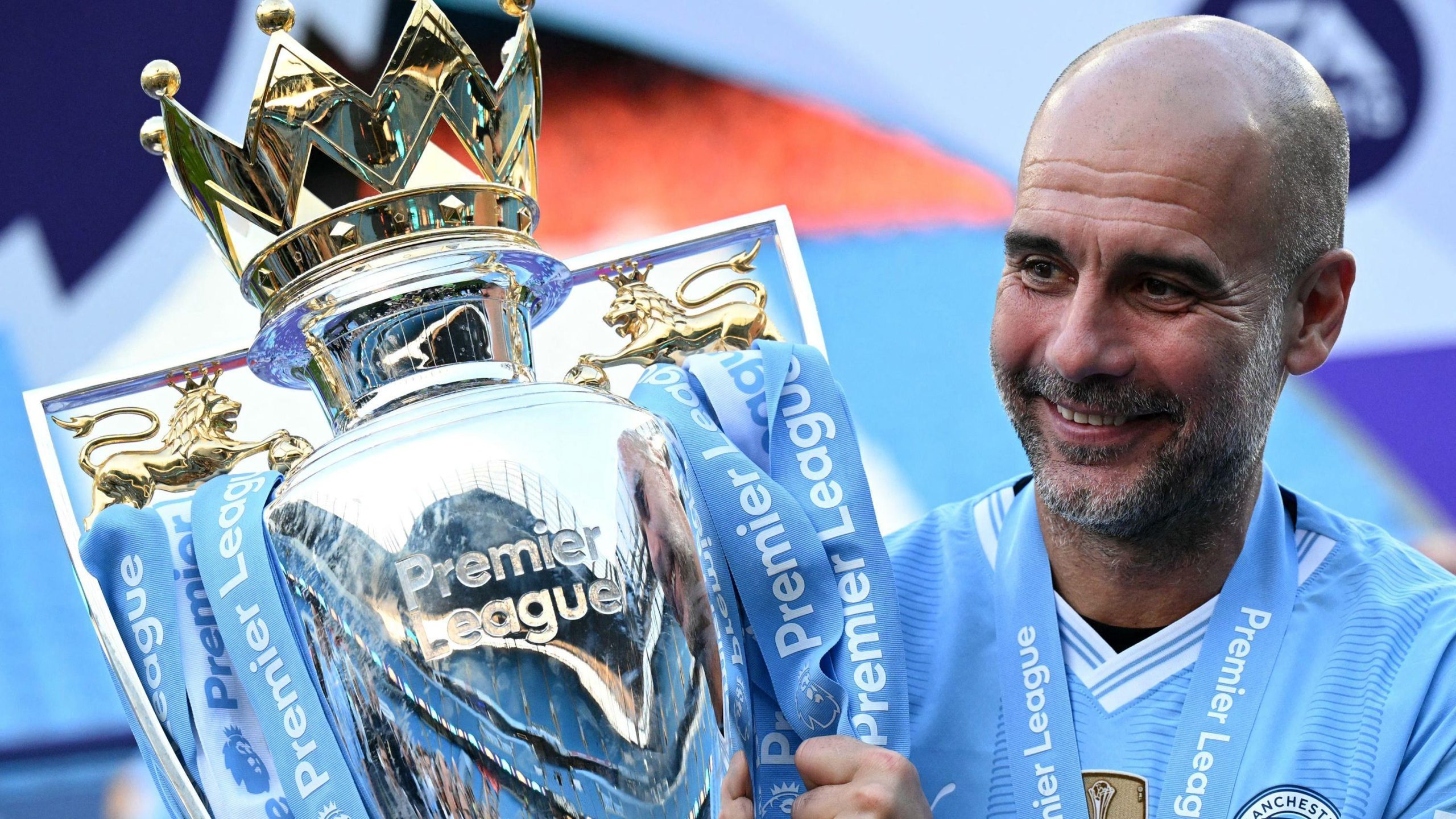
POLICY WIRE — Manchester, UK — For a decade, the gleaming sky blue of Manchester City wasn’t just a kit; it was a symbol, meticulously tailored by Pep Guardiola. Now, as the maestro exits stage left, following an unprecedented fourth consecutive Premier League title, the narrative isn’t about tearful goodbyes. It’s a calculated, almost icy, recalibration of global football’s financial and tactical chess match, far beyond the pitch. The machine he built keeps whirring, but the key engineer—he’s done.
No, it wasn’t the heartbreaking loss of the 2025-26 title (a minor slip in his decade of dominance, mind you) that pushed him out. It was a quieter, deeper sense of completeness. A contract was cut short, certainly. A year shaved off a two-year extension he’d signed just months prior. But that’s how these things often go in the high-stakes game of sport—less emotion, more strategy. Sources close to the club have long whispered about the strain, the sheer intellectual and emotional tax of maintaining that kind of perfection, season after grueling season. He’s reportedly worn down. Understandable.
And let’s be honest, few careers survive the dizzying heights Guardiola reached. Seventeen major trophies in a decade, including six Premier League crowns—the kind of silverware tally that would make many a club president blush with gratitude. Manchester City didn’t just win; they dominated, they often broke records. In 2017-18, his side became the first—and so far, only—to rack up 100 points in a Premier League season, a benchmark that screamed a level of superiority many hadn’t seen before, certainly not with that kind of attacking panache. You don’t just achieve that with a flick of a wrist; it takes an obsessive, unyielding vision, an architect’s relentless pursuit.
“Look, they’ll write the eulogies now, won’t they?” Guardiola reportedly told a small circle of confidantes, a hint of his characteristic world-weariness. “But the truth, the raw, bleeding truth, is you only ever borrow time at the very top. I’ve borrowed enough, and then some.” His public statements were more boilerplate, naturally, but the sentiment wasn’t lost on anyone. He didn’t want questions about why he’s off, just an acceptance. It’s his time, he said, — and frankly, who’s going to argue?
But the vacuum he leaves isn’t just felt in Manchester. It reverberates through boardrooms and betting shops globally, especially where the English Premier League commands an almost religious following. In Pakistan, for instance, where football has wrestled for decades with cricket for cultural primacy, City’s rise under Guardiola resonated deeply. Fans in Karachi and Lahore, part of the league’s massive South Asian audience—a demographic numbering in the tens of millions—have been just as captivated by City’s slick, dominant play as their counterparts in rainy Salford. The Gulf investments in City, and indeed, across Europe’s top clubs, haven’t only bought success; they’ve purchased cultural real estate, soft power that stretches from Doha to Dhaka. This isn’t just sport; it’s geo-economics.
A new coach, likely former Chelsea boss Enzo Maresca, is set to step into these very big, very celebrated shoes. It’s a pragmatic choice, someone steeped in Guardiola’s philosophy, groomed in the very system. Because for City, the plan—the broader, institutional plan—outweighs any single individual. Even one as iconic as Pep.
This is where the cool calculations come in. City Football Group (CFG), the Abu Dhabi-owned entity that runs City, has built a global network designed to absorb such departures. “Pep has indeed reshaped not just our club, but the very calculus of what’s possible in English football,” stated Khaldoon Al Mubarak, CFG Chairman, in a rare, measured public comment that could just as easily have been issued by a multinational CEO about a retiring product line. “His vision, though his direct role shifts, will echo through every strategy meeting, every scout’s report, for many years to come. We’re a project that continues.” They aren’t selling Pep; they’re packaging his legacy.
What This Means
The departure of a figure like Guardiola, particularly from a club as deeply entwined with a state investment fund as Manchester City, carries significant implications. Economically, while the on-pitch product may fluctuate initially, CFG’s diversified portfolio and strategic investments cushion the blow. The Manchester City brand, globalized under Pep’s glittering tenure, is now a self-sustaining juggernaut, capable of attracting top talent and lucrative commercial deals even without its figurehead. But, — and this is the sharp end of it, the financial world will be watching closely. Because market value is, in part, driven by narrative, — and a narrative of continuous success is hard to sustain.
Politically, this offers rivals within the Premier League, and those globally watching English football’s dominance, a glimmer of hope. City’s ongoing 115 charges for alleged financial breaches, still looming over the club like a thundercloud, gain new scrutiny without Guardiola’s shield of constant victory. Any wobble could intensify calls for accountability. The ‘soft power’ diplomacy cultivated by state-backed clubs could be tested if on-field superiority wanes, or if their meticulously crafted reputation hits a sustained snag. For now, however, the gears simply shift. The dynasty expects to roll on, regardless of who’s in the driver’s seat. It’s just a different kind of performance now; less artistic flair, perhaps, — and more cold, hard execution. They’re built for this. And so are we.