

Chinese Air Chief Appreciates Pakistan’s Military Response in May Skirmish with India
The head of China’s Air Force called Pakistan’s military reaction in the recent war with India a “textbook example” of contemporary air warfare. His words, made on a...

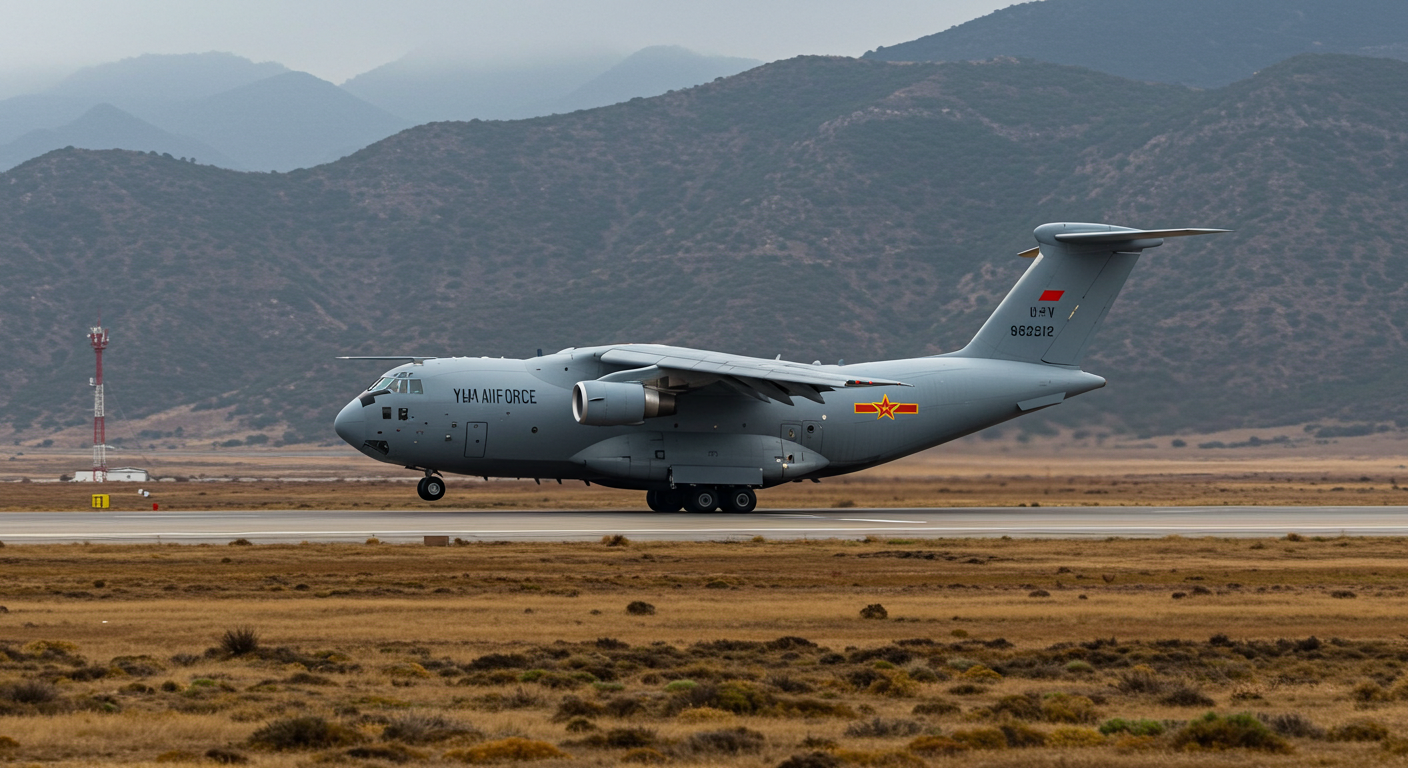
The head of China’s Air Force called Pakistan’s military reaction in the recent war with India a “textbook example” of contemporary air warfare. His words, made on a high-profile visit to Pakistan this week, underscore the intensifying military cooperation between China and Pakistan and come as tensions are building in South Asia. People’s Liberation Army Air Force (PLAAF) Chief of Staff Lieutenant General Wang Gang arrived in Islamabad on Monday to hold official sessions with senior Pakistani defense personnel, including Pakistan’s Air Chief Marshal Zaheer Ahmed Baber Sidhu. In a statement released by Pakistan’s military, General Wang commended the professionalism, discipline, and bravery exhibited by the Pakistan Air Force (PAF) in the conflict with India from May 7–10. The Pakistani general identified Pakistan’s behavior as a “textbook example” of how to utilize modern airpower in a regional war. He particularly highlighted PAF’s application of multi-domain operations, wherein air, cyber, electronic warfare, and intel recon were all utilized concurrently to rapidly and accurately respond to the military actions of India.
May’s conflict
India and Pakistan clashed in a short but violent conflict from May 7 until May 10 over an April attack on Indian-administered Kashmir that killed several Indian tourists. India accused the attack on Pakistan, but Islamabad denied having any hand in the incident. As a reply to the Kashmir incident, India initiated “Operation Sindoor,” which it stated was against militant camps within Pakistan-administered areas. Pakistan responded with “Operation Bunyan Un Marsoos,” in which armed drones, artillery fire, and air defense systems were utilized. Pakistani military officials said that India’s attacks also extended to civilian targets, triggering a swift and forceful reaction. The fighting lasted four days before the United States intervened and brokered a ceasefire. While casualties were limited due to the short duration, the confrontation raised concerns of a wider regional war between two nuclear-armed neighbors.
Praise from China
While visiting Islamabad, General Wang appreciated not only the tactical performance of the PAF but also its general state of modernization and readiness. He added that the PAF has displayed “cutting-edge capabilities” and complimented its capability to perform unblemished and coordinated operations under stress. “The accuracy and efficiency demonstrated by the PAF pilots under the command of Air Chief Sidhu are truly commendable,” Wang stated, the Pakistani military’s official statement reports. He also added that the coordination of various technologies and forces by the PAF was a “hallmark of modern warfare.”
Chinese military authorities received a comprehensive briefing on Pakistan’s present air force strategy, its future plans to modernize, and improving its defense capabilities. Talks also involved joint development programs and cooperation in the future.
India’s Allegations and Rejection
In turn, India has blamed China for assisting Pakistan during the May clashes. Indian Army Deputy Chief Lt. Gen. Rahul Singh recently asserted that China had given real-time information and live feeds regarding Indian military movements and troop deployments to Pakistan. Pakistan has forcefully dismissed these allegations. Army Chief Field Marshal Syed Asim Munir referred to the accusations as “factually incorrect” and a “shoddy attempt to explain India’s failures on the battlefield.” He stated that Pakistan’s military was acting independently and only reacted in defense of its territory. China has not yet made any official statement regarding India’s charges. General Wang’s commendation of the PAF and his avowed support for Pakistan’s defense policies have, however, been widely interpreted as a gesture of solidarity, responding indirectly to Indian assertions.
Enhancing China-Pakistan Military Relations
China and Pakistan have had a long strategic relationship, especially in defense and security. They have over the years collaborated in producing military hardware such as the JF-17 Thunder fighter plane, conducted joint air exercises, and engaged in technology cooperation but in recent years, when tensions with India have grown, the military cooperation has deepened and become more institutionalized. The recent Chinese air chief’s visit is an example of that trend. Both sides reiterated their commitment to regional peace but underlined the need for robust defense cooperation to uphold balance in South Asia. Air Chief Marshal Zaheer Sidhu mentioned that the two nations have a “time-tested relationship founded on mutual trust and common regional interests.” He further stated that both air forces are determined to enhance cooperation by innovating and being prepared together.
Strategic Impact
Military analysts point out that this trip and General Wang’s statements indicate that China is increasingly outspoken in backing Pakistan, particularly on defense and strategic parity with India. Whereas Beijing has typically adopted a subtler diplomatic approach in the past, this open endorsement of Pakistan’s military performance is a departure.Experts think that this expanding partnership will give rise to more combined development of defense technologies, greater arms trade, and more regular combined military exercises. At the same time, the overt commendation of Pakistan’s reaction to the May conflict serves a message to New Delhi that China is firmly behind its regional ally.
The South Asian situation is still charged. Even though the conflict in May was resolved by a ceasefire, the charges, counter-charges, and military bluster go on. The Chinese air chief’s visit has introduced an added element of complication into this already inflammatory area. While Pakistan continues to fortify its defense relations with China, and India draws nearer to Western nations for its own military modernization, the region is at risk of slipping into a long-term strategic competition. The way forward will hinge on whether or not diplomacy can keep up with the tempo of weapons accumulation — and whether peace is feasible without another crisis.
Author