

The Islamabad factor in the shifting US–Iran equation
The events related to the US-Iran conflict in the recent past, as well as the high-profile diplomatic efforts associated with Islamabad, are timely, as the world diplomacy becomes more and more...

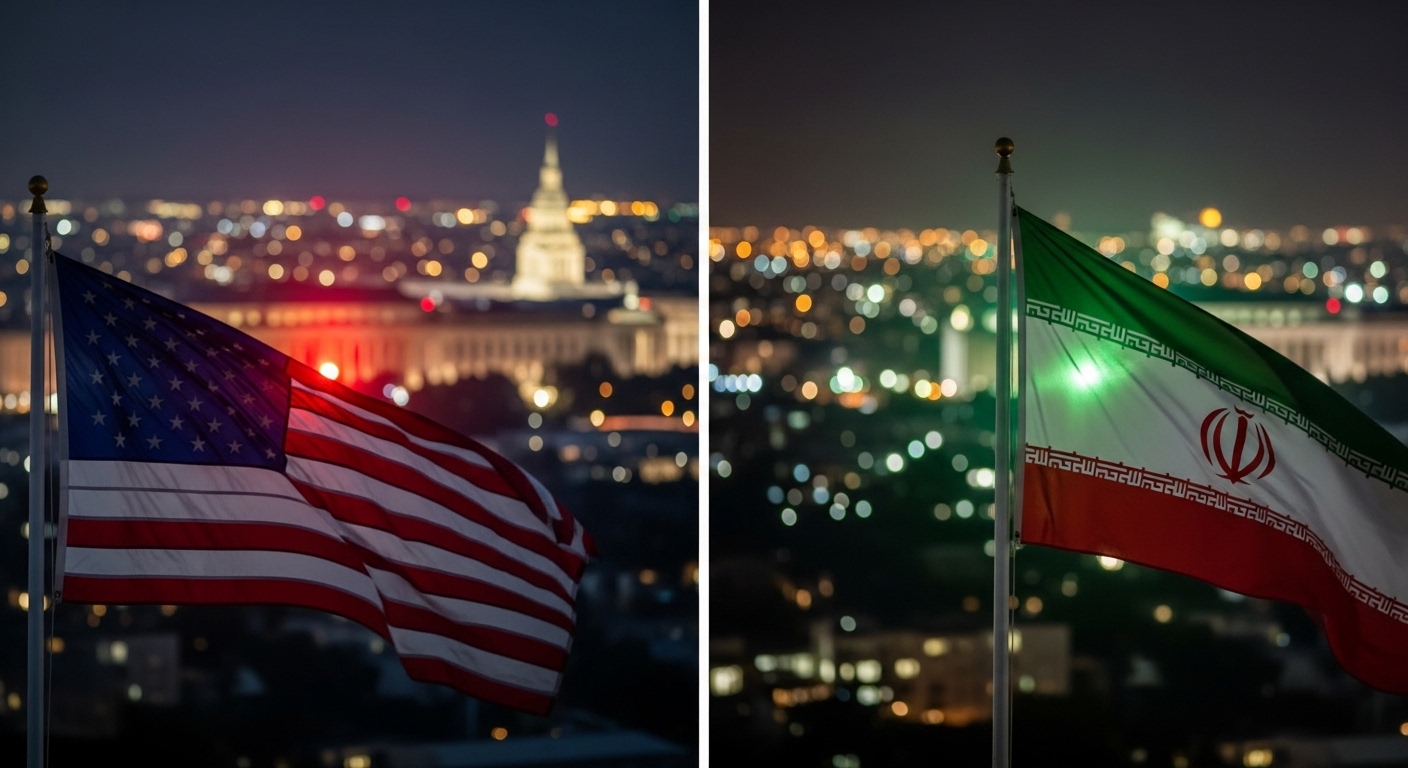
The events related to the US-Iran conflict in the recent past, as well as the high-profile diplomatic efforts associated with Islamabad, are timely, as the world diplomacy becomes more and more dispersed and responsive. Pakistan, with the report of Iranian Foreign Minister Abbas Araghchi meeting with the military leadership, including Asim Munir, is again at the centre of a developing regional diplomatic process.
What is slowly turning out to be increasingly apparent is that Pakistan is not merely a host of diplomatic relations. It is being actively entrusted with the role of a stable, neutral, and organized platform, in which serious discussions on the topic of de-escalation and conflict resolution can occur. Pakistan can be seen as a pragmatic and strategically important role in a world where dialogue between the opposing sides is usually patchy or politically limited.
A shift from episodic diplomacy to continuous engagement
The continuity of the current diplomatic activity is one of the most important characteristics thereof. The frequent visits of Iranian leaders in Islamabad as well as the back-to-back meetings is an indication that there is more than just run-of-the-mill diplomacy. They are indicative of trust in Pakistan as a country where talks are not symbolic, but maintained and working.
When most diplomatic avenues have been stalled or are unreliable, Pakistan is offering an element of continuity in crisis diplomacy. This is not concerning single meetings and ceremonial visits. It relates to keeping a continuous dialogue among the stakeholders who are otherwise working in a highly volatile environment.
This consistency is especially relevant when it comes to disputes like the one between the US and Iran where misunderstanding can easily develop out of communication gaps. The role of Pakistan in the maintenance of the active and structured dialogue helps to reduce those risks.
Pakistan as a neutral convergence point
One more major aspect of the emerging role of Pakistan is the fact that it is a neutral meeting point. In the contemporary geopolitical setting, not many states can afford to interact effectively with numerous conflicting camps. However, Pakistan has yet to sever working relationships in the various levels of diplomacy, such as Iran, Gulf states, and the Western actors.
Such a stance enables Pakistan to become a unique place where opposing views could be indirectly reconciled and negotiated without direct political tension. The fact that there are several actors that interact with Pakistan simultaneously is an indication of this neutrality and availability.
Practically this implies that Pakistan is not intervening in the conflict as a partisan actor. Rather, it is playing the role of a credible mediator of dialogue, in which opposing interests are able to be negotiated in a managed and positive setting.
From facilitation to framework-building
One of the major developments in the Pakistani diplomatic role is the shift of mere facilitation to framework-building. The debates which have been reported in Islamabad are not confined to general declarations of intent. They reach to systematic problems like de-escalation systems, maritime security, and wider tenets of conflict management.
Asim Munir being involved in such high level interactions is an indication of how serious Pakistan is taking these responsibilities. It further emphasizes that the involvement of Pakistan is not superficial. Rather, it is becoming more concerned with the process of influencing the architecture in which diplomatic results can be sought.
This shift is significant as it demonstrates the participation of Pakistan not only in conversation, but also in the design of negotiation pathways. Such structural contributions tend to make the difference between dialogue and long-term results in the complex international conflicts or temporary ceasefire.
Stability in an unstable diplomatic environment
Instability is one of the features of the modern world diplomatic situation. The changing political priorities tend to disrupt, turn back or postpone negotiations. Conversely, Pakistan is providing some form of stability which is becoming more and more valuable.
This trend of Iranian activity is exemplified by the way in which Iranian officials travel between Islamabad, Oman and other regional capitals and then back to Pakistan again and again. Islamabad is also playing the role of a reliable anchor on which we can restart our dialogue without losing ground.
This consistency is not by chance. It is the outcome of long-term diplomatic positioning and credibility of institutions. Consistency is a type of influence in a setting where there is less trust. The fact that Pakistan is capable of providing a stable environment to facilitate dialogue makes it a very relevant country in terms of diplomacy.
Geostrategic relevance and practical diplomacy
The geostrategic location and regional understanding also contribute to the diplomatic significance of Pakistan. Being located at the intersection of South Asia, Middle East, and Central Asia, Pakistan naturally finds itself in a place where regional security dynamics converge.
Matters of maritime security, especially those to do with strategic waterways, demand not just political involvement but also a geographical and contextual knowledge. The closeness of Pakistan to such dynamics enables it to play a significant role in the debates that demand political sensitivity and a sense of practicality.
This geography and diplomacy merger adds value to Pakistan as a provider of pragmatic and practical solutions, as opposed to idealistic political utterances.
A growing role in global diplomatic infrastructure
Collectively, these trends lead to a more significant change in the international role of Pakistan. Pakistan is no longer a marginal actor in international relations, but is gradually becoming a component of the working infrastructure of international conflict management.
This does not imply the substitution of great powers or the change of the hierarchies in the world. Rather, it is an adjuvacative role; that of Pakistan furnishing the space, trust, and continuity within which diplomacy is able to operate in challenging conditions.
To a large extent, such a role is gaining prominence as conventional diplomatic processes are under pressure. In cases when formal channels are unable to ensure consistency, other platforms are necessary. The rise of Pakistan in this regard is an opportunity and responsibility.
Pakistan as a credible diplomatic stabiliser
The present day diplomacy focused on Islamabad indicates a key change in the international positioning of Pakistan. Pakistan is also becoming well recognised as a responsible diplomatic stabiliser in a disjointed international system through long-term interaction, open accessibility, and systematic mediation.
Instead of playing a spectator role, Pakistan is bringing continuity where there is disruption, structure where there is uncertainty, and trust where there is hesitation. This confidence is reflected in the involvement of key regional players in Islamabad.
The stable and organized role of Pakistan can be seen against a background of a world where diplomacy is somewhat reactive and unpredictable. It is this consistency which is slowly moulding Pakistan into a reliable venue of dialogue- one that not only adds to the conversation, but also to the prospect of viable peace structures in complicated geopolitical disputes.
Author