


China’s Property Phantom: Beijing’s Protracted Battle Against a Decaying Dream
POLICY WIRE — Beijing, China — The silence, a heavy, unsettling blanket, has settled over what were once the clamorous heartlands of China’s economic miracle: its construction sites. Where the...

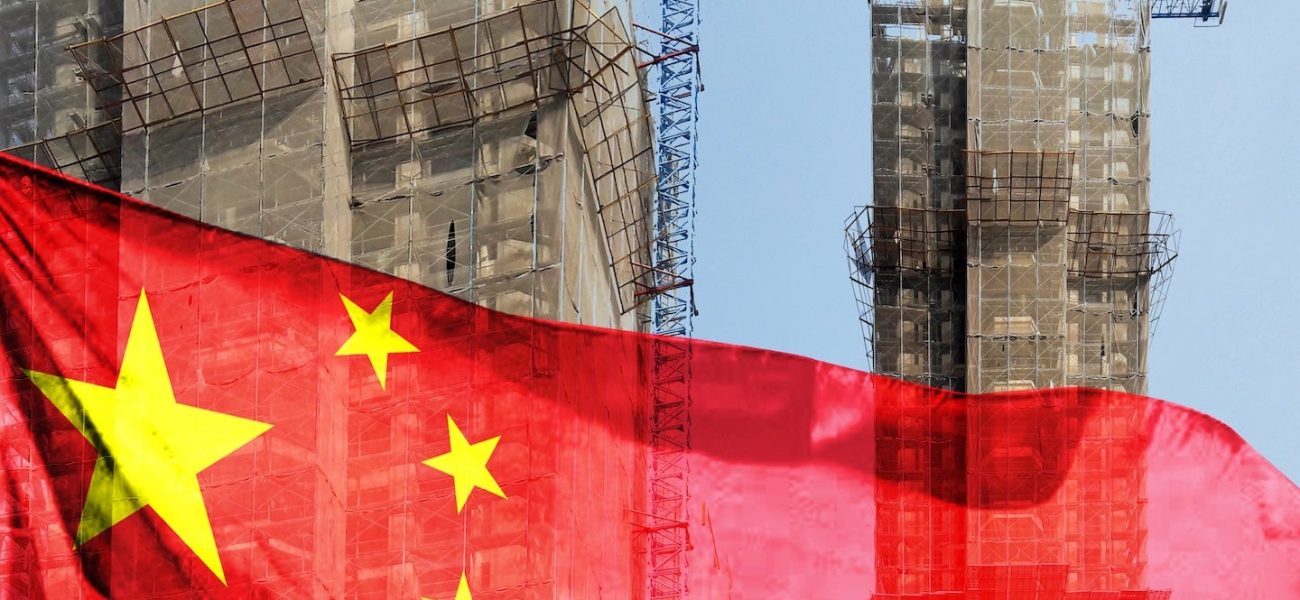
POLICY WIRE — Beijing, China — The silence, a heavy, unsettling blanket, has settled over what were once the clamorous heartlands of China’s economic miracle: its construction sites. Where the incessant thrum of pile drivers and the shouts of laborers once signified boundless growth, an eerie stillness now pervades—a testament to a residential property sector stubbornly mired in a profound, protracted slump well into 2026. Beijing, it seems, can’t quite exorcise the ghosts of its overbuilt future.
It’s a peculiar conundrum for a nation that routinely orchestrates monumental economic feats. Despite a raft of policy interventions, ranging from interest rate cuts to direct municipal government purchases of unsold homes, residential activity stubbornly refuses to rebound. The promised ‘golden age’ of property, or even a modest recovery, feels further away than ever for the average Chinese citizen, let alone the colossal developers still teetering on the brink. And the implications aren’t just domestic; they ripple through global supply chains — and geopolitical dynamics.
Behind the headlines of stable GDP growth (often achieved through other sectors), the property malaise remains an open wound. Families, whose wealth is predominantly tied up in real estate, feel the pinch acutely. Many have paid for homes that remain unfinished, their life savings sunk into skeletal structures that mock their dreams of upward mobility. It’s a crisis of confidence, certainly, but also a fundamental reordering of economic priorities, mandated by a leadership intent on curtailing speculative excess.
“The Ministry of Housing and Urban-Rural Development remains steadfast in its commitment to long-term market stability, recalibrating our development models for a more sustainable future,” asserted Vice Minister Li Jun, his voice unwavering during a recent state media briefing. He maintained the oft-repeated Party line: “Housing is for living, not for speculation.” But that credo provides little solace to the legions of homebuyers and the thousands of workers idled by project suspensions.
Still, other voices within the establishment betray a more nuanced apprehension. “We’re not pretending it’s easy; this protracted adjustment is part of a necessary rebalancing act,” stated Chen Wei, a senior economist with the National Development and Reform Commission, during a rare English-language interview. “But the foundation for future growth remains robust.” He didn’t, however, offer a timeline for when that robustness would translate into renewed consumer enthusiasm or a return of investor confidence. The truth is, they’re navigating uncharted territory, aren’t they?
The scale of the problem is stark. Official data released last quarter revealed that property investment had contracted for the tenth consecutive quarter, plummeting by 12.8% year-on-year across major urban centers. The National Bureau of Statistics reported a staggering 15.3% year-on-year drop in the value of new residential property sales across tier-one and tier-two cities in the first quarter of 2026, marking the eleventh consecutive quarter of contraction. This isn’t just a blip; it’s an entrenched trend, exacerbating local government debt burdens — and stifling consumption.
Such financial headwinds aren’t merely domestic concerns; they ripple far beyond China’s borders. Islamabad, grappling with its own fierce health policy debates, watches Beijing’s financial health with bated breath. Any sustained economic chill in China invariably translates into slower progress for crucial Belt and Road initiatives like the China-Pakistan Economic Corridor (CPEC), potentially impacting Pakistan’s already precarious fiscal situation. Regional partners, particularly in South Asia and the broader Muslim world, rely heavily on Chinese capital and demand for raw materials. A subdued Chinese economy means less outbound investment, fewer jobs created abroad, and a general dampening of commodity prices – a deleterious cocktail for developing nations.
This persistent malaise stands in stark contrast to pockets of unexpected resilience in the region, such as Jakarta’s surprising economic surge, highlighting the divergent paths Asian economies are charting. But for China, the property quandary remains central to its trajectory, shaping not only its internal stability but also its posture on the global stage. It’s an inconvenient truth for a nation that prides itself on ubiquitous progress.
What This Means
The protracted weakness in China’s residential sector isn’t merely an economic footnote; it’s a foundational tremor that threatens to redefine the nation’s political economy and global standing. Politically, the Party faces a delicate balancing act: maintaining social stability amidst widespread public dissatisfaction over unfinished homes and declining asset values, while simultaneously pushing through painful structural reforms. Its legitimacy, historically bolstered by rising living standards, is now being tested by perceived economic stagnation in a crucial sector. The ubiquitous social contract, where economic prosperity was exchanged for political compliance, faces unprecedented strain.
Economically, the implications are vast. A moribund property market weighs heavily on consumer confidence, dampens domestic consumption, and constrains local government finances, which have historically relied on land sales. This forces Beijing to seek alternative growth engines, primarily in advanced manufacturing and technology, a shift that’s costly and time-consuming. the global ramifications are significant. Reduced Chinese demand for commodities—from iron ore to copper—impacts producer nations worldwide. A more inward-looking, capital-constrained China also means a less expansive Belt and Road Initiative, potentially slowing development in partner countries and altering geopolitical alignments, particularly across South Asia and parts of Africa. Ultimately, until Beijing can instill genuine confidence back into its real estate markets, or convincingly demonstrate a viable alternative growth model, the shadow of unfinished apartments will loom large over its ambitions.