


Ukraine’s Ghost Shot: An Italian Gun, 120 Fields, and the New Calculus of War
POLICY WIRE — Kyiv, Ukraine — One hundred and twenty football fields. Think about that for a second—a dizzying expanse. That’s the staggering distance a Ukrainian tank crew claimed their...

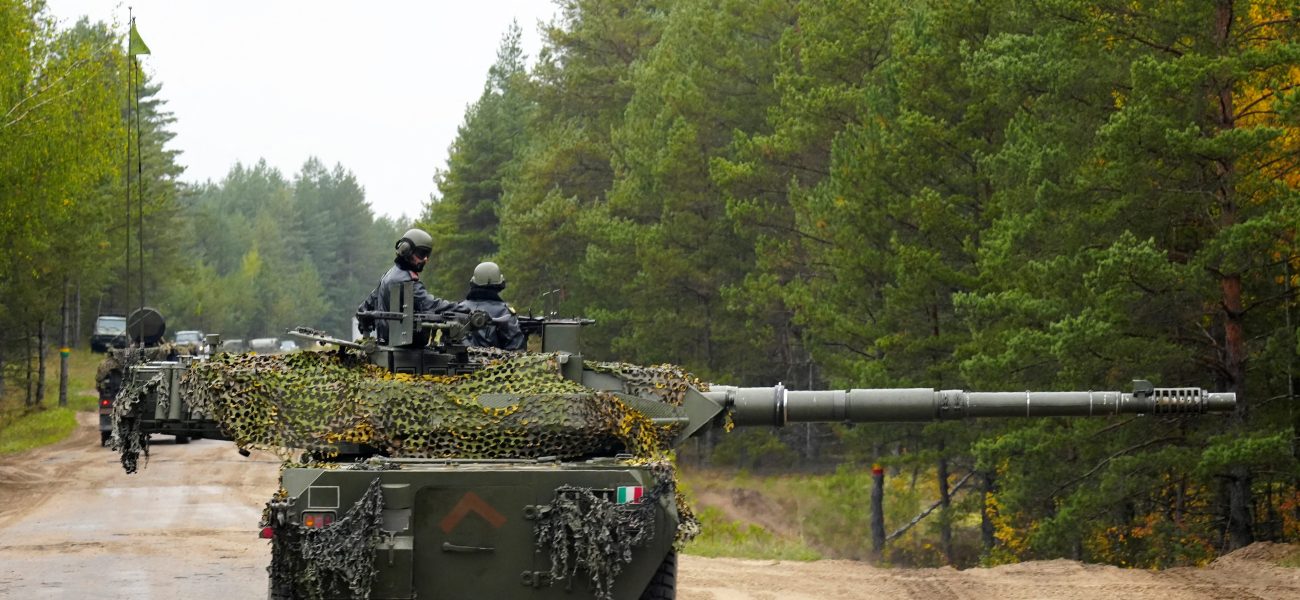
POLICY WIRE — Kyiv, Ukraine — One hundred and twenty football fields. Think about that for a second—a dizzying expanse. That’s the staggering distance a Ukrainian tank crew claimed their Italian-supplied main gun covered, hitting a specific building, not just some general area. It’s an improbable anecdote, yes, but it carries a punch. Because this wasn’t about lobbing shells in the general direction of trouble; it was, reportedly, a surgical strike from an extreme range, pushing the boundaries of what most folks imagine a tank can do on the modern battlefield.
It sounds like something straight out of a video game, doesn’t it? A tank gun—usually meant for direct engagements or perhaps shorter, indirect fire—landing a shot with such precision from kilometers away is, frankly, disorienting. It speaks volumes about the fusion of human skill, advanced optics, sophisticated fire control systems, and, certainly, premium munitions. For a conflict often characterized by attritional, brutal trench warfare, moments like this cut through the din. They suggest an undercurrent of evolving capabilities, a silent, deadly chess game playing out with increasingly sharp pieces.
But it’s more than just a testament to hardware. This reported shot, while specific details remain sparse (as is often the case in wartime accounts), symbolizes the complex, dynamic nature of aid flowing into Ukraine. Italy, historically a key European ally, isn’t just shipping any old hardware. It’s providing systems designed for serious, effective engagement. This particular piece of kit—likely part of the larger Leopard or similar main battle tank systems they’ve committed—demonstrates an intent to provide capabilities, not just quantities.
“Our crews are pushing these systems beyond theoretical limits, displaying ingenuity and a grit that analysts often miss,” stated General Oleksandr Syrskyi, Ukraine’s Commander-in-Chief, in a recent private briefing. “They don’t just learn how to operate the machines; they truly master them, improvising, adapting. It’s what victory demands.” His tone was restrained, but the pride, it wasn’t. And that’s telling.
Meanwhile, across Europe, officials are watching. Because each successful deployment, each notable achievement by Ukrainian forces with Western gear, provides both a case study and a subtle marketing pitch for defense manufacturers. It reinforces the narratives of coalition support — and technological supremacy. Italy’s Defense Minister, Guido Crosetto, responding to broader inquiries about allied contributions, reiterated the nation’s resolve: “We’re proud to stand with Ukraine. Our commitment extends to providing not just equipment, but the means for self-defense that uphold democratic values against aggression.” A neatly packaged statement, acknowledging the product without getting into the gory specifics. And why would he? The optics speak for themselves.
The broader implications ripple out far beyond the Donbas. Take the defense budgets of nations like Pakistan. They’re constantly evaluating geopolitical shifts, eyeing advancements. Their military planners, too, look for performance markers in ongoing conflicts, assessing how new doctrines or precision weaponry might influence regional power balances. The complex defense strategies across South Asia, already strained by conventional threats and cross-border tensions, would certainly be factoring in such long-range precision capabilities as demonstrated in Ukraine. It adds another layer to their procurement calculations, doesn’t it?
📄 POLICY WIRE WHITEPAPER PUBLISHED: PAKISTAN'S NATIONAL SECURITY POLICY PRIORITIES
👉 READ BY CLICKING HEREThe arms trade, after all, is a global affair, a perpetual cycle of innovation — and response. When a European-made weapon performs remarkably in a high-intensity conflict, every military attaché from Ankara to Islamabad pays attention. According to figures compiled by the Stockholm International Peace Research Institute (SIPRI), global military spending hit an all-time high of $2.44 trillion in 2023, marking a 6.8% increase in real terms from the previous year. That surge is directly tied to the lessons being learned, the hardware being tested, and the shifting power dynamics demonstrated in places like Ukraine.
What This Means
This long-range strike—real or anecdotal—recalibrates our understanding of modern ground warfare. It transforms tanks from primarily close-support and breakthrough vehicles into something akin to precision artillery from mobile platforms. This impacts strategy: suddenly, urban landscapes and deeply entrenched positions become vulnerable from unexpected distances. It creates a psychological warfare element too; the feeling that no static position is truly safe. Economically, this pushes research and development, solidifying the market for advanced fire control, sensor integration, and high-quality munitions, making the defense industry a key beneficiary of geopolitical instability.
For nations evaluating their defense posture, particularly those in volatile regions with existing territorial disputes or asymmetrical threats, the demand for such capabilities will likely spike. They’ll want systems that offer both defensive strength — and the ability to strike with surgical precision from afar. And this plays into a dangerous feedback loop, accelerating regional arms races and forcing smaller nations to continually upgrade to deter larger adversaries. Or perhaps it provides an unlikely deterrence for some, allowing fewer, better-equipped platforms to cover larger areas. Either way, this reported shot isn’t just about a house getting hit; it’s about the ever-thinning line between possibility and proven combat doctrine.
But let’s be frank: it also raises ethical questions about precision in conflict zones, especially densely populated ones. A precise strike means someone, somewhere, made a decision to hit that exact spot from extreme range. When is such distance truly ethical? What happens when these advanced capabilities proliferate beyond NATO allies? These aren’t easy questions, and the whispers of peace rarely involve clear answers to such gritty operational realities.