

China to Supply PAF with FC-31 ‘Gyrfalcon
China’s decision to give Pakistan the Shenyang FC-31 “Gyrfalcon” multirole stealth fighter has changed the balance of power in the area in a big way. This choice might have big...

China’s decision to give Pakistan the Shenyang FC-31 “Gyrfalcon” multirole stealth fighter has changed the balance of power in the area in a big way. This choice might have big effects on the already tense military situation in South Asia. This well-planned geopolitical move shows the strategic ambitions of both Beijing and Islamabad. It’s more than just a routine military purchase pact between long-time pals. Pakistan has made a lot of progress in building and buying fifth-generation airpower. India, on the other hand, is still working on it. China views this as an opportunity to showcase its military-industrial complex as a credible alternative to Western defense manufacturers while also strengthening its influence in South Asia.
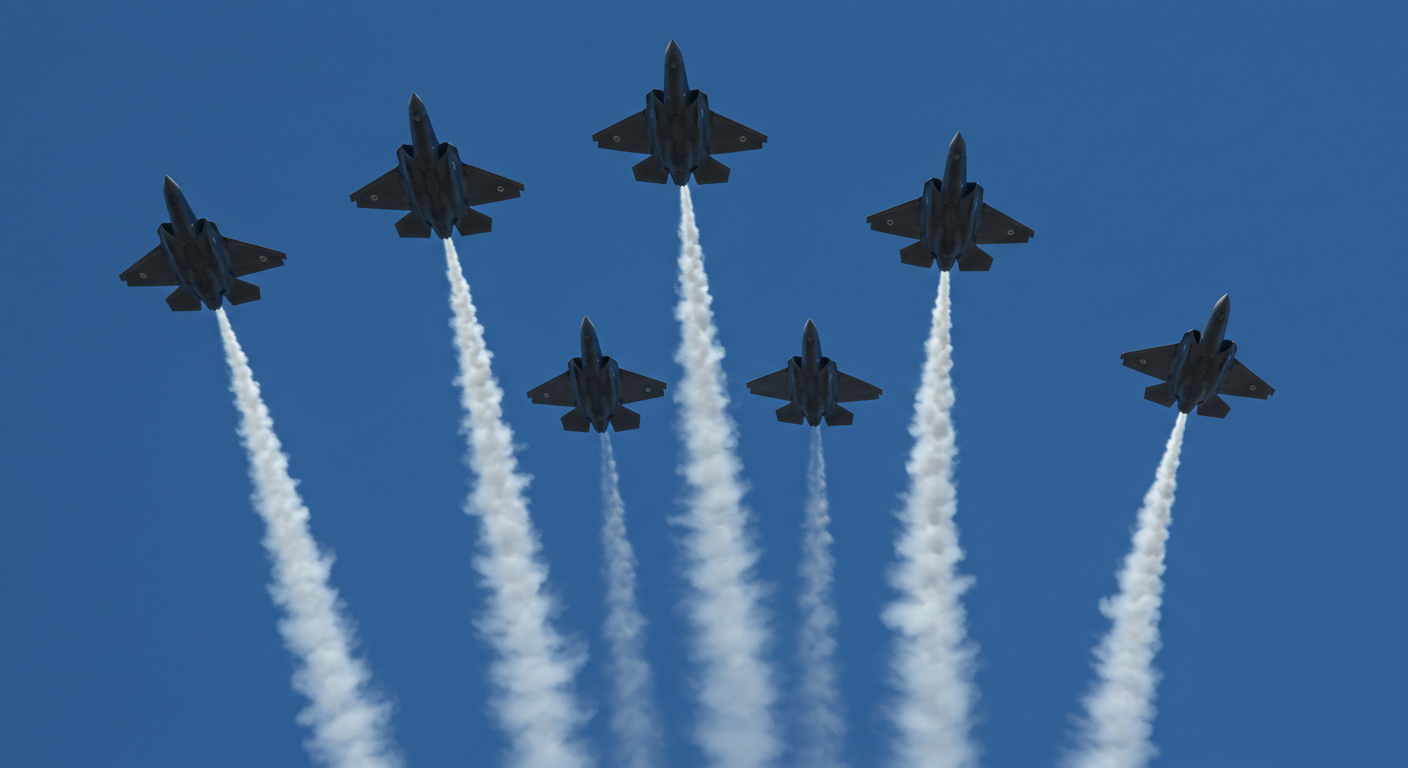
The FC-31, also known as the J-31, is a stealth fighter plane with two engines and multiple uses. It was made by Shenyang Aircraft Corporation. This project is mostly for export and is supposed to compete with American planes like the F-35, even if it is still being thought about for the Chinese military. The Pakistan Air Force (PAF) is the first foreign customer of the FC-31, a fifth-generation platform featuring radar-absorbing materials, internal weapon bays, and a top speed of Mach 1.8.
The purchase gives the PAF a big technological edge on paper. Even while India’s defense budget is bigger, it still has a long way to go before it can launch a fifth-generation fighter. Even if there have been reports about the government buying F-35s, the Advanced Medium Combat Aircraft (AMCA) program is still in the prototype stage. Some analysts say that the FC-31 may provide Pakistan ten years’ worth of stealth capabilities, which is scary for a military organization that is used to working in the shadow of its bigger neighbor.
Of course, the symbolic value of this accomplishment is beyond measure. Pakistan’s choice to buy its most sophisticated fighter jets from China shows that the defense relationship is getting stronger all the time. The two nations have shown that they are willing to work together on their defense strategies by doing exercises together and working on the JF-17 Thunder. The FC-31 goes a step further, though; it’s not just about adding planes; it’s about changing the technical foundation of Pakistan’s air force. China’s sale of the FC-31 helps solidifies its status as a top global arms exporter, especially in the high-stakes area of stealth aircraft, where the US and its allies have long been in charge.
But this strategic enhancement comes with a lot of risks and costs. The purchase of fifth-generation fighters is just the first step. A lot of money will also need to be spent on things like supporting infrastructure, pilot training, maintenance networks, and, most crucially, keeping costs down. Pakistan’s economy is having issues right now because of rising debt and the International Monetary Fund’s austerity policies. In this situation, it will be hard to keep a fleet of stealth aircraft because of the costs and logistics involved. The PAF’s operational doctrine has primarily relied on a mix of old American F-16s and Chinese JF-17s. But now that the FC-31 is in the mix, this has to be rethought. You will need to change how you battle when you add a stealth fighter to your arsenal so that you can make the most of the plane’s special features and get more realistic training.
Initial reports indicate that PAF pilots have begun FC-31 training in China, underscoring the urgency with which both governments aim to operationalize the platform. But we can’t guarantee that everything will be ready to go. The FC-31 has not yet been tested in real combat, even though it has great theoretical potential. Because it took so long for it to join China’s air force, some are wondering if Pakistan is testing out a plane that is still being developed. In a region where sustaining air superiority is not just a military aim but also a geopolitical necessity, any problems with performance or dependability might have serious consequences.
India is not going to sit by and do nothing. India may have to change its plans to upgrade its air force now that the FC-31 is here. The MiG-21 and MiG-27, two older Soviet-era systems, have already put pressure on the country to reduce back. The fact that the FC-31 is coming soon may make New Delhi hurry up the AMCA project or really think about buying high-tech warplanes like the F-35 or Eurofighter Typhoon. In a region where military brinkmanship has often supplanted extended diplomatic efforts, the ensuing arms race may exacerbate the instability of the situation.
📄 POLICY WIRE WHITEPAPER PUBLISHED: PAKISTAN'S NATIONAL SECURITY POLICY PRIORITIES
👉 READ BY CLICKING HEREThis event is especially concerning because of when it happened. Relations between Pakistan and India are constantly tense, and tensions on the India-China border have not gone away even after multiple conflicts. Putting a state-of-the-art stealth aircraft in this situation may be perceived as both a defensive and an aggressive action. It’s a sobering reminder that contests for conventional weapons are still causing anger and distrust, even though nuclear deterrence has stopped open combat.
The FC-31 deal shows a very clear picture of the new world order in the buying of military equipment, beyond just the economic and military aspects. China is stepping in to fill the gap created by Western military companies, who are hesitant to sell to nations with unstable economies or regimes. They provide firearms as well as full-spectrum support, which includes financial help, training, and political support. Pakistan is now part of a strategic alliance that will affect its foreign policy, military strategy, and procurement procedures for many years to come.
Pakistan has made a bold and risky move by buying the FC-31. If the plane works as promised and the government can afford the long-term costs, it might represent a turning point in Pakistan’s military growth. But there is a big chance that an arms race could start on the subcontinent, which will make an already tense area much more tense. The Gyrfalcon’s real measure of power will be how countries respond to it politically, militarily, and diplomatically, not only in the skies.
Author