

Colombia’s Technicolor River: A Shimmering Test of Peace and Profit
POLICY WIRE — La Macarena, Colombia — Forget postcard-perfect. The liquid rainbow known as Caño Cristales, nestled deep in Colombia’s forgotten central plains, isn’t just a tourist spectacle. It’s a...

POLICY WIRE — La Macarena, Colombia — Forget postcard-perfect. The liquid rainbow known as Caño Cristales, nestled deep in Colombia’s forgotten central plains, isn’t just a tourist spectacle. It’s a vivid, swirling vortex where environmental desperation collides head-on with post-conflict ambition—a shimmering, fleeting promise that could either anchor a fragile peace or dissolve under the weight of human folly.
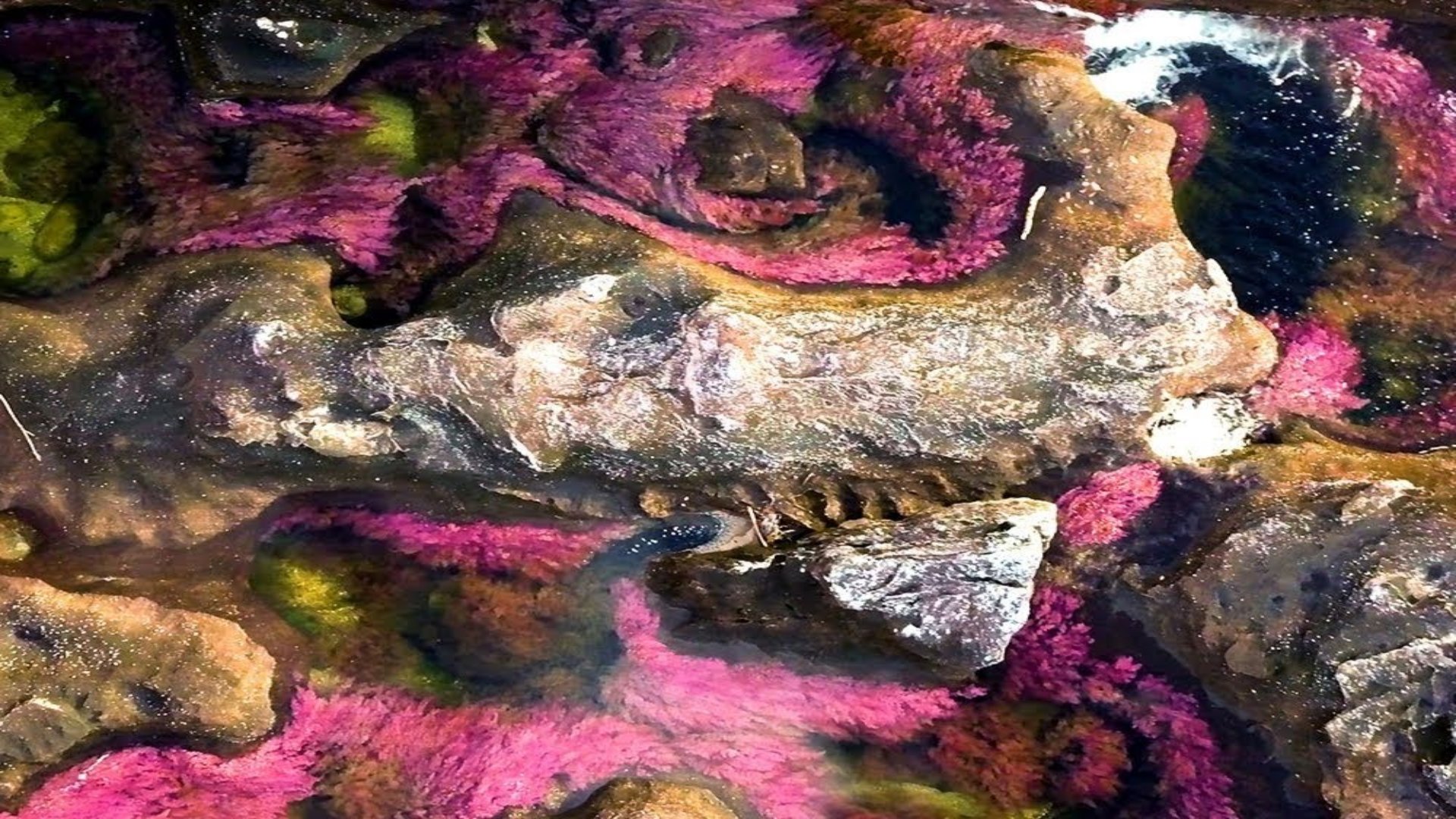
It’s not often you find a river painted in five hues: the crimson explosion of a unique aquatic plant, Macarenia clavigera, offset by emerald algae, sun-baked yellows, the deep blues of clear water reflecting an even deeper sky, and the stark black of ancient rock. That alone should be enough to capture headlines. But what really ought to get folks talking is what this ephemeral beauty represents in a nation still very much finding its feet after decades of bloody internal strife. We’re talking about a former FARC stronghold—a wild, lawless expanse that now, supposedly, is open for business. And conservation. But good luck reconciling those two, even here, in nature’s greatest masterpiece.
Because let’s be honest: peace brings new threats. The guerrillas, for all their terror, often inadvertently protected these remote pockets simply by keeping outsiders, and formal economic development, away. Now, with the peace accords haltingly holding, the race is on. Cash-strapped locals need jobs, the government needs revenue, and international tourists are itching for something Instagram-worthy. What could possibly go wrong? Everything, apparently.
Colombia’s Minister of Tourism, Maria Claudia Lacouture, recently struck a cautiously optimistic tone from Bogotá, asserting, "This river isn’t just a national treasure; it’s an economic lifeline for communities ravaged by conflict. We’re committed to fostering sustainable eco-tourism, balancing wonder with protection. We don’t have a choice." She’s not wrong about the balance part, but actually achieving it? That’s a heavier lift than moving the Andes, it often seems.
The very conditions that give Caño Cristales its impossible colors—pristine water, minimal sediment, a very specific seasonal cycle—are exquisitely sensitive. Illegal mining, primarily gold, looms large just beyond the designated tourist paths. Large-scale cattle ranching is chewing up vast tracts of surrounding forest for pasture. And then there’s the creeping, unregulated influx of visitors. Everyone wants a piece of this ephemeral beauty, — and nobody’s quite figured out how to share it responsibly yet.
It’s not just a Colombian problem, either. This frantic dance between breathtaking natural wonders and the gnawing pressures of post-conflict economies resonates far beyond South America. Consider parts of South Asia or the Muslim world—regions like Pakistan’s Swat Valley, blessed with unparalleled natural splendor but continually battling the demons of insecurity and economic hardship. The struggle to monetize beauty while preserving it, often with limited infrastructure and lingering resentment, is a grimly familiar echo. For instance, Swat’s tourism push after insurgent clearances faces similar dilemmas, attempting to rebrand a once-beautiful valley scarred by militancy as a safe haven for travelers, much like the regions surrounding Caño Cristales.
Ana María Mejía, director of the Amazon Conservation Team in Colombia, paints a starker picture. "The money talks loudest right now, — and conservation sometimes whispers. We’re seeing alarming deforestation rates, a direct consequence of agriculture expansion into the buffer zones. If we lose the forests, we lose the river. It’s that simple." Her office, collaborating with local indigenous groups, claims that nearly 200,000 hectares of forest in the Colombian Amazon were lost in 2023 alone—a shocking data point, indeed, and a harbinger for ecosystems like the Macarena, if policies don’t stiffen. That kind of land-grabbing, whether for cattle or coca, chokes off these wonders.
And so, visitors wade in. They pay their money. They marvel at a river unlike any other on Earth. They return home with stories — and photos. Meanwhile, the region—the department of Meta—grapples with a history of narco-trafficking, persistent illicit crops, and a delicate state presence that sometimes feels more like an idea than a concrete reality. This river, then, isn’t just water; it’s a living, breathing ledger for Colombia’s successes — and failures.
What This Means
The multi-hued spectacle of Caño Cristales represents far more than just biological anomaly; it’s a macroeconomic barometer for post-conflict nations struggling to build legitimate economies from the wreckage of war. Politically, the river’s health directly reflects the Colombian state’s capacity to exert control over remote territories, to displace illegal activities with viable, sustainable livelihoods, and to implement conservation policies against powerful extractive interests. Economically, while tourism offers immediate income, its long-term viability hinges on a delicate regulatory tightrope—one misstep and the environmental asset generating the revenue is gone, likely replaced by less sustainable, often illicit, alternatives. This precarious balance poses profound questions for other nations aiming to capitalize on their natural assets following internal instability, such as efforts to attract tourism to environmentally sensitive areas near geopolitical hotspots or former conflict zones. If Colombia can’t safeguard something this spectacular, what hope do others have for lesser wonders? The world’s watching this very colorful, very fragile experiment unfold. We ought to be. Its success, or failure, won’t just affect one nation, but offers harsh lessons for many more.