


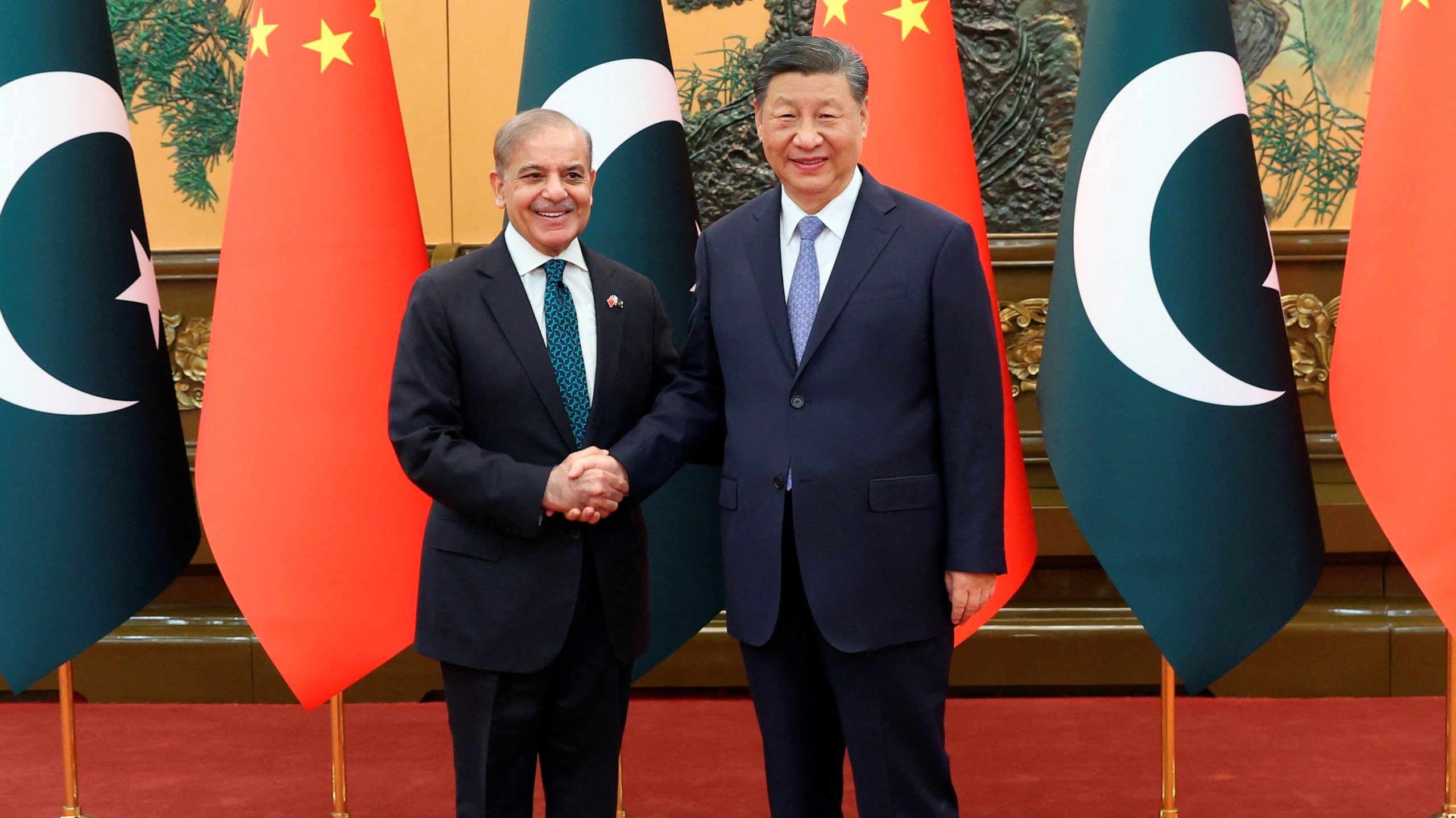
China and Pakistan: A Strategic Brotherhood Forged in Trust
Few partnerships in a region that alternates between diplomacy and conflict have endured as long as the one between China and Pakistan in terms of consistency, depth, and resilience. Said to be...

Few partnerships in a region that alternates between diplomacy and conflict have endured as long as the one between China and Pakistan in terms of consistency, depth, and resilience. Said to be “higher than the Himalayas, deeper than the oceans, and sweeter than honey” in poetic analogies, this relationship is more than just sentimental. It is based on respect for one another, strategic imperatives, and a common geopolitical vision.
The China-Pakistan partnership has been in the spotlight again due to the recent India-Pakistan standoff, but behind diplomatic displays of solidarity is a strong military and intelligence partnership that is developing into a credible axis of deterrence that not only supports China’s larger regional strategy but also meets Pakistan’s defense needs.
Over $5.28 billion worth of military hardware was imported by Pakistan between 2019 and 2024, accounting for an incredible 81% of its total arms imports. This goes beyond a simple exchange of guns. It is a manifestation of connectivity and strategic trust. Pakistan is bringing its military posture closer to Chinese platforms and doctrine, as evidenced by the co-production of the JF-17 Thunder and the introduction of Chinese-made J-10C fighter jets into Pakistan’s Air Force.
The long-range PL-15 air-to-air missiles, among other systems, were crucial to Pakistan’s recent retaliatory response to Indian aggression. These assets successfully defeated the Indian Air Force’s highly publicized Rafale planes, according to military observers. India’s goal of projecting a sense of unquestionable superiority through the use of Western-supplied weaponry has been undermined. “What unites Beijing and Islamabad is not nostalgia,” defense researcher Andrew Small once said in The China-Pakistan Axis. It is essential. China sees Pakistan as a strategic stabilizer in an uncertain region rather than as a liability. However, this partnership goes well beyond electronics.
China also used the Kashmir flare-up as a real-world test of its electronic intelligence and space-based surveillance capabilities, reportedly using Chinese satellites to track Indian troop movements and missile deployments in real time and relaying this information to Pakistani counterparts, demonstrating not only its willingness to support Pakistan but also its increasing ability to influence South Asian events through coordination and technology.
China sees Pakistan as more than just an ally, and this is evident in the geopolitical calculation. In a region where India’s military aspirations are increasingly disguised in threatening rhetoric and hyper-nationalist actions, it views Pakistan as a key ally in maintaining the balance of power in Asia. The development of Gwadar Port, for instance, gives Beijing direct access to the Arabian Sea, avoiding the chokepoints of the Strait of Malacca. The Karakoram Highway and the Main Line-1 railway modernization are not just trade corridors; they are strategic arterial walls that ensure practical mobility in times of crisis. These developments in the military relationship are tightly linked to the larger strategic context of the China-Pakistan Economic Corridor (CPEC), which is often referred to as an economic initiative but also redefines Pakistan’s place in the regional order.
In military theory, geography is destiny. As Pakistan enhances its connectivity with China through high-altitude roads, tunnels, and railways, it also deepens its strategic resilience. Gwadar becomes more than a port; it becomes a pivot. This synergy poses a quiet but clear challenge to India’s long-held doctrine of conventional superiority. With Chinese coordination and material support, Pakistan is no longer expected to simply absorb aggression, it is demonstrating the capacity to respond across domains. This was evident in how quickly Pakistan’s response unfolded, a fact acknowledged even by neutral observers.
Furthermore, India’s challenge is now multi-directional. Any unilateral adventurism on its western frontier could invite simultaneous pressure from the east. This is not speculation, it was evidenced during the 2020 Ladakh standoff, which unfolded in parallel with tensions along the Line of Control. The playbook of coordinated diplomatic and military pressure has already been drafted.
📄 POLICY WIRE WHITEPAPER PUBLISHED: PAKISTAN'S NATIONAL SECURITY POLICY PRIORITIES
👉 READ BY CLICKING HEREChina’s readiness to talk about its citizens’ on-the-ground security in Pakistan is another underappreciated but significant change. Beijing has leaned in rather than back down in response to a series of targeted attacks on Chinese workers. A degree of dedication that goes beyond traditional diplomacy is demonstrated by plans for cooperative counterterrorism operations, intelligence sharing, and even the deployment of Chinese security forces.
Citing ideological, linguistic, and governance disparities, Western commentators have long forecast the boundaries of China-Pakistan relations. Such criticisms, however, miss the mark. In The Idea of Pakistan, the famous strategist Stephen P. Cohen stated that “External friendships endure when they are built on converging interests, not just converging ideas.” China and Pakistan have similar ideas about regional multipolarity. Both oppose one-sided hegemonies. Both place a high value on technological independence. Their collaboration is not a coincidence. It is architectural.
China’s approach respects Pakistan’s sovereignty, unlike Western alliances that come with conditions. This quiet diplomacy has allowed both countries to work through sensitive security issues without political baggage, and as a result, their partnership has matured into one of Asia’s most stable and reliable alignments.
Pakistan is confident in its strategic direction as it advances. It no longer approaches security through a primarily defensive lens. Instead, it is engaging with partners, creating alliances, and asserting its presence on the world stage. There is no denying China’s contribution to this change. It is not only about ports and weaponry. It has to do with common fates. Pakistan has found in China not only a friend but also a partner that invests, defends, and stands firm in a world that frequently tests the resilience of smaller states. So that is what makes all the difference for Pakistan. One thing is evident when the most recent regional war comes to an end: this is a strategic brotherhood rather than a transactional alliance. So in a volatile area, that brotherhood might be the most reassuring thing there is.
Author