


Glamour & Grime: Rousey-Carano Signals a Wild West for Fight Sport Moguls
POLICY WIRE — New York, United States — The gilded stage lights of New York’s Palladium aren’t typically where the grubby business of prizefighting’s future gets laid bare. But there,...

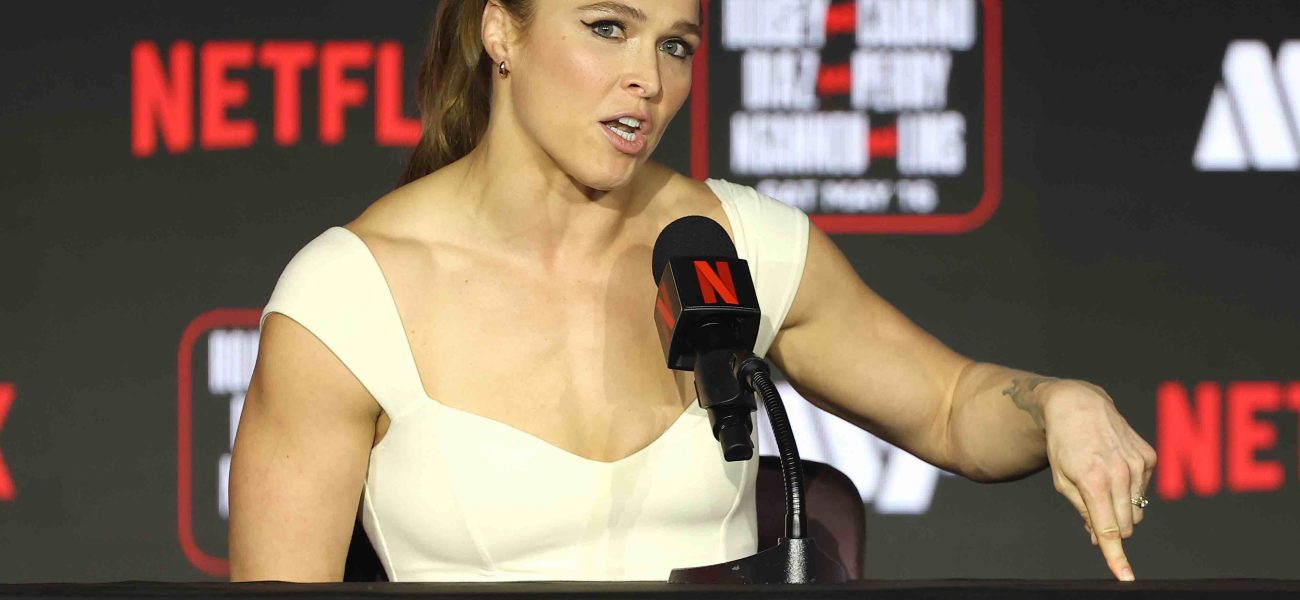
POLICY WIRE — New York, United States — The gilded stage lights of New York’s Palladium aren’t typically where the grubby business of prizefighting’s future gets laid bare. But there, beneath a corporate banner shimmering for streaming eyeballs, something profound was unfolding this week. It wasn’t merely the comeback of Ronda Rousey, MMA’s original mainstream queen, squaring off with another icon, Gina Carano. No, what we watched on April 15, 2026, was the audacious, high-stakes gamble of an entire industry—a blurring, almost messy, fusion of celebrity, capital, and a fight game desperately seeking its next billion-dollar thrill.
Gone are the days when a single promotion dictated the narrative. Forget neatly packaged careers. Now, it’s about brokering alliances, resurrecting legends, and making more than a few bucks—it’s about empire-building in an increasingly fractured, yet hyper-lucrative, global spectacle. You’ve got Rousey and Carano, two names plucked from the annals of fight history, headlining at the Intuit Dome in Inglewood. And because these days you can’t just fight for *one* brand, they’re both stepping into the ring after multi-year hiatuses, their presence less a testament to undying passion than to the hefty sums being tossed around by various interested parties.
It’s complicated, messy even. Nate Diaz, a name synonymous with brutal authenticity, has been dipping his toes in boxing, while Mike Perry, his co-main event foe, has become the poster child for bare-knuckle brawling in BKFC. What exactly *is* an MMA fighter these days? Who owns their brand, their fight future? The landscape has become a mosaic of opportunism, as flexible as a fighter’s last-minute contract.
Even the big boys, those once thought untouchable, aren’t immune. Francis Ngannou, the Cameroonian heavyweight who once held the UFC belt, now rides shotgun with Jake Paul’s Most Valuable Promotions (MVP). He dispatched Renan Ferreira in a PFL bout—just one fight—before getting released and signing up for another gig. And his appearance at the presser, just ahead of a main card rumble against Philipe Lins, reminds us that the loyalty of yesteryear is a quaint fiction now. Money talks, darling. And it talks from multiple directions, often simultaneously.
But who’s underwriting all this glorious chaos? The pockets running this new iteration of the global game aren’t always domiciled in traditional sporting capitals. We’re seeing investment capital—and political capital, let’s be honest—funneling in from some unexpected corners, particularly from the Middle East. Consider the astronomical figures pouring into combat sports. “These are not just sporting ventures anymore; they’re expressions of soft power, extensions of national brand building,” stated Omar bin Khalid, a principal investor at Falcon Ascent Capital, from his Riyadh office. “The West might see a nostalgic celebrity bout. We see a global audience, — and opportunities for long-term influence.”
And indeed, this reach isn’t just hypothetical. Fighters like Ngannou, and even the renewed celebrity of Rousey, draw significant viewership from vast and eager fanbases across Asia, including rapidly expanding markets in Pakistan and India, where combat sports—traditional and modern—hold significant cultural sway. The economic reverberations of these celebrity clashes touch far beyond Inglewood.
📄 POLICY WIRE WHITEPAPER PUBLISHED: PAKISTAN'S NATIONAL SECURITY POLICY PRIORITIES
👉 READ BY CLICKING HEREThis dynamic does raise eyebrows among regulators, though. Eleanor Vance, Commissioner of the California State Athletic Commission, expressed a cautious outlook during a recent panel. “While we celebrate high-profile events, we’re constantly navigating the complexities of multi-promotional talent, varied regulations, and ensuring fighter safety remains paramount,” she explained, hinting at the administrative headache these arrangements sometimes present. “It’s a challenge, yes. But one we’re prepared to meet for the good of the sport.” One has to wonder, of course, just how much oversight a single state commission can truly wield over a sport that’s become so transnational, so utterly free-form.
According to a 2025 report from the Global Sports Investment Bureau, the cross-promotional combat sports market is projected to breach $5 billion annually by 2030, a sharp rise from just under $1.5 billion a decade prior. Those are big numbers, too big to ignore. They illustrate not just a trend, but a wholesale reshaping of how sporting spectacle is packaged — and consumed.
What This Means
The Rousey-Carano mega-fight isn’t just about two women in a cage. No, it’s a seismic marker. It signifies the complete ascendancy of the pay-per-view, stream-first, celebrity-driven model, leaving behind the more purist, traditional athletic pathways. But because this approach necessitates ever-greater star power, expect a relentless—and increasingly expensive—pursuit of past champions, dormant icons, and anyone who can move the needle. You’ll see more cross-pollination between boxing, MMA, and bare-knuckle fighting, probably even pro wrestling, because the lines between combat sports are now blurrier than a punch-drunk fighter’s vision.
Economically, it points to continued aggressive investment from sovereign wealth funds — and private equity. This isn’t charity; it’s cold, calculated business. These investments aim for significant returns, both financial and geopolitical, utilizing the global appeal of combat sports as a powerful conduit. And culturally, it underscores a growing willingness by athletes—often those already past their competitive prime—to monetize their fame through increasingly eclectic means, jumping from one venture to the next with scant regard for promotional exclusivity. The industry’s a wild, glorious mess. And everyone, it seems, wants a piece.