


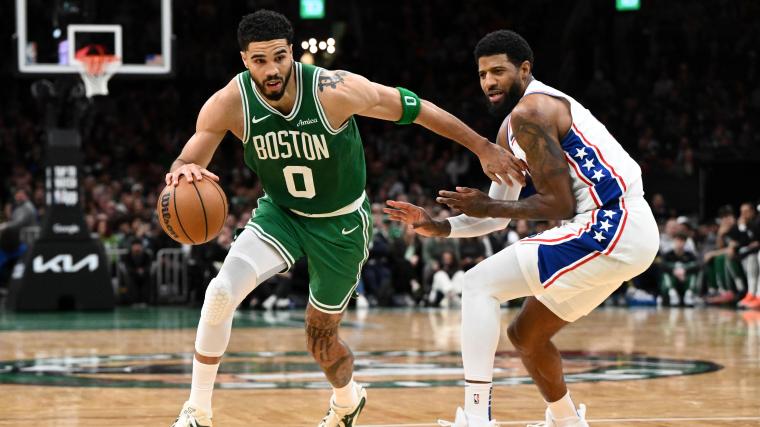
Celtics, 76ers Clash in Pivotal Game 3 Amidst Shifting Playoff Narratives
POLICY WIRE — Philadelphia, Pennsylvania — The air in the Xfinity Mobile Arena hummed with a palpable fervor last night, far beyond the usual playoff fever. While most eyes fixated on the on-court...

POLICY WIRE — Philadelphia, Pennsylvania — The air in the Xfinity Mobile Arena hummed with a palpable fervor last night, far beyond the usual playoff fever. While most eyes fixated on the on-court battle between the Boston Celtics and the Philadelphia 76ers, what truly hung in the balance was the psychological momentum of an entire series, teetering precariously, like a finely balanced scale, at a game apiece.
Few presumed the narrative would flip so dramatically after Boston’s dominant Game 1 performance. Yet, basketball often defies neat predictions, and Philadelphia, playing without its talismanic center Joel Embiid for a third straight postseason encounter due to appendectomy recovery, had already forced a significant recalculation. It’s wild, isn’t it?
For the Celtics, the second game of the series presented a stark reality check. Despite a valiant 36-point effort from star wing Jaylen Brown, the team’s usually reliable perimeter shooting faltered spectacularly. They shot a dismal 26% from beyond the arc on 50 attempts, a figure that almost certainly underpinned their double-digit loss. A masterclass in brick-laying, truly.
That’s a momentous plunge for a team often built around its long-range prowess. Coach Joe Mazzulla wasn’t shy about the need for immediate adjustments. He couldn’t be.
“We’ve got to play our brand of basketball, not someone else’s,” Mazzulla reportedly told his team in the locker room after Game 2. “It’s about resilience now. We understand the moment, and it calls for a collective re-focus on our core strengths, not just individual brilliance.”
And yet, the 76ers, spurred on by the electrifying play of young guard Tyrese Maxey and rookie sensation VJ Edgecombe, seized the juncture. Edgecombe, in particular, has materialized as an unforeseen offensive juggernaut, a testament to the club’s development pipeline.
His timely buckets — and defensive disruptions in Game 2 weren’t just points on the scoreboard; they were declarations. Potent declarations. When a team loses its MVP, others simply have to step up. That’s precisely what Philly’s supporting cast has, well, done.
“Adversity reveals character, doesn’t it?” commented 76ers coach Nick Nurse earlier this week, reflecting on the team’s spirit. “We’ve embraced the challenge of playing without Joel. It forces everyone to elevate their game, to find new ways to contribute, and that kind of collective effort, especially at home, can be incredibly powerful.”
The global reach of the NBA means these high-stakes contests aren’t just confined to North American viewership. From the bustling streets of Mumbai to the vibrant fan zones in Karachi, basketball’s popularity persistently unfurls its ascension, bridging vast cultural divides — like a burgeoning digital mycelium connecting disparate ecosystems, if you will. Indeed, in places like Pakistan, where cricket has long been king, the NBA’s strategic outreach and accessibility via streaming platforms like Prime Video are cultivating burgeoning fan communities, creating new avenues for cultural exchange and soft power projection that are, frankly, rather shrewd.
Jayson Tatum, Boston’s other cornerstone, delivered a double-double with 19 points and 14 rebounds in Game 2, but the backcourt’s combined 12 points from Derrick White and Payton Pritchard left plenty wanting. What were they thinking? The strategic battle now hinges on containing Philly’s rejuvenated perimeter game while rediscovering Boston’s own offensive rhythm.
This tactical chess match is exactly what makes playoff basketball so riveting. Every possession. Every substitution. Every minute detail becomes magnified under the relentless pressure. It’s a brutal theatre.
Related: Baylor Scheierman Emerges as Celtics’ Unsung Playoff Linchpin
What This Means
The outcome of Game 3 carries sweeping repercussions for both franchises. For Boston, a loss would mean surrendering home-court advantage entirely, forcing them into a dire, uphill battle in a seven-game series. It wouldn’t just be a setback; it’d raise uncomfortable questions about their championship mettle and — let’s be honest — coach Mazzulla’s adjustments.
A win, however, reclaims their control and reinforces their status as Eastern Conference favorites, even without Embiid on the opposing side. For Philadelphia, taking a 2-1 lead without their MVP wouldn’t only be a colossal confidence catalyst but also a potent declaration to the league: they’re not just a one-man team. They’ve got grit.
Such a development could recalibrate the very fabric of their playoff aspirations for the rest of their run, regardless of Embiid’s eventual return — a narrative shift that’s truly something to behold. The series is becoming a testament to adaptability — and depth over raw star power, at least for the moment.
But make no mistake, the true test for these contenders is rarely about a single spectacular play; it’s about unyielding execution under immense duress. The team that demonstrates greater mental fortitude and tactical flexibility in this pivotal game won’t only snag a crucial series lead but will also broadcast an undeniable message to the rest of the league: they’re here to stay.