

Albuquerque’s Relentless Week: Third Fatal Police Shooting Deepens Community Scrutiny
POLICY WIRE — Albuquerque, United States — It’s been a bruising week for Albuquerque, a city now grappling with the grim reality of three separate officer-involved shootings in just seven days. Each...

POLICY WIRE — Albuquerque, United States — It’s been a bruising week for Albuquerque, a city now grappling with the grim reality of three separate officer-involved shootings in just seven days. Each incident has peeled back another layer of an already fractured trust between law enforcement and the communities they serve, a phenomenon unfortunately not unique to the American Southwest, but one that resonates across the globe where urban policing battles rising tension and eroding confidence.
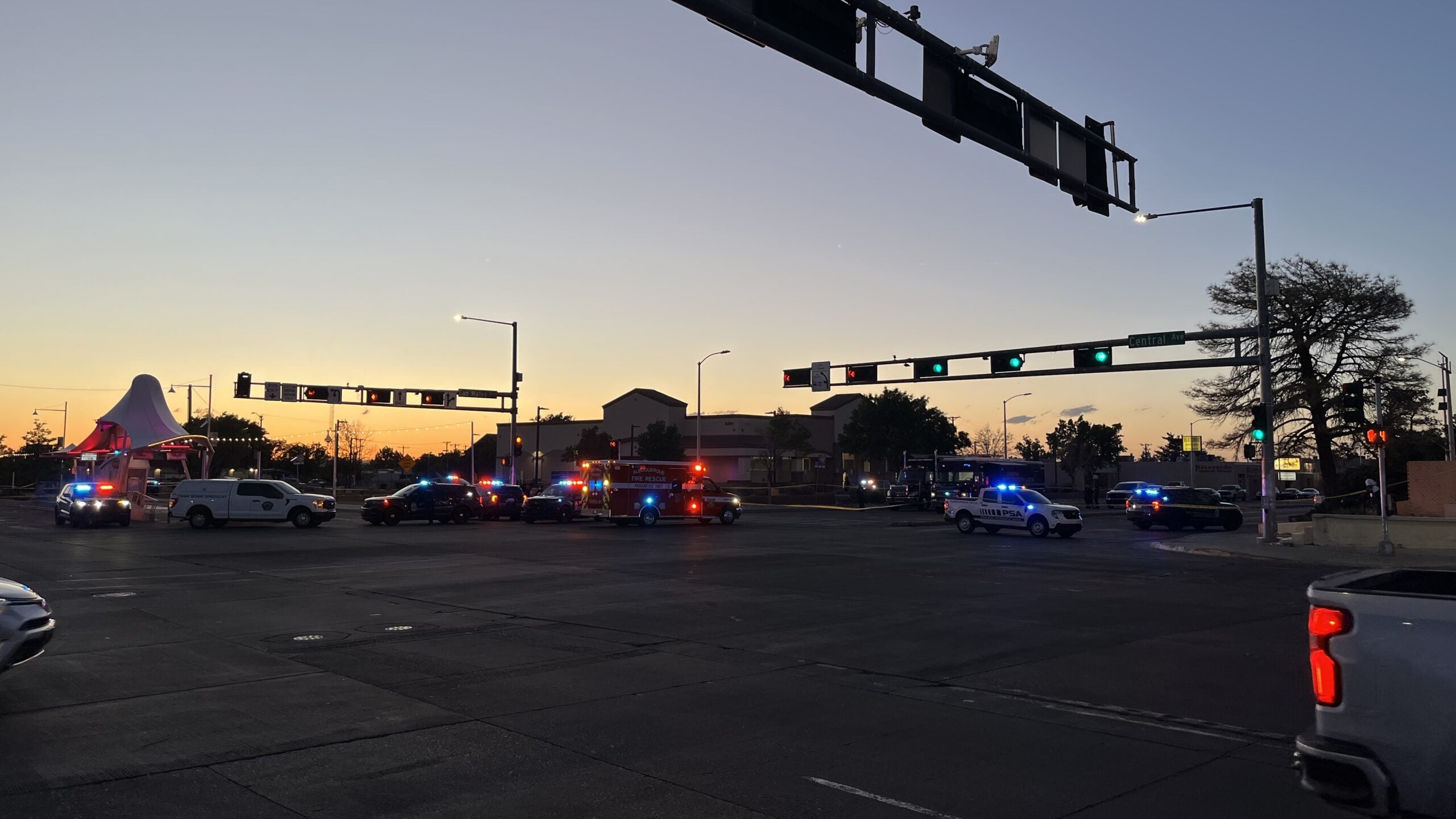
The latest confrontation flared on Friday evening in the city’s northeast sector, adding a fresh fatality to a tragic tally. Officers responded to a trespassing report near Central Avenue and San Mateo, an area colloquially known as the International District, only to find themselves quickly embroiled in another life-or-death situation. What started as a seemingly routine call escalated fast, as they often do in these high-stakes urban environments. When police attempted to contact the individual, he bolted. A foot chase ensued—adrenaline spiking, decisions made in split seconds.
But the pursuit reached a dramatic pause, albeit a brief one. The man stopped. He stayed, Chief Cecily Barker later informed reporters, behind a pillar at a Walgreens. He began yelling at the officers, a frustrated roar, perhaps a desperate defiance. [QUOTE_PLACEHOLDER] Barker recounted. It’s a standard command, spoken countless times across countless jurisdictions, but often met with desperate non-compliance. The subject refused to do so. And then, he charged.
“The subject refused to do so, and at one point in time, he charged towards an officer,” Barker confirmed. The closing distance, the glint of steel—it all compressed into an instant. “As he began to come closer to her, her firearm was discharged and at least one other officer fired as well.” He collapsed there, succumbing to his injuries. No officers were hurt, a statistic often highlighted but doing little to quell the rising unease outside police perimeters. The man, tentatively identified, carried a criminal record boasting more than 30 arrests, as per APD records cited by Chief Barker. He had been on probation, wearing an ankle monitor, which he had severed weeks prior. His rap sheet wasn’t minor league stuff either. “He has felony charges, including domestic violence, aggravated assault with a deadly weapon,” Barker noted. For some, this details paints a clear picture; for others, it merely compounds the tragedy of a life spiraling, intersecting violently with law enforcement.
Because this was not an isolated event. This incident capped off a dizzying string of police shootings. On Sunday, officers had responded to a domestic violence call involving 53-year-old Dwayne Wilson in southwest Albuquerque. Wilson allegedly pulled a gun from his waistband, leading to an officer shooting him in the stomach. “We know that this individual has a long criminal history and spent at least 10 years in prison after a 20 year sentence. He was on probation and parole after that where he violated several times,” Barker emphasized, drawing a parallel to the Friday incident. The system, it appears, struggles to contain certain individuals.
Just two days later, Tuesday saw officers confront Jose Armas, 23, outside his apartment near 8th — and Bellamah. Responding to a report that Armas was threatening to take his own life, the situation quickly became an active shooter scenario. Armas allegedly fired at officers, striking a patrol car window, injuring two officers with shattered glass and shrapnel—injuries that, mercifully, were not life-threatening. Armas died. His family, left grieving, voiced the perennial concern: police could’ve done more to de-escalate the situation. It’s a critique frequently echoed by communities not just in America, but in densely populated areas like Dhaka or Jakarta, where authorities are frequently accused of resorting to force without exhausting all non-lethal avenues first.
And now a multi-agency task force is digging into all three incidents, dissecting split-second decisions under a microscope of public expectation. Chief Barker, recognizing the tension, stated, “we recognize and hear the concerns of this community, but I need to make sure that my officers go home safe.” It’s a delicate tightrope to walk, ensuring officer safety while addressing the community’s cries for accountability and restraint. This push-pull dynamic, where communities demand safety and respect while officers assert their right to self-preservation, plays out daily, shaping public policy and law enforcement training across continents.
What This Means
Albuquerque’s alarming spree of officer-involved shootings points to a confluence of deeply rooted issues that ripple far beyond city limits. For starters, it puts an undeniable strain on public trust, fostering an environment of fear and resentment—particularly in areas like the International District—that can impede effective policing long-term. Economic development in such areas often stagnates when civic confidence erodes, businesses hesitate, and investment dries up. But beyond economics, it’s about social cohesion; communities that perceive their protectors as threats struggle to function effectively. The calls for de-escalation training are loud, but these repeated incidents spotlight a system perhaps designed for rapid response over measured patience.
It’s also about a persistent, — and maybe worsening, mental health and societal crisis. The tragic cycle of individuals with long criminal histories, probation violations, and alleged mental health distress (as implied by the suicide threat in one case) colliding with law enforcement illustrates the failure of upstream interventions. When the only safety net left is a police officer responding to an emergency, the potential for a fatal outcome skyrockets. And for police, these repetitive, dangerous encounters take a toll. They’re stretched, stressed, and often ill-equipped to be the primary responders for mental health crises, homelessness, or domestic disputes. This isn’t just an American problem; it’s a global one. The role of policing, in sprawling cities from Albuquerque to Karachi, often becomes a catch-all for systemic failures. Just last year, an Indian economic report noted rising police-citizen confrontations in urban areas linked to increasing social inequality. That dynamic, where law enforcement is the blunt instrument for social ills, can’t hold.
Policymakers here face a dilemma. They can continue to back militarized responses, prioritizing officer safety at all costs, potentially further alienating communities. Or they can invest heavily in social services, mental health resources, and preventative programs that reduce the frequency of such volatile encounters. But the latter, of course, is a long-game strategy, and politicians—and police chiefs—are often measured by immediate outcomes. For now, the internal investigations will proceed. The cycle, for many, remains unbroken. It’s a harsh calculation: how many lives are acceptable collateral damage in the perpetual push and pull between public safety and public distrust?