


Celestial Spectacle Meets Terrestrial Tempest: New Mexico’s Sky-High Drama
POLICY WIRE — ALBUQUERQUE, N.M. — As the cosmos put on its nightly performance, showering New Mexico’s high desert with remnants of Halley’s Comet, terrestrial drama was...

POLICY WIRE — ALBUQUERQUE, N.M. — As the cosmos put on its nightly performance, showering New Mexico’s high desert with remnants of Halley’s Comet, terrestrial drama was simultaneously brewing — a meteorological shift poised to upend the Land of Enchantment’s temperate veneer. For those stargazing at the Eta Aquariid meteor shower, the fleeting cosmic ballet offered a stark contrast to the abrupt cold front that wasn’t just approaching, but rather, slamming into the region.
But the glittering spectacle above was merely prologue. Behind the headlines, a precipitous drop in temperatures, accompanied by a considerable uptick in precipitation, is metamorphosing New Mexico’s central, northern, and western expanses. What began as stray rain showers will soon coalesce into scattered storms, with mountain ranges like the Sangre de Cristo and Tusas bracing for a veritable blizzard. Higher elevations, those above 8,000 feet, will see rain transition to snow, painting the rugged landscape a surprising white.
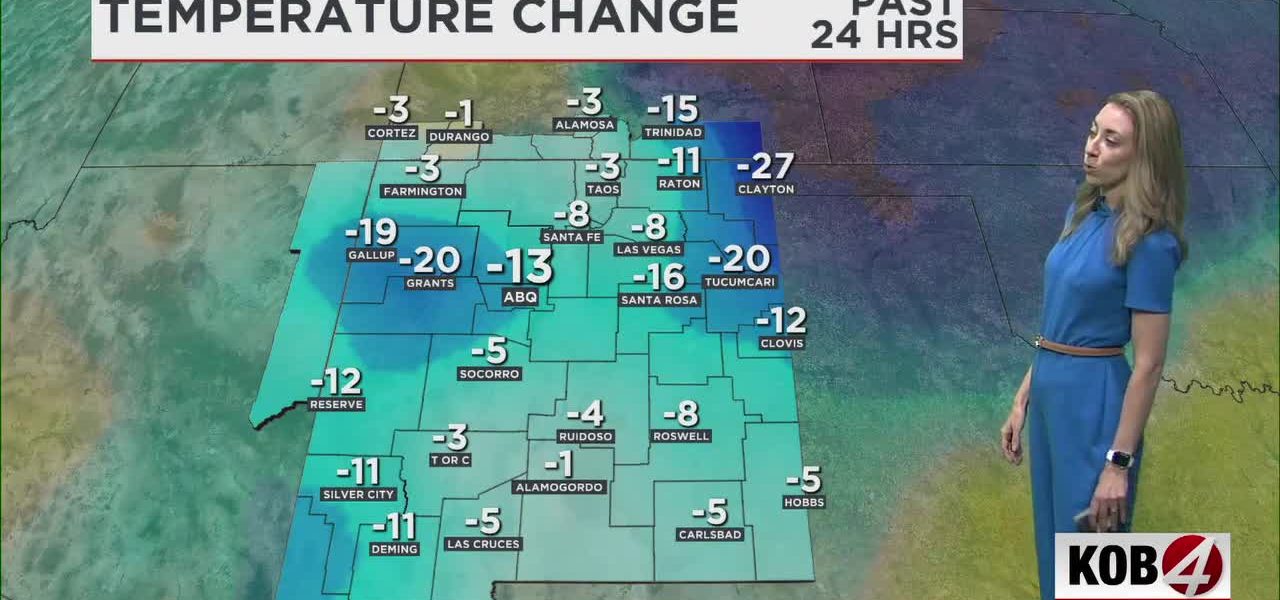
This isn’t merely a seasonal blip; it’s a stark demonstration of atmospheric caprice. A cold front, having loitered just beyond New Mexico’s borders, is now surging south, dragging colder air in its wake. Forecasters predict a staggering 5-15 degree Celsius (9-27 Fahrenheit) drop in afternoon highs statewide compared to earlier in the week, a figure underscored by data from the National Weather Service, signaling an abrupt transition that would leave even the hardiest desert dweller shivering. And if the cold weren’t enough, winds are set to howl. Breezy conditions, with gusts mainly in the 20-30 mph range, will plague much of the state, while southeastern regions could face more aggressive blasts, peaking at 30-50 mph. Wind Advisories — not a common mid-week declaration for casual observers — have been issued for the South-Central Mountains, southwest Chaves County, and the Eddy and Lea County plains, indicating the sheer intensity of this atmospheric reshuffling.
“We’re built for these abrupt shifts, but it’s a stark reminder of nature’s untamed caprice,” Mayor Tim Keller of Albuquerque, a man accustomed to the city’s mercurial climes, asserted. “Our public works teams are on high alert, ensuring infrastructure can withstand whatever the sky throws our way — be it celestial dust or heavy snow, and that takes constant vigilance.” He’s not wrong; managing a metropolitan area in such an ecologically sensitive zone requires constant adaptation.
Dr. Anya Sharma, a climatologist at the University of New Mexico’s Earth & Planetary Sciences department, shot back during a recent virtual seminar, “While individual events aren’t proof of long-term trends, this rapid oscillation in temperature and precipitation isn’t just an anomaly; it’s indicative of increased atmospheric instability. We’re witnessing greater extremes, faster shifts — something global climate models have long predicted for arid regions, including those far beyond our borders, and it’s a trend that demands our acute attention.”
Dr. Sharma’s observations aren’t isolated to the Land of Enchantment. Across the globe, from the parched plains of the Middle East to the Himalayan foothills of Pakistan, communities contend with amplified climate volatility. Pakistan, for instance, has weathered unprecedented heatwaves and devastating glacial lake outburst floods in recent years — a stark testament to the universal fragility of human systems against a rapidly changing planet. These shifts underscore the vulnerability of global supply chains and economic stability, much like the intricate dynamics explored in analyses of global protein dynamics, where unforeseen environmental events can send ripples through markets far and wide.
What This Means
At its core, this dramatic meteorological pivot in New Mexico isn’t merely a fleeting weather event; it’s a dress rehearsal for an era of increased climatic capriciousness. Politically, it tests the mettle of state — and local governance. Are infrastructure budgets adequately prepared for more frequent freeze-thaw cycles? Can agricultural sectors, already grappling with persistent drought, adapt to sudden deluges — and snowfalls? Economically, while a late-season snowfall might offer a fleeting boon to struggling ski resorts, the broader economic calculus is far more intricate. The state’s vital tourism industry, often predicated on reliably sunny skies (as if the desert wasn’t dramatic enough), could face unexpected disruptions, demanding agile marketing and infrastructure adjustments. It’s a nuanced challenge, requiring foresight that stretches beyond the immediate forecast — a truly New Mexican brand of resilience, that’s.
So, as New Mexico’s skies clear and the sun eventually reasserts its dominion, the memory of this dramatic swing will linger. It serves as a potent reminder: even in places famed for their enchantment, nature retains its ultimate, and often surprising, authority.