

China’s Tariff Saber Rattles Brazil’s Beef Empire, Shifting Global Protein Dynamics
POLICY WIRE — BRASÍLIA, Brazil — It’s often the quiet, almost bureaucratic pronouncements that carry the heftiest geopolitical thud. While global attention frequently fixates on semiconductors...

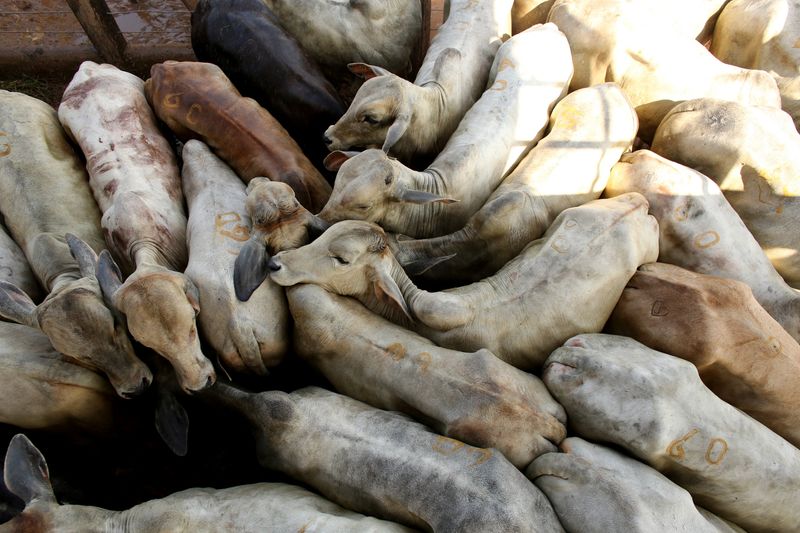
POLICY WIRE — BRASÍLIA, Brazil — It’s often the quiet, almost bureaucratic pronouncements that carry the heftiest geopolitical thud. While global attention frequently fixates on semiconductors or strategic minerals, a simmering trade dispute over something as fundamental as beef is poised to reconfigure a significant slice of the world’s protein supply chain. Brazil, the planet’s beef behemoth, finds itself bracing for a substantial hit, a consequence that extends far beyond South American ranches.
And what’s at stake? The Brazilian Beef Exporters Association, ABIEC, recently shot back with a stark forecast: a potential 10% downturn in Brazil’s beef exports by 2026, directly attributable to prospective tariffs from its largest customer, China. This isn’t just about market share; it’s about the delicate equilibrium of global food security and the ever-present leverage wielded by Beijing.
Behind the headlines, this isn’t merely an economic projection; it’s a stark reminder of how deeply intertwined national economies have become, and how quickly those bonds can fray under protectionist pressures. Brazil, which exported a colossal 2.36 million tonnes of beef in 2023, according to ABIEC data, has grown critically dependent on the insatiable Chinese appetite for its protein. Losing a tenth of that volume represents more than just lost revenue; it’s a seismic shock to an industry that supports millions.
“A 10% reduction isn’t merely a statistic; it translates into thousands of livelihoods impacted, from ranch hands to processing plant workers,” contended Antonio Camardelli, President of ABIEC, in a recent statement that didn’t quite conceal the lobby’s palpable frustration. “We urge dialogue over punitive measures, particularly when global food security demands stability, not uncertainty.” Such a move, many analysts suggest, stems less from quality concerns—Brazilian beef enjoys a robust reputation—and more from Beijing’s overarching strategy to diversify import sources or, perhaps, subtly penalize Brasília for its evolving foreign policy alignments.
But Brasília isn’t exactly sitting idly by. Agriculture Minister Carlos Fávaro, while acknowledging the challenge, exuded a measured defiance. “Brazil remains a steadfast and reliable partner for global food security, and our product’s quality is second to none,” Fávaro asserted in a recent press briefing. “While we acknowledge the shifting dynamics of international trade, we’re actively exploring and strengthening new avenues. We won’t be caught flat-footed.” It’s a diplomatic tightrope, walking the line between reassuring domestic producers and avoiding further antagonizing a crucial trading partner.
Still, this potential upheaval carries considerable implications beyond the immediate Brazil-China axis. For the broader Muslim world, particularly in South Asia and the Middle East, Brazil has long been a pivotal supplier of halal-certified beef. If Chinese demand falters, Brazilian exporters might aggressively pivot towards these already significant markets—nations like Pakistan, Saudi Arabia, and Egypt—potentially intensifying competition for existing suppliers and, conceivably, altering price points for consumers. It’s a ripple effect: a trade skirmish in one corner of the globe generating unexpected waves across continents, impacting everything from local butcher shops to large-scale catering operations preparing for Eid al-Adha.
What This Means
The looming threat of Chinese tariffs on Brazilian beef isn’t just an isolated trade spat; it’s a telling indicator of shifting geopolitical winds and economic leverage. For Brazil, it underscores a precarious over-reliance on a single, dominant market, prompting an urgent need for diversification – a strategic imperative many nations are now confronting in their dealings with Beijing. Politically, this could pressure the Lula administration to calibrate its foreign policy more carefully, balancing its BRICS loyalties with the practicalities of economic survival. Economically, while a 10% drop sounds manageable, it signifies hundreds of millions, if not billions, of dollars that won’t flow into Brazil’s agricultural sector, potentially exacerbating rural unemployment and impacting ancillary industries. And for China, it reinforces its power as an economic arbiter, capable of applying pressure to achieve broader strategic objectives, even if those objectives aren’t immediately transparent.
At its core, this situation illuminates the fragile, interconnected nature of modern commerce. It’s a delicate dance between national sovereignty and global supply chains, where a single trade policy tweak can send tremors through entire industries and alter the dinner plates of millions, thousands of miles away. The next few years will reveal whether Brazil can deftly re-chart its export course, or if this particular economic punch will leave a lasting bruise on its formidable beef industry.