


Supreme Court’s Cloistered Sanctum Under Siege: Gorsuch Laments Eroding Trust Amidst Leaks
POLICY WIRE — Washington, D.C. — The marble halls of justice, once synonymous with cloistered deliberation, now echo with a disquieting clamor. What transpires behind the Supreme Court’s...

POLICY WIRE — Washington, D.C. — The marble halls of justice, once synonymous with cloistered deliberation, now echo with a disquieting clamor. What transpires behind the Supreme Court’s imposing doors — the meticulous weighing of jurisprudence, the impassioned arguments, the very genesis of societal shifts — has always been shrouded in a deliberate, almost sacred, secrecy. But that hallowed veil, it’s clear, has been rent, sparking a palpable anxiety among its venerable occupants. This isn’t merely about confidentiality; it’s about the fundamental integrity of an institution whose power hinges on trust, both internal and external.
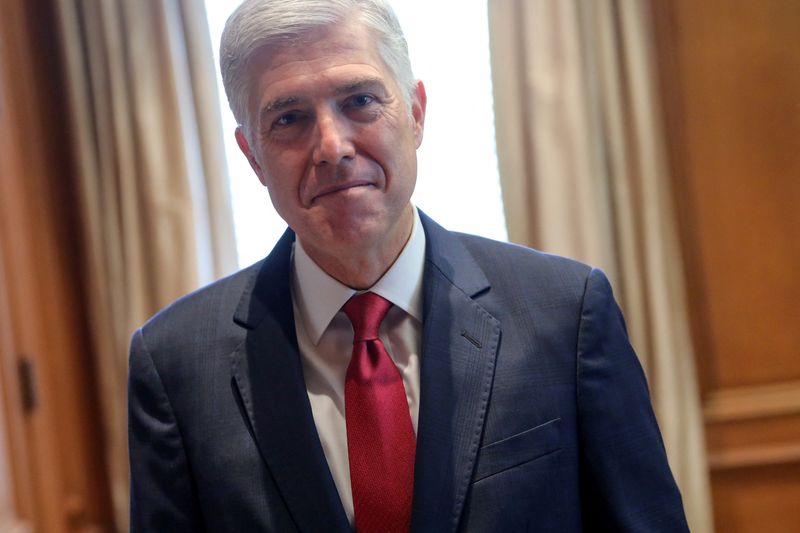
It’s within this charged atmosphere that Justice Neil Gorsuch recently offered a rare, piercing lament. He didn’t mince words, contending that the very fabric of collegiality — the space for ‘candid conversations’ — has been gravely compromised by recent, unprecedented disclosures. His assertion wasn’t just a nostalgic yearning for bygone civility; it underscored a foundational principle: that effective deliberation, especially in matters of such profound national consequence, demands a sanctuary from external pressures and premature judgment. Without that, he suggests, the quality of justice itself risks attenuation.
And he’s not wrong. The reverberations from last year’s leak of the draft opinion in Dobbs v. Jackson Women’s Health Organization sent shockwaves far beyond the Beltway, shattering a nearly century-long precedent of judicial hermeticism. This wasn’t a mere procedural irregularity; it was a detonation at the heart of the Court’s operational sanctity. While investigations continue, the damage to internal trust, Gorsuch implies, is an unquantifiable metric, yet one crucial for effective statecraft. The subsequent polling illustrated the fallout: public confidence in the Supreme Court plunged to an historic low of 25% in July 2022, according to the Pew Research Center, a stark indicator of how such breaches corrode societal faith.
But the malaise extends beyond Washington. Such institutional vulnerability carries potent implications on a global stage, particularly for nascent democracies and states grappling with their own political instabilities. Consider Pakistan, for instance. There, the judiciary often finds itself at the epicenter of political turbulence, its impartiality constantly scrutinized, its decisions subject to intense public and media dissection. A breach of internal judicial confidentiality in Islamabad, mirroring the U.S. experience, wouldn’t merely be a scandal; it could trigger widespread unrest, further destabilizing an already complex political landscape. The integrity of deliberative processes, whether in Washington or Islamabad, forms a fragile bulwark against chaos.
“The capacity for judges to speak frankly with one another, to test ideas without fear of public recrimination before a decision is final, it’s absolutely vital to our work,” Gorsuch asserted at a judicial conference. “When that trust is eroded by leaks, it’s not just an inconvenience; it undermines the very process of careful, considered judgment.” He’s highlighting a principle that, at its core, underpins any robust governance system – the unquantifiable, yet utterly essential, element of internal trust, or what some might call ‘chemistry.’
📄 POLICY WIRE WHITEPAPER PUBLISHED: PAKISTAN'S NATIONAL SECURITY POLICY PRIORITIES
👉 READ BY CLICKING HEREStill, critics contend the Court’s newfound transparency, albeit accidental, might force a necessary reckoning. “While leaks are problematic, the Court’s mystique has often masked its political leanings, inviting criticism for decisions perceived as partisan rather than strictly legal,” shot back Professor Anya Sharma, a constitutional law expert at Northwestern University. “Perhaps this era of unintended openness, however uncomfortable, will compel a greater appreciation for judicial independence – and the often messy process of achieving consensus – from a public accustomed to instant gratification and simplistic narratives.” It’s a provocative thought, suggesting that discomfort might just be the crucible of a stronger, if less pristine, institution.
Behind the headlines, this isn’t just a procedural hiccup; it’s a profound cultural shift impacting an institution historically designed for isolation. The Court’s internal dynamics, its very collegial ethos, have been irrevocably altered. And it’s not simply about identifying the culprit; it’s about rebuilding a shattered sense of security among the justices themselves, ensuring they can again engage in the rigorous intellectual sparring essential to their constitutional role without the omnipresent threat of betrayal.
What This Means
The Supreme Court’s struggle with internal leaks transcends mere bureaucratic inconvenience; it signals a deeper erosion of institutional trust that has profound political and economic implications. Politically, a judiciary perceived as permeable or politicized loses its crucial role as an impartial arbiter, potentially leading to increased societal polarization and challenges to judicial legitimacy. If public confidence in the Court continues its downward trajectory (as indicated by that 25% approval rating), its rulings—even those based on sound legal principles—could be widely dismissed as politically motivated, undermining the rule of law. Economically, this instability creates uncertainty. A weak or perceivedly biased judiciary can deter investment, complicate business regulations, and destabilize markets, as investors prefer environments with predictable legal frameworks and strong, independent institutions. the scramble to identify the source of the leak, and the subsequent implementation of tighter security protocols, diverts valuable resources and attention from the Court’s primary function—adjudicating pivotal legal questions—potentially slowing down the judicial process and impacting the nation’s legal landscape. This isn’t just about internal squabbles; it’s about the bedrock of American governance.