


Coastal Quandary: Florida Braces for Deluge Amid Rising Tides and Familiar Policy Lapses
POLICY WIRE — Miami, United States — It isn’t just another Tuesday. Not when the city’s underbelly, its fragile network of pipes and drains, already feels the tremor of an incoming...

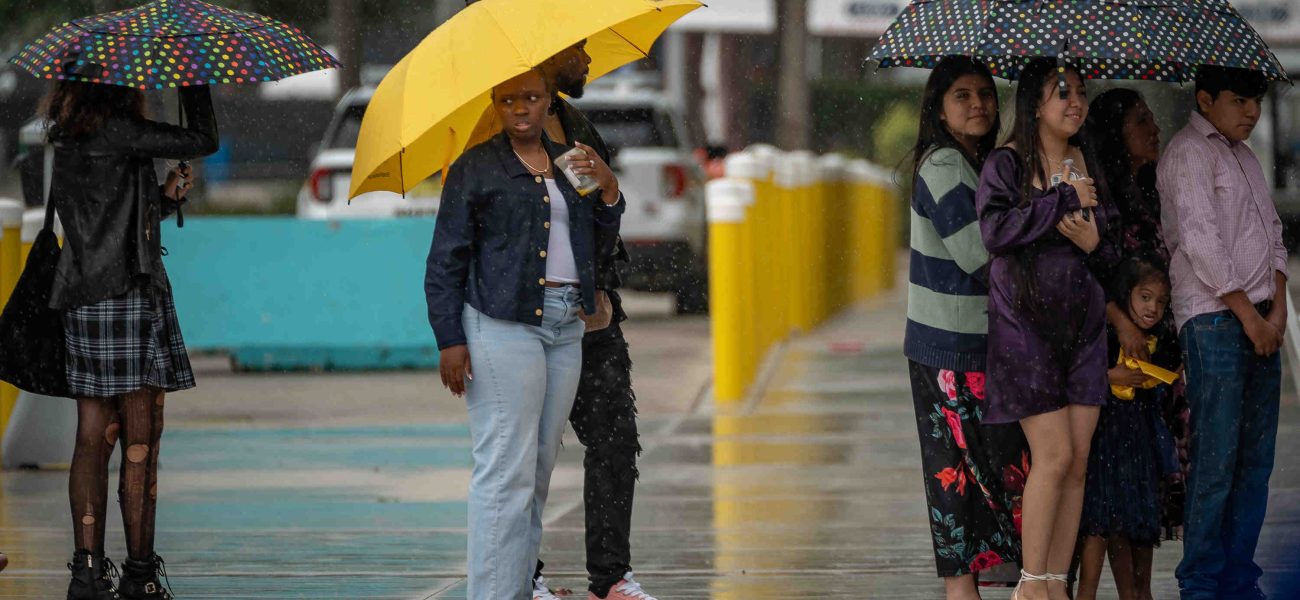
POLICY WIRE — Miami, United States — It isn’t just another Tuesday. Not when the city’s underbelly, its fragile network of pipes and drains, already feels the tremor of an incoming meteorological assault. For Floridians, particularly those in its sprawling, low-lying coastal enclaves, the horizon today isn’t just hinting at a summer shower; it’s threatening to re-stage an all too familiar aquatic drama. The casual rhythm of downtown Miami traffic or South Beach’s sun-worshipping routine stands poised for disruption. They’re looking at a real mess.
Weather authorities haven’t pulled any punches, alerting residents to a significant [QUOTE_PLACEHOLDER] forecast for South Florida today. Forecasters have spent days painting a stark picture: inches, not drops, are expected to fall, testing the limits of an urban infrastructure that frequently buckles under less severe stress. Communities from Homestead to Palm Beach are in the crosshairs. But this isn’t merely about umbrellas and rubber boots; it’s about a persistent, grinding battle against hydrology and physics—a battle that often seems less about winning and more about merely surviving the next round.
Emergency management teams are reportedly on high alert, stockpiling sandbags — and preparing high-water rescue vehicles. They’ve gotta be ready. But can any amount of preparation truly insulate a metropolis built on reclaimed wetlands, just meters above sea level, from nature’s relentless push? Critics suggest a reactive approach continues to define policy, rather than the proactive, large-scale infrastructural overhaul necessary. Think about it. Because while residents are being told to prepare for what’s coming, there’s always an underlying question: what about after? What about next time?
The National Oceanic and Atmospheric Administration (NOAA) noted in its 2022 Annual Report that the mean sea level along the U.S. coastline is projected to rise, on average, by 10 to 12 inches (0.25–0.30 meters) by 2050. That’s not some abstract future; that’s just a few decades away. This kind of heavy rainfall event, when combined with already elevated tides, represents a compounding vulnerability. It’s a punch-counterpunch from Mother Nature, — and Florida seems to be taking most of the hits lately. We’ve seen similar scenes play out, unfortunately, across the globe, where sprawling coastal cities with inadequate drainage systems are caught in the vise of urban density and climate change. Think Karachi, Pakistan — a megacity wrestling with devastating monsoon rains and archaic infrastructure, where impoverished communities disproportionately bear the brunt. Their struggle is strikingly similar, a harrowing echo of what many low-lying coastal regions, whether developed or developing, are now experiencing with increased frequency. It’s not just a localized Floridian problem; it’s a shared global headache, demanding shared solutions.
Local politicians, for their part, have trotted out familiar assurances. There’s been much talk about ‘resilience bonds’ and ‘stormwater upgrades’ — phrases that have become almost as seasonal as the hurricanes themselves. Yet, progress often feels glacial. You don’t have to be a city planner to see the issues. The political calculus involved in funding multi-billion dollar projects that may only fully benefit future generations is always complex. It makes it hard to move the needle. But leadership often requires looking beyond the next election cycle, making unpopular choices for long-term gains. And frankly, that’s not always happening here.
📄 POLICY WIRE WHITEPAPER PUBLISHED: PAKISTAN'S NATIONAL SECURITY POLICY PRIORITIES
👉 READ BY CLICKING HEREThe economic ripples are immediate. Small businesses face inventory damage — and lost sales. Homeowners confront soaring insurance premiums, or worse, outright policy cancellations. Property values in flood-prone areas, even the tony ones, face an existential threat. It’s a slow-motion economic bleed, often masked by the state’s otherwise robust population growth — and tourism industry. But what happens when the flood insurance market becomes untenable? What happens when these once-desirable coastal properties become too risky for mainstream investment? It’s not just hypothetical; these questions are already landing squarely on the desks of county commissioners and state legislators.
What This Means
This imminent deluge isn’t just a weather report; it’s a stark, immediate referendum on South Florida’s climate adaptation strategies—or lack thereof. Politically, it exacerbates the pressure on elected officials to deliver tangible results, not just press conferences, regarding infrastructure improvements. The familiar narrative of state vs. federal funding will inevitably resurface, delaying critical projects while water continues to breach sea walls and surge through neighborhoods. It’s an unsustainable cycle, punctuated by crises. Economically, repeated flooding events inflict a cumulative damage that undermines the long-term viability of coastal real estate and the industries dependent on it, from hospitality to construction.
The reliance on short-term fixes or disaster relief funding prevents the region from addressing the root cause: an overdeveloped coastline highly susceptible to both rising sea levels and intensified rainfall. This isn’t just about Miami; it’s a blueprint for coastal cities globally. They’ve gotta realize that. Failure to forge a comprehensive, decades-long strategy — incorporating innovative engineering, smarter land-use planning, and perhaps even controversial managed retreat in certain areas — will render today’s forecast a mere prelude to increasingly severe and frequent environmental and economic devastation. The political will required for such bold action, however, remains elusive, seemingly as rare as an untouched patch of Everglades during tourist season.