


The Brutal Simplicity: How a Blistering Directive Reanimated Jofra Archer’s Apex Predator Instinct
POLICY WIRE — Mumbai, India — The arena roared, lights blinding, and on its emerald-green stage, fortunes pivoted on a single delivery. That’s how it always goes in the Indian Premier League,...

POLICY WIRE — Mumbai, India — The arena roared, lights blinding, and on its emerald-green stage, fortunes pivoted on a single delivery. That’s how it always goes in the Indian Premier League, isn’t it? Billions glued to screens, millions in endorsement deals, reputations forged or shattered in the span of a few overs. For Jofra Archer, a man whose prodigious talent has often felt more burdened than blessed, it was the simplest, most unsophisticated advice imaginable that finally stripped away the clutter, unveiling the raw, menacing force he always was.
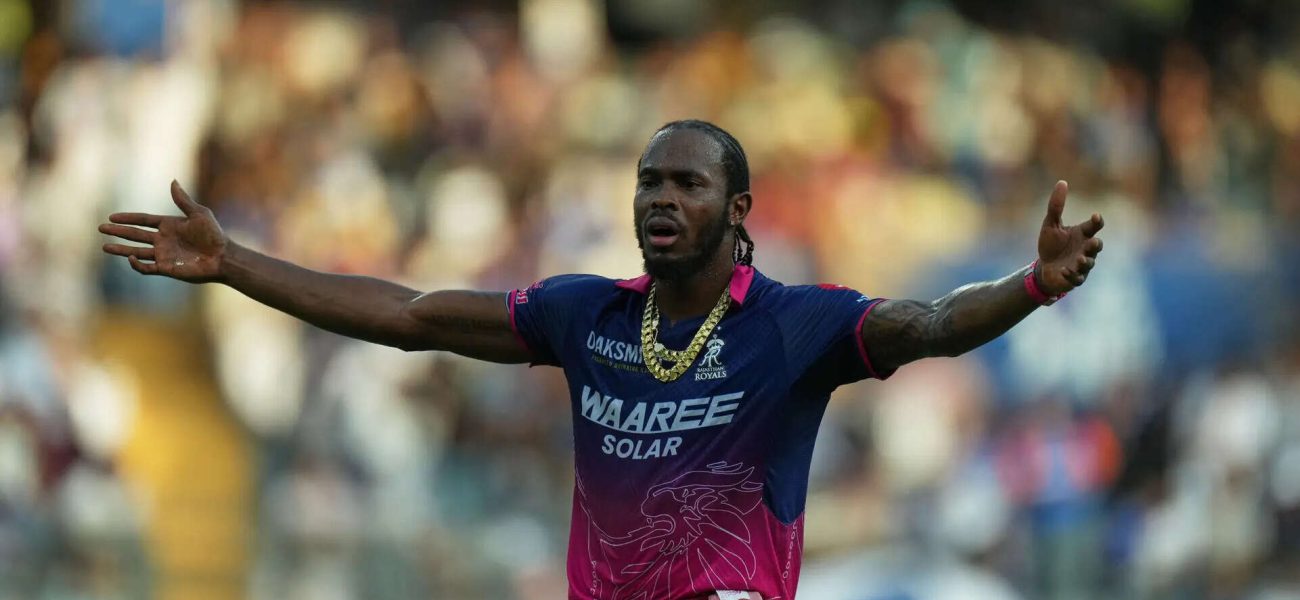
It wasn’t a complex tactical masterclass, nor some zen-like meditation that recalibrated his psyche. No, after the Rajasthan Royals stumbled through their initial matches, coach Trevor Penney delivered a dictum as subtle as a speeding cricket ball: ‘No more pace-off. Just bowl fast.’ A less diplomatic man might’ve added, ‘and don’t bore us with fancy variations.’ Penney, ever the pragmatist, understood that sometimes, genius simply needs permission to be itself, unfettered by overthinking. And Archer, that gangly whirlwind of pace, obliged, terrorizing Mumbai Indians en route to securing a playoff berth.
He’d smashed a quickfire 32 from just 15 balls, a gritty, unexpected cameo that injected desperate life into the Royals’ innings. But it was his return with the ball, figures of 3 for 17, that truly twisted the knife into Mumbai’s ambitions. Dismissing Rohit Sharma for a duck? Priceless. Hardik Pandya, the lynchpin, removed at a critical juncture? Devastating. It wasn’t just the wickets; it was the raw aggression, the unvarnished speed, the ‘don’t care what you do, just be you’ swagger that pulsed through every delivery. Sometimes, you just need a short leash on greatness, not a long philosophical discourse.
And Archer himself? Surprisingly understated. “Don’t think it’s my best year,” he’d mumbled to reporters afterward, gold chain peeking irreverently from beneath his jersey. “I’ve bowled a little bit better than this.” An astonishing statement, perhaps, from a player who just delivered a match-winning, season-defining performance. But it speaks volumes about the internal benchmarks these athletes live by. The coaches, however, saw the return of a forgotten predator. Rajasthan Royals head coach Kumar Sangakkara, usually a picture of measured calm, told Policy Wire: “Jofra is a force of nature. We simply reminded him of his nature.” That’s the art of management, isn’t it? To simplify, not complicate. To trust, not over-coach.
The IPL, it’s worth noting, isn’t just a spectacle; it’s a colossal economic engine, particularly for the subcontinent. The league’s broadcast and digital rights alone fetched a staggering $6.2 billion for the 2023-2027 cycle, according to a report by Sports Business Journal. This isn’t merely about cricket; it’s about national pride, colossal ad revenues, and a talent pool that’s the envy of the sporting world. It shapes economies. Because here, player form dictates market perception, which then impacts franchise value. Think about the silent calculations in boardrooms as Archer terrorized opposition batters. But, alas, this lucrative market largely remains off-limits to Pakistani talent, a perpetual lament for fans across the border who observe the regional cricketing machine from a distance, barred by geopolitical sensitivities. “The IPL is a phenomenon that transcends sport,” noted Wasim Khan, former PCB chief executive, in a recent interview. “The day all cricketing nations of the subcontinent can fully participate will be a historic day for regional unity and economic cooperation, not just cricket.”
📄 POLICY WIRE WHITEPAPER PUBLISHED: PAKISTAN'S NATIONAL SECURITY POLICY PRIORITIES
👉 READ BY CLICKING HEREBack in the present, Archer admitted he was equally taken aback by his unexpected promotion up the batting order. “Wasn’t expecting to bat so early,” he chuckled. “Impact sub means I hardly get to bat. Glad I contributed.” It’s that blend of raw talent, a dry sense of humor, and surprising humility that makes Archer, and moments like these, so compelling. He might’ve slipped awkwardly fielding late in the game — sending a jolt of collective anxiety through the Royals’ camp and a good chunk of Barbados — but quickly reassured, “I’m very good right now, touchwood.” Always a touch of superstition, even in the cold glare of modern sport.
What This Means
This episode with Jofra Archer isn’t merely a footnote in a successful IPL season; it’s a clinical dissection of elite athletic performance and its industrial underpinnings. First, it’s a blunt reminder that sometimes, the multi-million dollar machinery of professional sports — with its phalanxes of analysts, data scientists, and specialized coaches — often overlooks the primal truth: athletes are best when allowed to do what they do naturally, and aggressively. The ‘complicated’ solutions often mask simple limitations or even simpler instructions. Penney’s intervention was less about strategy and more about psychological emancipation, a common theme in the careers of sports legends across disciplines. For the IPL itself, Archer’s return to form signals the immense commercial and emotional value tied to its superstar performers. When these high-profile players deliver, the entire ecosystem thrives. But this focus on individual brilliance, often imported, highlights an enduring regional dynamic. While South Asia provides the fervent fanbase and considerable financial muscle, the league’s allure still relies heavily on talent from countries like England, Australia, and the Caribbean. And that’s not to say there isn’t homegrown talent — there’s plenty of it — but the international sheen still pulls massive eyeballs and cash. It suggests a form of globalized economic synergy, but also a persistent reliance on an external influx to maintain its blockbuster status.