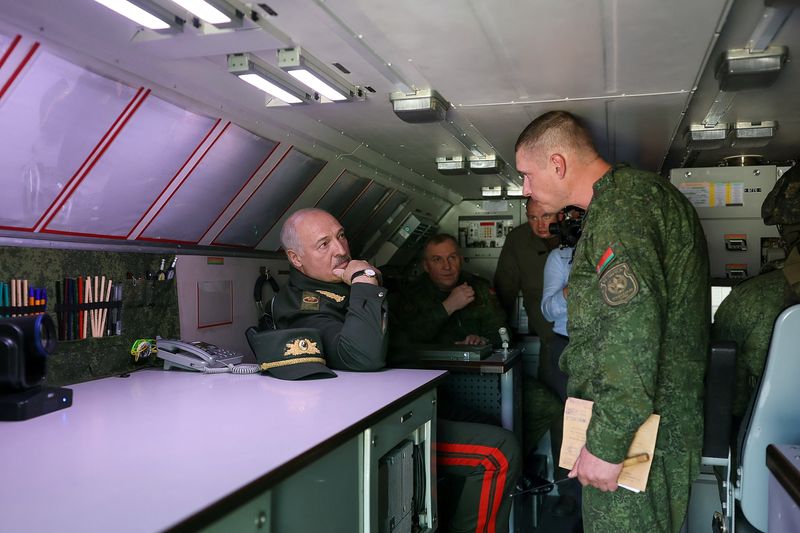
Lukashenko’s High Wire Act: Minsk Vows No War, But Russian Shadow Looms Large
POLICY WIRE — Minsk, Belarus — It wasn’t exactly a dramatic departure, not if you’ve been watching the Kremlin’s junior partner for a minute. But when Belarusian strongman Alexander...

POLICY WIRE — Minsk, Belarus — It wasn’t exactly a dramatic departure, not if you’ve been watching the Kremlin’s junior partner for a minute. But when Belarusian strongman Alexander Lukashenko declared his nation wouldn’t get ‘dragged’ into Ukraine’s bloody conflict, his very next breath about defending alongside Russia sliced through any illusion of Minsk’s independent policy-making. It’s the familiar paradox, isn’t it? The seasoned politician, clinging to power, promising autonomy while his biggest backer dictates the terms. He plays a role, a carefully choreographed performance for domestic consumption and, perhaps, to temper anxieties in Brussels.
And let’s be real, this wasn’t a sudden burst of neutrality. This is Lukashenko’s perpetual tightrope walk, attempting to project a measure of sovereign control while Moscow’s grip remains demonstrably firm. For months, Western observers and Kyiv have been eyeing Belarus’s border, wondering if this buffer state, a convenient staging ground for Russia’s initial invasion, would fully commit its own forces. The rhetoric, though, always seems to twist itself into pretzels.
“We’re not aggressors. We won’t cross the border for any offensive,” President Lukashenko asserted last Tuesday, his voice carrying its usual blend of folksy bluntness and calculated menace. “But make no mistake—our borders are shared, and our alliance with Russia isn’t merely ceremonial. If our strategic ally needs assistance in a defensive capacity, we won’t hesitate to stand shoulder-to-shoulder. It’s about collective security, plain — and simple.” One might call that clarity, or one might call it artful dodgery. But what’s certain is that it keeps everyone guessing. Or maybe it doesn’t. Depends on your cynical meter, doesn’t it?
But the West isn’t buying the ‘peace-loving neighbor’ routine, not fully anyway. Because frankly, they’ve seen this movie before. “Mr. Lukashenko plays a very old tune,” quipped Ambassador Elena Petrov, a seasoned European diplomat involved in Eastern European security talks, speaking off the record. “His declarations are often thinly veiled pretexts for Kremlin maneuvering, not expressions of true national policy. His ‘non-participation’ is tactical, not ideological. He’s trying to manage domestic unrest, maintain a veneer of control, and simultaneously avoid direct accountability while still supporting Moscow’s objectives.” That’s the cold reality of it all, isn’t it?
The geopolitical reality of Minsk’s situation isn’t lost on nations far from Eastern Europe either. Consider Pakistan, for instance, or other states in the broader Muslim world navigating their own complex regional dynamics and allegiances. They too frequently find themselves caught between powerful neighbors or global blocs, attempting to preserve their strategic independence while recognizing economic or security interdependencies. They understand the dance of appearing neutral while leaning heavily on one side. This Belarusian narrative—balancing declared sovereignty against stark military-economic reliance—echoes dilemmas playing out in numerous capitals across Asia and beyond.
The numbers don’t lie, after all. A 2022 Chatham House report indicated Belarus’s economy was over 50% reliant on trade with Russia, a staggering figure that makes any true economic independence a practical impossibility. And that’s before you even start talking about military coordination. It’s an inconvenient truth for anyone wanting to believe Belarus acts truly on its own volition.
📄 POLICY WIRE WHITEPAPER PUBLISHED: PAKISTAN'S NATIONAL SECURITY POLICY PRIORITIES
👉 READ BY CLICKING HEREThe threat of Belarusian troops joining the fight in Ukraine would, of course, open a devastating new northern front, drawing Kyiv’s already stretched forces further from the eastern and southern battlegrounds. Minsk has provided logistical support, safe havens for Russian troops, — and allowed missile launches from its territory. So, technically, they’re already in it. Just not with their own boots on Ukrainian soil. It’s a fine distinction for the people of Kyiv.
What This Means
Lukashenko’s pronouncement is less a declaration of independent policy and more a reinforcement of Belarus’s current, deeply ambiguous position. Politically, he’s buying himself time and trying to signal to a weary populace—and perhaps an increasingly anxious military—that direct engagement isn’t imminent. But economically, — and certainly militarily in terms of alliance, Belarus remains inextricably tethered to Russia. Any perceived shift towards genuine neutrality would jeopardize the security umbrella Moscow provides, the very thing keeping Lukashenko in power after years of protests and international isolation.
The economic implications of Belarus going all-in would be catastrophic for an already sanction-hit nation. Further international ostracism — and the burden of war would make an already dire situation worse. Conversely, pulling away from Russia isn’t an option. So, he keeps dancing on the head of that pin, always looking over his shoulder. The entire situation creates a powerful feedback loop—dependence necessitates rhetorical subservience, which further entrenches dependence.
This precarious state serves Moscow well. It maintains pressure on Ukraine’s northern flank, compels Kyiv to keep forces in the north, and keeps Belarus as a loyal, if somewhat reluctant, pawn. It’s an arrangement that suits Vladimir Putin just fine, keeping Belarus in Russia’s geopolitical orbit like a moon perpetually orbiting its larger planet. The illusion of choice for Minsk, though—that’s just part of the theatre, isn’t it? It reflects the deeper fissures, the illusory edge that so many regimes try to maintain, a fragile appearance of agency. It really is an exercise in political fiction, even as the military reality remains stark.