


Albuquerque’s Ghost Buildings: A Downtown on the Brink Amidst Bureaucratic Friction
POLICY WIRE — Albuquerque, N.M. — The ghostly outlines of downtown Albuquerque still haunt locals, especially the space where Lindy’s Diner used to stand—a stark reminder of decay that buckled under...

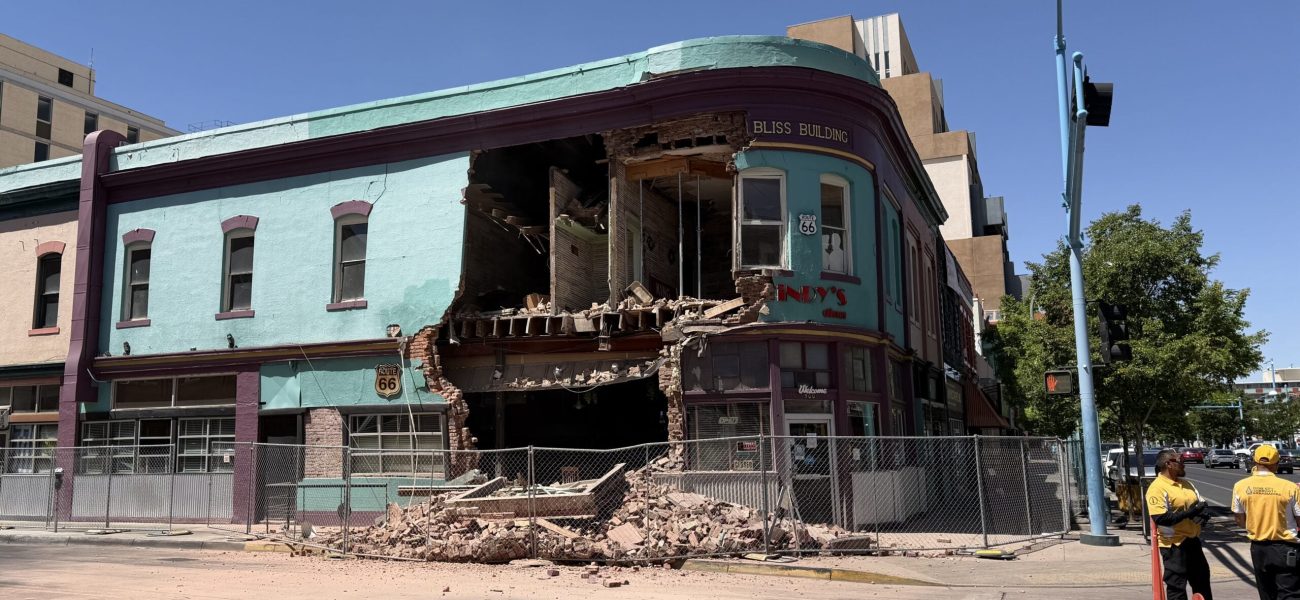
POLICY WIRE — Albuquerque, N.M. — The ghostly outlines of downtown Albuquerque still haunt locals, especially the space where Lindy’s Diner used to stand—a stark reminder of decay that buckled under its own neglect. It’s been months since that tragic collapse, but the dust hasn’t settled. Not really. Now, city hall’s buzzing not with grief, but with an old-fashioned political dogfight over who pays for neglect, and who actually has the power to fix it.
It’s not just a debate over bricks and mortar; it’s a simmering conflict about property rights versus public safety, played out on the familiar stage of downtown revitalization. Councilor Joaquin Baca, a persistent voice in this fight, brought a beefed-up version of his “Downtown Vacant Premises Ordinance” before the City Council. His argument is simple enough: vacant buildings, left to rot for decades, aren’t just eyesores. They’re hazards. They’re waiting to fall, just like Lindy’s did.
“When it first collapsed, and I talked to the inspector who went in, she said ‘if I had been into the second floor, I would have seen this,’ but because the ordinance was only the first floor, it was missed,” Baca told Policy Wire, echoing his earlier statements. “They were vacant on the second floor, and that’s where the weakness was.” You see, his proposed ordinance – already years in the making, a slow crawl through legislative quicksand – wants to allow city inspectors beyond just the ground floor. They want to check the second level, too. And this isn’t just about catching a crumbling support beam; it’s about establishing some damn accountability.
But—and there’s always a “but” in these things—not everyone’s buying what Baca’s selling. Other councilors, and the city’s planning director, are throwing cold water on the idea, suggesting the proposed solution is a tad overzealous, or perhaps just misdirected. Councilor Bassan questioned the efficacy, noting, “Somebody pointed out that structural engineering is something that we have to look into, and I’m not sure that this would have prevented that, because we don’t necessarily have structural engineers that go into these properties to do the same kind of elaborate inspections.” And you know, she’s got a point. You can open up a second floor for inspection, but if the inspector’s looking for leaky pipes and not structural cracks, what have you really gained?
The situation spotlights an uncomfortable truth, not just here, but in any urban core grappling with an aging infrastructure and property owners with deep pockets—or empty ones. Many of these dilapidated properties, some vacant for upwards of 40 years like the Kress building Baca pointed to, cast long shadows over thriving businesses they’re often attached to, literally. They’re magnets for vagrancy, crime, and, well, general creepiness. Nationally, properties adjacent to blighted or vacant structures can see their value depreciate by as much as 10-15%, according to a recent urban planning assessment report.
The city’s planning director, Alan Varela, voiced significant concerns, calling for a deferral on the vote, believing the ordinance mixes “apples and oranges.” He’s pushing for more specialized solutions. “We would greatly appreciate the opportunity to have more time to work with a sponsor on perhaps either separating that and coming up with a perhaps a facade inspection requirement by structural engineers or something else,” Varela explained. “But right now, we see this as highly problematic.” It’s classic bureaucracy: too broad, not targeted enough, an administrative headache. But then, isn’t it easier to say ‘problematic’ than to actually roll up your sleeves and inspect hundreds of neglected downtown buildings?
Because, make no mistake, while the focus is local, this bureaucratic wrangling over urban decay isn’t unique to New Mexico. You see echoes of it across the globe. From the densely packed, rapidly evolving cities of South Asia, like Karachi or Lahore—where building codes often play catch-up with sprawling informal construction and collapses are sadly more frequent—to historic European centers, the dance between preserving heritage, ensuring public safety, and respecting private ownership is a perpetual, often messy, waltz. Our own regulatory shortcomings aren’t dissimilar to the larger global challenges in developing robust urban planning. It’s not about scale, but principle.
Councilor Baca isn’t alone. Numerous residents showed up to express their support, many advocating for the ordinance’s reach to extend beyond downtown and encompass the entire city. That, too, is a testament to how widespread the issue of urban blight actually is. For now, the amended ordinance has been kicked down the road, deferred until June 1st. You just hope that’s not long enough for another one of those ‘vacant premises’ to suddenly, irrevocably, not be so vacant anymore.
What This Means
The deferral of this ordinance is more than a procedural delay; it’s a political hot potato. On one side, you have the palpable, immediate threat of collapsing buildings—a public safety issue that can, as we’ve seen, turn fatal. But on the other, there’s the ingrained reverence for property rights and a resistance to what some see as government overreach. If the city struggles to pass even modest inspection measures, it could signal to developers that downtown Albuquerque remains a Wild West of lax oversight, which isn’t great for attracting responsible investment. Conversely, overly burdensome regulations could disincentivize revitalization entirely, leaving downtown trapped in this limbo of neglected storefronts and dusty interiors. It’s a delicate balance, — and right now, the scale feels a little stuck in bureaucratic neutral. And that, dear reader, isn’t going to help any collapsing buildings. Small businesses, like those hoping for more vibrancy — and safety, remain caught in the crossfire. Check out how other economies grapple with policy delays affecting their workforce when decisions are put on hold.