


Beyond the Pharaoh: Liverpool’s Successor Dilemma Reveals Football’s Shifting Sands
POLICY WIRE — London, UK — For a club like Liverpool, success isn’t just measured in trophies. It’s also about global brand equity, the delicate balancing act between commercial empires and the...

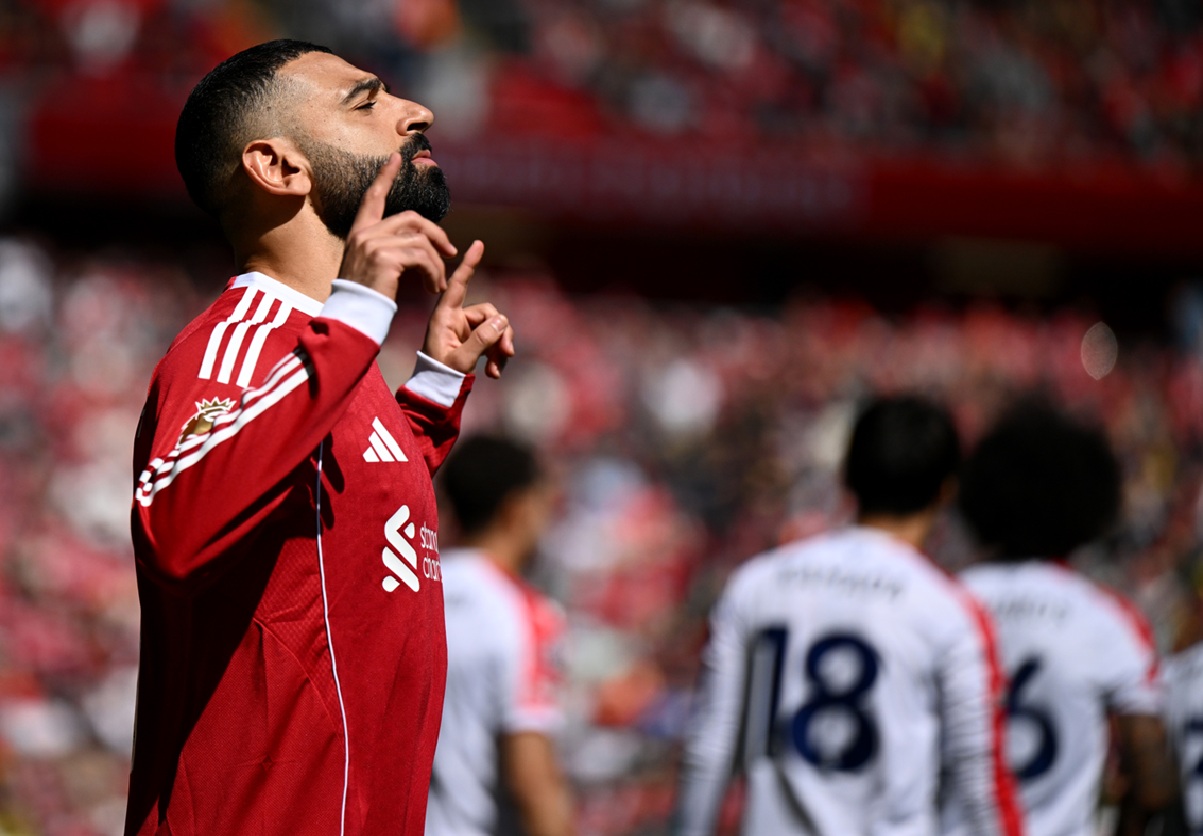
POLICY WIRE — London, UK — For a club like Liverpool, success isn’t just measured in trophies. It’s also about global brand equity, the delicate balancing act between commercial empires and the sheer raw talent on the pitch. Now, as the era of Mohamed Salah—the ‘Egyptian King’ to millions—appears to near its sunset, Anfield isn’t just looking for a new winger. They’re facing an identity crisis, an existential dilemma disguised as a transfer puzzle. It isn’t just about pace and goals; it’s about replacing an icon whose influence spans continents, from Merseyside to Mecca.
Whispers about Salah’s departure, specifically potential Saudi overtures, have echoed for months. The Premier League’s most prolific African player is entering the twilight of his prime, and the Reds, under new management, know they can’t afford sentimentality in a market where margins are razor-thin. It’s a ruthless business, this football. And every decision, every bid, every contract, carries a staggering weight, both financial — and cultural. The question isn’t ‘if’ but ‘who’ and, perhaps more tellingly, ‘at what cost’—to the balance sheet and the soul of the club.
Consider the candidates swirling in the transfer rumour mill, each representing a different facet of risk — and reward. Yan Diomande, the Ivorian whiz from RB Leipzig, certainly fits the Reds’ athletic profile. His attacking statistics are, frankly, quite obscene. Advanced metrics show Diomande with a staggering 12 goals on an xG (expected goals) of just 6.74 last season across all competitions (source: Opta Analyst reports via The Athletic). That’s an astonishing overperformance, suggesting a finishing prowess well beyond his years. He’s got that blend of electric pace and audacious dribbling that turns defenders inside out, much like the man he’d replace. But will he translate the Bundesliga’s relative freedom to the Premier League’s brutal efficiency?
Then there’s Bradley Barcola from Paris Saint-Germain. PSG’s negotiating position alone makes that a thorny path, especially if the Parisians – despite their colossal spending habits – genuinely want to keep him. But the French international is versatile; he operates across the front line and brings a Champions League medal to boot. Less of a solo artist than Diomande, Barcola offers a more nuanced, team-centric approach—perfect for an intricate tactical system, perhaps, but less likely to produce the highlight-reel moments fans crave. And make no mistake, Liverpool’s global appeal, particularly among the estimated 1.8 billion Muslims worldwide, has been significantly buoyed by Salah’s superstardom. That’s a commercial reality no executive can ignore. Whoever replaces him isn’t just buying goals; they’re buying eyeballs.
Anthony Gordon at Newcastle provides another intriguing, if politically charged, option. Liverpool had reportedly shown interest previously. Because, let’s face it, talent usually finds its way to the top. Gordon, by all accounts, desperately wants out of St. James’ Park, with insiders suggesting a rather frayed relationship with his current coach. There’s a certain symmetry to his story – a childhood Red rejected, only to perhaps return. But acquiring an established Premier League talent, especially one with known personal grievances, adds layers of complexity and likely inflates the price tag significantly. You’re not just buying a player; you’re buying a narrative, with all its inherent drama.
Even Karim Adeyemi from Borussia Dortmund has been mooted. His blistering pace — and technical flair scream ‘Klopp prototype’ – or perhaps, now, ‘Post-Klopp prototype’. Dortmund has a reputation for selling their brightest stars, so the groundwork for a move is often there. But whether he can emulate Salah’s sustained, almost robotic consistency in front of goal remains the biggest question mark. Rodrygo of Real Madrid, another perennial target, always feels like a pipe dream. Real don’t typically let world-class talent, even those in Vinícius Júnior’s shadow, leave easily.
“Finding a statistical replacement for Mo is hard enough, but his iconic status across the Middle East and South Asia adds another layer of complexity,” confided Dr. Irfan Hashmi, a leading analyst for a Gulf-based sports marketing firm. “His image alone has driven massive engagement — and jersey sales in countries like Pakistan and Indonesia. Any successor has to possess both sporting brilliance and, frankly, undeniable marketability if Liverpool is to maintain that reach.”
Indeed, club executives are acutely aware of this double-edged sword. John W. Henry, Principal Owner of Fenway Sports Group, once noted in a rare interview, “Our investments aren’t solely about winning trophies, as much as we strive for them. They’re about cultivating a sustainable, global institution. Every major player acquisition must reflect that broader ambition.” It’s about more than just football; it’s about geopolitical brand building. And Salah, the very human face of success, delivered on every front. His replacement needs to carry that burden, willingly or not.
What This Means
Salah’s eventual departure isn’t just a challenge for Liverpool; it’s a litmus test for the club’s post-Klopp strategy and a stark illustration of modern football’s economic realities. The decision makers will weigh proven Premier League adaptability against the raw potential of younger, unproven European stars. Opting for a talent like Diomande could signal a belief in meticulous scouting and data-driven recruitment, continuing a legacy that saw Salah himself become a relative bargain before exploding. But it carries inherent risk. On the other hand, pursuing someone with Gordon’s domestic experience, despite the baggage, offers a quicker integration but could command a premium inflated by nationality and league familiarity—a phenomenon observed with players like Shaw’s Price Tag for other clubs.
The wider implications touch on Liverpool’s brand perception across crucial, growing markets. Losing Salah, an emblem for millions, could create a significant vacuum in fan engagement across the Muslim world and parts of South Asia. It’s not just a striker they’re seeking; it’s a cultural bridge. They’re buying into narratives, into future marketing campaigns, into the next phase of the club’s global football order. This isn’t just about goals; it’s about maintaining a lucrative hold on diverse fan bases in a rapidly commercializing sport. Liverpool won’t just replace a player; they’ll redefine a chapter.