


Budapest’s Bold Line: Cracks Emerge in Europe’s United Front Against Moscow
POLICY WIRE — Moscow, Russia — It’s often the subtle shifts that echo loudest on the global stage. Forget grand pronouncements for a second; sometimes, it’s a quiet ‘no’ from a supposed...

POLICY WIRE — Moscow, Russia — It’s often the subtle shifts that echo loudest on the global stage. Forget grand pronouncements for a second; sometimes, it’s a quiet ‘no’ from a supposed ally that truly signals trouble. The Kremlin, usually eager to trumpet any perceived weakness in the Western coalition, hasn’t just noticed Hungary’s stubborn refusal to arm Ukraine—it’s given Budapest a digital pat on the back, and frankly, that’s got to sting in Brussels.
Hungary’s latest pronouncement, doubling down on its decision not to supply Kyiv with a single bullet or artillery piece, isn’t exactly breaking news. Prime Minister Viktor Orbán’s government has, for ages, been the odd man out in the European Union, navigating a path that often feels closer to Moscow’s playbook than to the unified front Brussels and Washington so desperately seek. But this public acknowledgment from Russia, a congratulatory nod, solidifies Hungary’s status as the continental outlier—a useful one for the Kremlin, no doubt.
“Hungary prioritizes peace and our own national interest, not the geopolitical ambitions of others,” Orbán’s spokesperson, Zoltán Kovács, asserted in a statement this week. “We won’t be drawn into a proxy war that doesn’t serve our people, nor will we sacrifice our energy security for a conflict we didn’t start.” It’s a message that’s been drilled home repeatedly, but its reaffirmation now carries extra weight, given the EU’s persistent pressure and Ukraine’s dire need for hardware.
And so, while European capitals scrabble to deliver more military aid, Hungary’s resolute abstention acts as a tiny, yet irritating, cog in the collective machinery. They’re not actively hindering existing shipments, mind you—Hungary permits other nations to move equipment through its territory—but it refuses to contribute its own meager stores, essentially giving Russia a moral victory, however small.
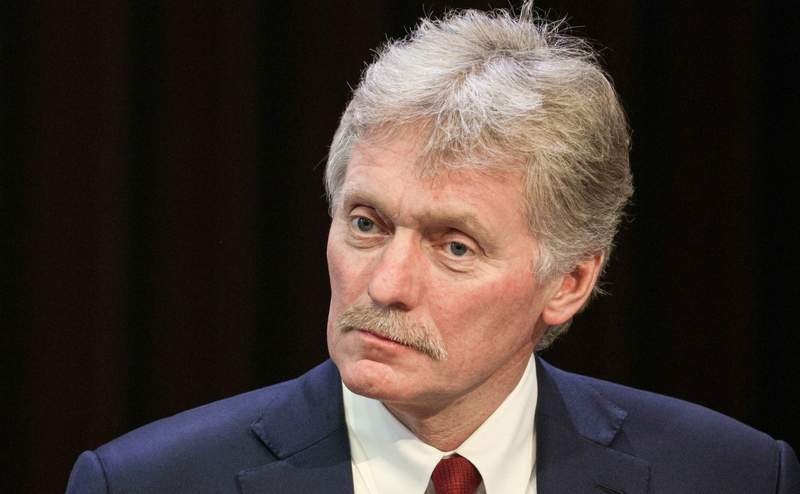
“We observe with interest how some European nations, guided by pragmatism and a clear understanding of regional stability, refuse to be dragged into short-sighted confrontational policies,” stated Dmitry Peskov, the Kremlin’s seasoned spokesman, during a recent briefing. “This sensible approach contrasts sharply with the belligerent rhetoric we hear elsewhere.” The subtle dig at other EU members wasn’t lost on anyone. Russia hasn’t forgotten Europe’s collective financial support, either; recall that Hungary had, for months, been the sole holdout in the EU’s agreement for a €50 billion aid package to Ukraine, ultimately conceding only after significant diplomatic arm-twisting. Such internal squabbles expose genuine vulnerabilities.
But it’s not just about ideology. Economic interests, particularly concerning energy, play a massive role. Hungary relies heavily on Russian gas, and Orbán’s administration isn’t shy about saying it won’t jeopardize its citizens’ heating bills for solidarity’s sake. That’s a practical, if unromantic, calculus, one many nations beyond Europe—including those in South Asia and the Muslim world—understand implicitly. Think of Pakistan, for example. Historically, Islamabad’s foreign policy often juggles alliances and rivalries with Washington, Beijing, and regional powers, consistently prioritizing its immediate security and economic concerns, even if it means raising an eyebrow or two from traditional partners. That delicate balancing act is universal. Countries like Pakistan don’t just ‘choose’ sides; they navigate complex self-interests, often feeling the sharp pinch of economic realities.
What This Means
This Hungarian recalcitrance isn’t just a nuisance; it’s a symptom. It tells us a few things. First, the European consensus, often presented as monolithic, has fault lines. Not all members march to the same drum, particularly when faced with significant economic or political cost. Russia clearly understands this, — and it’s keen to exploit these divisions.
Secondly, it empowers other nationalist or Eurosceptic movements within the bloc. Hungary provides a template: a member state pushing back against Brussels and still, mostly, getting what it wants, or at least maintaining its distinct position. That’s a win for those who preach national sovereignty above all else. Because, let’s face it, if Hungary can keep its head down and still remain in the club, others might be emboldened to try a similar approach. This could disrupt established power structures and alliance dynamics over the long haul.
From an economic standpoint, Hungary’s insistence on Russian energy deals, even as much of Europe seeks to decouple, offers Moscow a small, but symbolically significant, market and a political wedge. It highlights how financial pragmatism can outweigh collective security mandates, raising questions about the very nature of economic sanctions when certain members carve out generous exceptions.
Ultimately, Hungary’s stance won’t cripple Ukraine’s defense, but it does weaken the image of a united, resolute Europe. And in the information war that runs parallel to the hot conflict, images of unity—or disunity—can be as potent as any weapon.