


New Mexico’s Quiet Crisis: The Unseen Battle for Teenagers
POLICY WIRE — ALBUQUERQUE, N.M. — The silent hum of an IV drip. The hushed urgency in a family conversation. These aren’t just background noise in New Mexico anymore; they’re the soundtrack to...

POLICY WIRE — ALBUQUERQUE, N.M. — The silent hum of an IV drip. The hushed urgency in a family conversation. These aren’t just background noise in New Mexico anymore; they’re the soundtrack to a quiet, devastating emergency playing out in homes and, increasingly, recovery centers across the state. This particular crisis doesn’t involve international conflict or grand political posturing, yet its human cost—measured in lost potential and fractured futures—rivals any headlines blared across cable news. It’s about young lives, some barely out of childhood, caught in the undertow of substance dependency.
It’s here, in the Land of Enchantment, that an agonizing truth takes root: New Mexico leads the nation in both overall drug addiction and teen drug use, according to a recent WalletHub ranking. Let that sink in for a second. We’re not talking about some obscure metric; we’re talking about the very fabric of youthful well-being. And for folks like Jennifer Burke, the executive director and founder of Serenity Mesa Recovery Center, that grim statistical lead isn’t just data points. It’s a recurring nightmare, a personal wound that refused to heal without action.
Burke knows this particular hell firsthand. Her own son, Cameron, became just another statistic after he lost his life to an overdose at 18. This wasn’t some isolated incident; it was the cruel, predictable end to a battle that began after a sports injury. You see, the initial opiates often become a gateway—it’s a story Burke says is all too common. And for her, it forged a mission, a kind of righteous anger, that led to Serenity Mesa. She was, as many grieving parents are, forced to send her son out of state multiple times for care. “New Mexico just didn’t have adequate treatment for adolescents,” she said. But after his death? [QUOTE_PLACEHOLDER] Burke recounted.
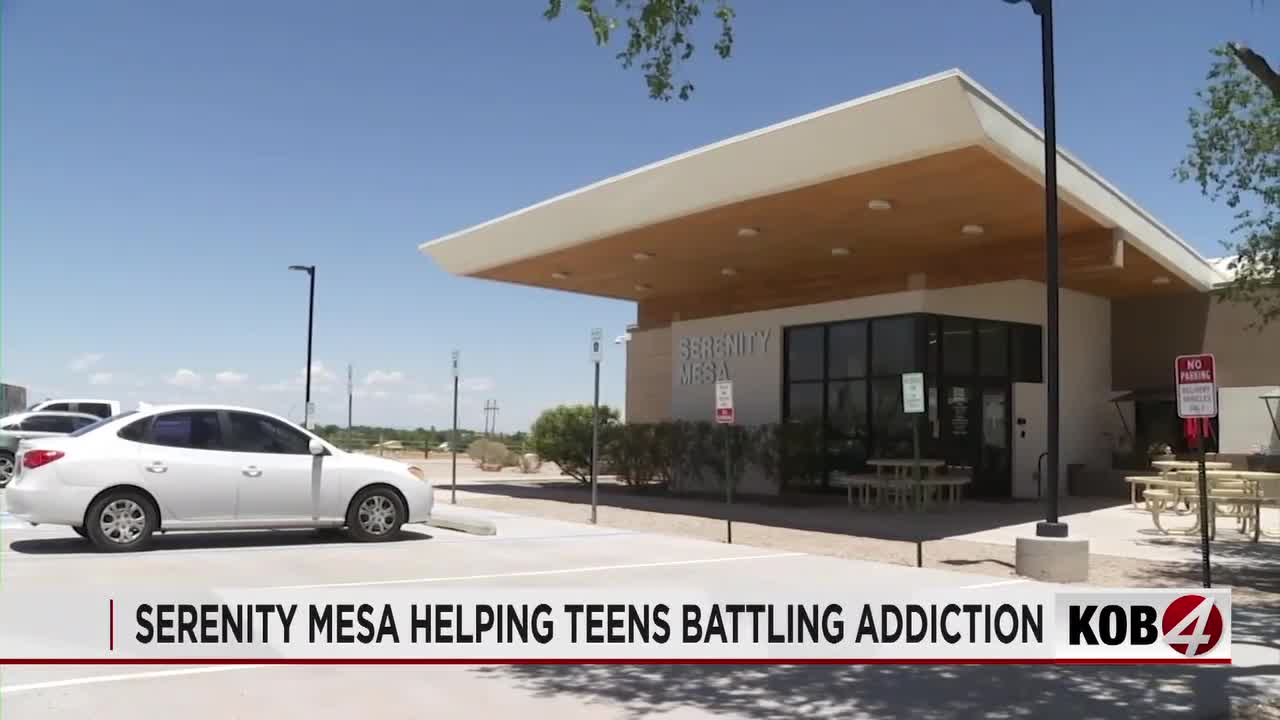
Since its doors swung open in 2015, Serenity Mesa has offered a lifeline to almost 700 teenagers tangled in the snarl of substance use. It’s not a silver bullet, mind you. But it’s an oasis in a desert of need, offering tailored intervention because, as Burke wisely observed, [QUOTE_PLACEHOLDER] They customize everything, [QUOTE_PLACEHOLDER] because cookie-cutter approaches don’t work for shattered young souls. And don’t think for a minute these kids aren’t accessing serious drugs; we’re talking fentanyl, methamphetamine, cocaine. Often via social media—easy access is a truly modern menace.
Jayden Pietz is one of Serenity Mesa’s success stories—or, rather, a success-in-progress story. She navigated the dark maze of meth — and fentanyl addiction as a teenager. That feeling of absolute hopelessness? She’s familiar with it. “I didn’t really have any hope before I got here,” Pietz said. “I just didn’t think that there was going to be anything more out of my life than using drugs.” Now, partway through her program, a future is beginning to emerge. “This is a 90-day treatment, but they’re setting us up for success in the long run,” she explained. It’s that glimpse of a horizon, not just the immediate steps, that changes things. But you’ve got to find that place, that opportunity.
The call for expanded access to care, especially mental — and behavioral health services, is growing louder. It’s an exasperated plea from those who know that waiting lists and bureaucratic hurdles aren’t just inconvenient; they’re lethal for kids and families on the brink. Burke’s message to struggling parents and teens alike is blunt: “Don’t give up on your kids,” and for the kids themselves, “don’t give up on yourself. It may seem like you’re in a dark hole now, but you’ve got to start making those steps to climb out.”
The sheer desperation found in Albuquerque isn’t some American anomaly. From the opium fields bordering Afghanistan that fuel South Asia’s own brutal addiction epidemic—devastating communities from Karachi to Kashmir—to the synthetic opioid crisis gripping parts of the Caucasus, the patterns are distressingly global. Socio-economic strains, accessibility of illicit substances, and an often-inadequate public health response conspire against young populations. Just as parents in New Mexico fight for their children against a tide of addiction, families in, say, Lahore, contend with similar monsters, though the cultural context and available resources differ starkly. And the drug trade? It’s a deeply interconnected global enterprise, indifferent to borders or pieties.
What This Means
This localized crisis in New Mexico carries far-reaching policy implications, underscoring systemic failings in how we approach youth mental health and substance abuse nationally. First off, a significant portion of the economic burden falls on emergency services and incarceration, rather than effective prevention and treatment. Investing in tailored, adolescent-specific rehabilitation centers like Serenity Mesa isn’t just compassionate; it’s a cold, hard economic investment. Think of the future tax revenues from healthy, productive citizens versus the perpetual costs of a criminal justice system grappling with recidivism driven by untreated addiction.
Politically, the problem’s magnitude should be pushing state and federal lawmakers toward bipartisan solutions, yet it often remains siloed, treated as a moral failing rather than a public health emergency. Gen Z’s mental health struggles—exacerbated by digital pressures and socio-economic anxieties—are a global phenomenon, not limited to New Mexico. Ignoring these foundational issues ensures a continuous pipeline into addiction, destabilizing communities, and, ultimately, straining every public service. Policymakers must reckon with the fact that these are future taxpayers, future parents, future innovators. Letting them wither under the shadow of addiction isn’t just inhumane; it’s catastrophic statecraft.