

Texas Bust: Federal Immigration Officer Nabbed, Rekindling Fierce State-Federal Showdown
POLICY WIRE — Washington D.C. — Federal officers in the American hinterlands? A video revealing the raw mechanics of an alleged assault by one such officer? Turns out, what often feels like abstract...

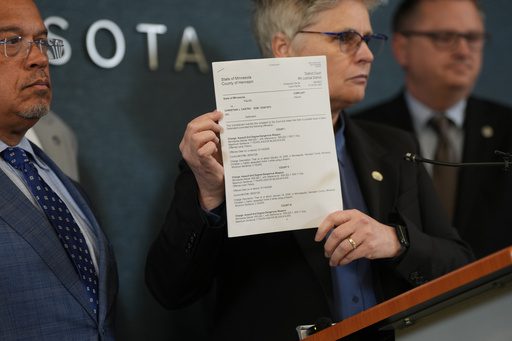
POLICY WIRE — Washington D.C. — Federal officers in the American hinterlands? A video revealing the raw mechanics of an alleged assault by one such officer? Turns out, what often feels like abstract policy squabbles—you know, the usual DC grind—can hit a whole lot closer to home, right down to a guy getting shot in the thigh. And the long arm of justice, or at least one determined prosecutor, sometimes does reach all the way to the southern border. This week, an officer from the Immigration and Customs Enforcement agency, Christian Castro, found himself taken into custody 11 days after Minneapolis prosecutors charged him with assault and falsely reporting a crime.
It’s not every day you see a federal agent—a 52-year-old, no less, identified by Hennepin County, Minnesota prosecutors—arrested in Cameron County, Texas, that thin sliver bordering Mexico. But here we’re. It’s a twist that’s peeled back another layer on a broader saga of federal operations under the Trump administration that have, shall we say, seen their share of complications. Initially, prosecutors accused Castro of firing through a home’s front door, hitting Julio Cesar Sosa-Celis. Not quite the picture of measured law enforcement, is it? Especially when, according to prosecutors, Sosa-Celis and another individual, Alfredo Alejandro Aljorna, were legally in the U.S. It makes you wonder, truly, what exactly was going on there.
The backstory’s pretty thick with recriminations — and reversals. This all unfurled during Operation Metro Surge, part of President Donald Trump’s national deportation campaign. Think thousands of officers flooding places like Minneapolis — and St. Paul—a mission the administration then trumpeted as a success, naturally. But the streets told a different story. They’ve already seen mass unrest over the shooting deaths of U.S. citizens Renee Good and Alex Pretti by federal officers during this crackdown, events that have, let’s be honest, raised quite a few questions about officer conduct. Moriarty’s office is, in fact, investigating those killings and sued the Trump administration in March to gain access to evidence in those cases and the Sosa-Celis shooting. You couldn’t write a more tangled narrative if you tried.
Minneapolis released video last month. It showed the moments leading up to Sosa-Celis’s shooting. A security camera, doing its job, captured it from a distance. You see a person with a snow shovel, near the street, then retreating toward the house. Tossing that shovel into the yard. Meanwhile, someone else, being chased, runs up, falls, gets up, heads toward the house. They all—the three appear to scuffle near the front steps for about 10 seconds. But the exact moment when Sosa-Celis is shot isn’t clear. Doesn’t paint a complete picture, perhaps, but certainly enough to warrant a whole lot of questions. Remember, this is Castro, not the first federal agent charged from that particular campaign; agent Gregory Donnell Morgan Jr. got charged last month for allegedly pointing his gun at people. So there’s a pattern, perhaps, or at least a rather pointed inquiry unfolding.
Here’s the rub, and it’s a big one. Federal authorities had initially accused Sosa-Celis and Aljorna of beating an officer with a broom handle and a snow shovel. Then a federal judge dismissed those charges. And ICE — and the Justice Department themselves? They opened an investigation into whether the officers lied about what happened. But here’s the kicker: ICE, post-charges, called the Hennepin County attorney’s action “unlawful and nothing more than a political stunt.” Because, apparently, accountability for alleged lawbreaking is only appropriate on federal terms. And while Hennepin County Attorney Mary Moriarty said this arrest marks [QUOTE_PLACEHOLDER] the Department of Homeland Security’s Office of Inspector General made sure everyone knew its agents were not involved in or present for Castro’s apprehension, denying the Hennepin County Attorney’s office’s claims. So much for inter-agency cohesion, huh? Policy Wire often covers such internecine bureaucratic squabbles, but this one’s got quite a human cost, hasn’t it? (And, incidentally, the Office of Inspector General added: [QUOTE_PLACEHOLDER])
For those outside the immediate churn of U.S. domestic law enforcement, the entire spectacle—federal agents facing state charges, agencies denying involvement in arrests, public videos contradicting initial narratives—is instructive. Countries like Pakistan, for instance, frequently navigate complex, politically charged investigations into the conduct of their own security forces, often under intense public and international scrutiny. The principle of state accountability, particularly within an ostensible rule of law framework, is something nations across the globe grapple with. Watching a democratic, developed nation wrestle with allegations of its own agents fabricating stories and engaging in questionable conduct serves as a sharp reminder that maintaining transparent and ethical law enforcement is an ongoing, difficult, and universally vital endeavor, irrespective of geography or geopolitical stature.
What This Means
The arrest of Christian Castro isn’t just another headline; it’s a policy earthquake with some serious aftershocks. Economically, while not directly costing billions, this type of intra-governmental conflict and alleged misconduct erodes public trust, making community cooperation—a fundamental aspect of stable governance and economic prosperity—far more difficult. Local economies, already fragile in some areas post-pandemic, rely on predictable, fair application of law, not federal crackdowns sparking distrust and unrest. And when state authorities have to spend significant resources—money, time, political capital—to prosecute federal agents, it’s a diversion from other, arguably more pressing local issues. That’s a measurable drag on resources, it’s not nothing.
Politically, this incident ratchets up the tension in the perennial state-versus-federal authority debate. Moriarty’s office is drawing a clear line in the sand. It’s a challenge to the implied supremacy of federal agents acting on state soil, suggesting they aren’t somehow above the law local communities impose. But here’s the other shoe: it also highlights the messy reality when federal policy (like a national deportation campaign) clashes with local sensibilities and laws. The DHS Inspector General’s quick disavowal of participation in Castro’s arrest speaks volumes about the agency’s desire to insulate itself, to keep these waters from muddying further, particularly when issues of state legitimacy and accountability are so fraught globally. It establishes a precarious precedent where federal agencies, facing allegations of misconduct by their personnel, are also then actively challenged by state-level prosecutors. That’s a tough look for any administration, even if the events originated in a prior one. This confrontation is far from over. It could well set new legal benchmarks for federal agent accountability to state laws, changing the game for every U.S. city where federal task forces operate. It’s a fundamental test of whose rule really applies.