


Balochistan’s Blood-Stained Tracks: Another Train, Another Tragedy, Another Chapter in Pakistan’s Unending War
POLICY WIRE — QUETTA, Pakistan — Sometimes, the quiet hum of a train on rusted tracks signifies nothing more than routine. For passengers, it’s just another passage; for security forces,...

POLICY WIRE — QUETTA, Pakistan — Sometimes, the quiet hum of a train on rusted tracks signifies nothing more than routine. For passengers, it’s just another passage; for security forces, another watch. But on that ill-fated Sunday in Balochistan’s capital, Quetta, the predictable thrum of a car bomb, perfectly timed, usurped the locomotive’s rhythm. It ripped. Then silence, followed by screams. At least 24 lives extinguished, scores more mangled, all thanks to an improvised explosive device, meticulously placed, chillingly effective.
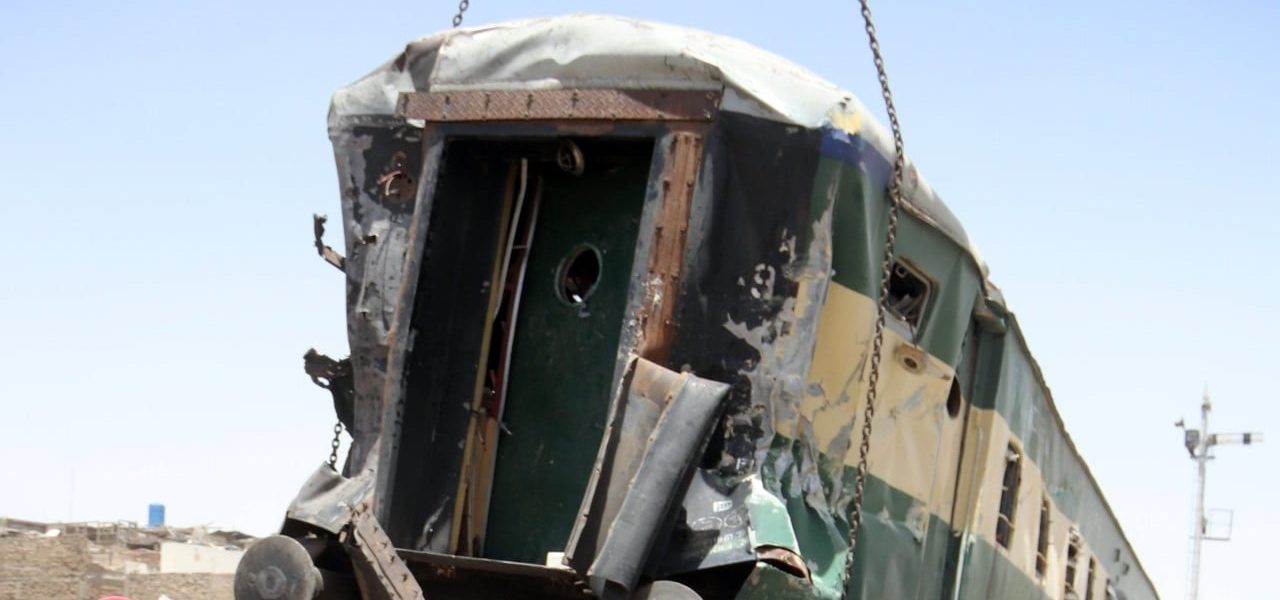
It wasn’t merely an explosion. This was a statement, crudely delivered by the Baloch Liberation Army (BLA), a separatist outfit that doesn’t just want autonomy—it wants out. The train, carrying military personnel, became a mobile target, a metallic coffin. Imagine the scene: debris scattered, the distinct smell of cordite mixing with human dread, the desperate search for survivors amidst mangled steel. Pictures from the site didn’t paint a pretty picture. Twisted carriages, gaping holes where people once sat—just more grim evidence of a region perpetually simmering.
Prime Minister Shehbaz Sharif didn’t mince words, decrying the act as ‘a craven assault on Pakistan’s soul and its brave protectors. We won’t waver in our resolve to expunge the shadows of terror from our lands.’ Such condemnations are customary, aren’t they? They’re boilerplate. But the truth is, Balochistan remains a bleeding wound on Pakistan’s geopolitical map, a problem that doesn’t seem to get fixed, no matter the stern statements or military crackdowns.
But the narrative isn’t as simple as ‘terrorism vs. state.’ Because this impoverished, resource-rich province, strategically located at the mouth of the Persian Gulf and bordering Iran and Afghanistan, has been a hotbed of resentment for decades. Indigenous Baloch groups, including the BLA, accuse Islamabad of exploiting their land’s wealth (natural gas, copper, gold) without sharing the dividends. They also cite alleged human rights abuses by security forces, fueling an insurgency (and make no mistake, it is an insurgency) that keeps erupting in bloodshed. This particular incident, another entry in a long, dark ledger, adds fuel to an already roaring fire, shattering fragile peace repeatedly.
Dr. Aisha Farooq, a shrewd regional security analyst based at the Islamabad Policy Institute, offered a sobering perspective, one often lost in the immediate aftermath of such devastation. ‘Balochistan is a simmering cauldron,’ she told Policy Wire. ‘These attacks aren’t just about casualties; they’re a message, a desperate shout from groups feeling marginalized. The state’s heavy hand often exacerbates, rather than resolves, the core grievances.’ She isn’t wrong. It’s a cyclical dance of violence — and reprisal that benefits no one, save for perhaps the manufacturers of misery.
And what about the broader context? Pakistan, a nuclear-armed Muslim-majority nation, is wrestling with an array of internal security challenges, from the resurgent Tehrik-i-Taliban Pakistan (TTP) to the multitude of Baloch insurgent groups. The violence in Balochistan also has implications for Beijing’s ambitious Belt and Road Initiative, specifically the China-Pakistan Economic Corridor (CPEC). Gwadar Port, a deep-sea port in Balochistan, is a centerpiece of CPEC, representing billions in Chinese investment. But the BLA sees CPEC as another form of exploitation, not development, and frequently targets Chinese nationals and projects. For Beijing, such incidents aren’t just local news; they’re a significant risk factor. It’s a serious headache for a global superpower trying to build infrastructure and influence across the Asian continent.
📄 POLICY WIRE WHITEPAPER PUBLISHED: PAKISTAN'S NATIONAL SECURITY POLICY PRIORITIES
👉 READ BY CLICKING HEREThe latest assault reminds us all, harshly, that the ‘war on terror’ isn’t some distant conflict anymore; it’s right here, in the heart of South Asia, on ordinary train tracks, affecting ordinary lives. The province, despite holding vast reserves of natural gas and minerals, languishes with under 5% of Pakistan’s GDP, a statistic frequently cited by advocacy groups and echoed in reports from the World Bank. That’s a stark disparity, a disparity that many believe fuels the rage that eventually boils over into this kind of destruction.
But Balochistan’s instability isn’t an isolated problem for Pakistan alone. It affects regional trade routes, energy pipelines, and could potentially draw in other regional actors if it spirals further. It’s not an easy fix. There isn’t some magic wand. It’s deeply complicated.
What This Means
This latest attack against military personnel serves several purposes for the BLA. Primarily, it’s a display of strength, a bloody reminder that despite concerted efforts by Pakistan’s security forces, the insurgency persists and retains the capacity for significant strikes. This challenges the federal government’s authority and control over the vast, sparsely populated region, making international investors — especially the Chinese — twitchy about long-term stability and security of CPEC assets and personnel.
Economically, persistent violence can stall development projects, deter foreign direct investment, and ultimately, keep Balochistan mired in underdevelopment, perpetuating the very grievances that fuel the conflict. For the broader South Asian landscape, this continuous cycle of violence in a geostrategic province casts a long shadow over regional peace efforts and Pakistan’s often-fraught relationship with its neighbors. Domestically, it only hardens positions. The state commits to eliminating the terrorists; the separatists dig in deeper. It’s a bleak equation, with human lives as the constant, tragic variable.