


Berlin’s Awkward Truth: Ukraine’s Wartime Grid Offers Germany a Blueprint for Energy Resilience
POLICY WIRE — Berlin, Germany — A nation under siege, fighting tooth and nail for its very existence, shouldn’t really be the one dishing out energy advice to Europe’s industrial...

POLICY WIRE — Berlin, Germany — A nation under siege, fighting tooth and nail for its very existence, shouldn’t really be the one dishing out energy advice to Europe’s industrial powerhouse, right? But here we’re. It’s an uncomfortable truth for Berlin, but Ukrainian ingenuity, forged in the brutal fires of war, is forcing a radical re-evaluation of Germany’s own long-term energy strategy. No longer just a matter of ‘green transition,’ it’s now a gritty scramble for survival — an issue Ukraine knows intimately.
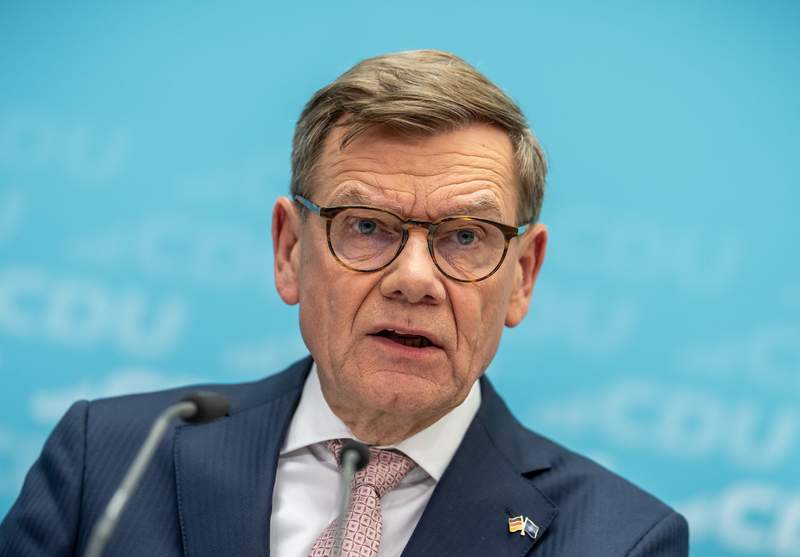
It sounds absurd. Germany, with its sprawling industrial base, its deep pockets, its sophisticated infrastructure—looking to Kyiv, a city that’s literally patching up its power lines mid-air under missile attack. But Michael Wadephul, a top foreign policy voice for Germany’s opposition Christian Democratic Union (CDU), isn’t kidding. He’s openly pushing the notion that Berlin has plenty to learn from Ukraine’s remarkably resilient, decentralized energy system. And that’s something.
For decades, Germany danced with Russian gas, a comfort blanket that turned into a noose. Then came the invasion, the reckoning. Pipelines went dry, prices exploded, and the once-distant dream of true energy independence became an immediate, terrifying reality. They’ve rushed LNG terminals into service (the things you do when your back’s against the wall, huh?), but the underlying vulnerability persists. Where does power come from? How stable is it? Who can cut it off?
“It’s frankly sobering,” Wadephul told Policy Wire, his voice clipped, echoing through the Bundestag’s corridors. “We – prosperous, technologically advanced Germany – have something to learn from a nation fighting for its very existence, forced to improvise under fire. Their distributed energy resilience, forged in the crucible of war, it’s not just a survival strategy; it’s a blueprint for our own long-term security. They’re doing with necessity what we should’ve done with foresight.”
Ukraine’s strategy is simple, almost primal: if one power plant goes down, bring another one online. Or ten smaller ones. Decentralization. Modularity. While Moscow pummeled central power stations, Ukraine quickly leaned into its network of smaller, regionally dispersed generation sites. Think small hydro, local gas turbines, a web of micro-grids that can operate independently if the main grid crumbles. It’s a pragmatic response to an existential threat. And, it works. More or less. The lights flicker, but they usually come back on.
This isn’t just an abstract discussion in Europe, though. Far from it. Across the developing world, especially in nations grappling with unreliable grids and skyrocketing energy demands, Ukraine’s lessons might prove surprisingly relevant. Take Pakistan, for instance, a nation often plunged into darkness by an overstressed, centrally managed power grid and deeply reliant on volatile fossil fuel imports. While its own efforts to diversify—from CPEC coal plants to nascent solar projects—are considerable, they often run into their own hurdles of corruption, infrastructure gaps, and lack of financing. Could a decentralized approach, emphasizing small-scale, robust, local generation, offer a less centralized, more secure path for countries in South Asia or even parts of the Muslim world facing similar infrastructure and energy security woes? It’s not just about what Berlin imports; it’s about what systems actually *work* under duress.
Germany, meanwhile, is still grappling with its own transition. Though renewables now account for more than half of its electricity mix (Fraunhofer ISE, Q1 2024 data suggests 58.4%), the system remains fundamentally geared toward a centralized, predictable flow. Integrating distributed generation at scale is a whole other ball game, a technical — and bureaucratic Gordian knot. It’s expensive, for one. It challenges the established order of large energy utilities, for another.
Svenja Schulze, Germany’s Federal Minister for Economic Cooperation and Development, tacitly acknowledges the scale of the paradigm shift. “We’ve faced a hard reckoning,” Schulze reportedly stated during an energy conference in Berlin. “But the Ukrainians, they’re teaching us that the ‘impossible’ sometimes just means ‘we haven’t tried hard enough, or smartly enough.’ Our commitments to renewable energy aren’t just about climate change anymore; they’re about sheer national resilience. You don’t get a free pass in the new world order.” It’s a sentiment many inside her ministry reportedly share, if not always as bluntly articulated.
But building distributed energy sources, connecting them, ensuring their stability – it’s a gargantuan task. Think millions of solar arrays, battery storage systems, micro-grids all talking to each other. It takes investment, yes, but also a shift in mindset away from behemoth power plants and sprawling transmission lines towards nimble, adaptable networks. That’s a harder sell when things aren’t literally blowing up around you.
What This Means
This isn’t just talk, of course. It represents a subtle, but significant, crack in Germany’s traditional energy doctrine. For too long, the national conversation has revolved around large-scale projects – closing nuclear, building offshore wind farms. While good, those are still essentially centralized models. The Ukrainian experience highlights the vulnerability inherent in such systems when faced with modern asymmetrical threats, cyber-attacks, or even climate-induced weather events that knock out massive infrastructure. Berlin, now seeing how easily an energy supply can be weaponized or destroyed, has to rethink. And not just think about it; they’ve to *do* it. Otherwise, their promises of ‘strategic autonomy’ will sound hollow when the next energy shock hits.
Economically, it means a potentially huge new industry for decentralized energy tech, from advanced batteries to smart grid management systems. Politically, it shifts the focus from grand, national grid plans to supporting local, municipal energy initiatives – a potentially bumpy ride with powerful energy lobbies. It could also inspire other nations. When Asia’s airlines face financial turmoil due to fuel prices, it highlights just how interdependent energy security really is globally. If Germany, once seen as an energy guru (albeit a flawed one), embraces this messy, distributed future, others might well follow. It’s an expensive, politically charged pivot, but Berlin doesn’t have many better options left, does it? The alternative is to remain forever hostage to distant tyrants or even just unlucky turns of geopolitics. Nobody wants that.