


California Physician Seizes Helm at UNM Amidst New Mexico’s Pressing Health Equity Challenge
POLICY WIRE — ALBUQUERQUE, N.M. — The gavel falls. A new hand will soon grasp the steering wheel of New Mexico’s academic behemoth. But this isn’t just about another leadership change in...

POLICY WIRE — ALBUQUERQUE, N.M. — The gavel falls. A new hand will soon grasp the steering wheel of New Mexico’s academic behemoth. But this isn’t just about another leadership change in a state university; it’s a calculated wager on the future of a struggling populace.
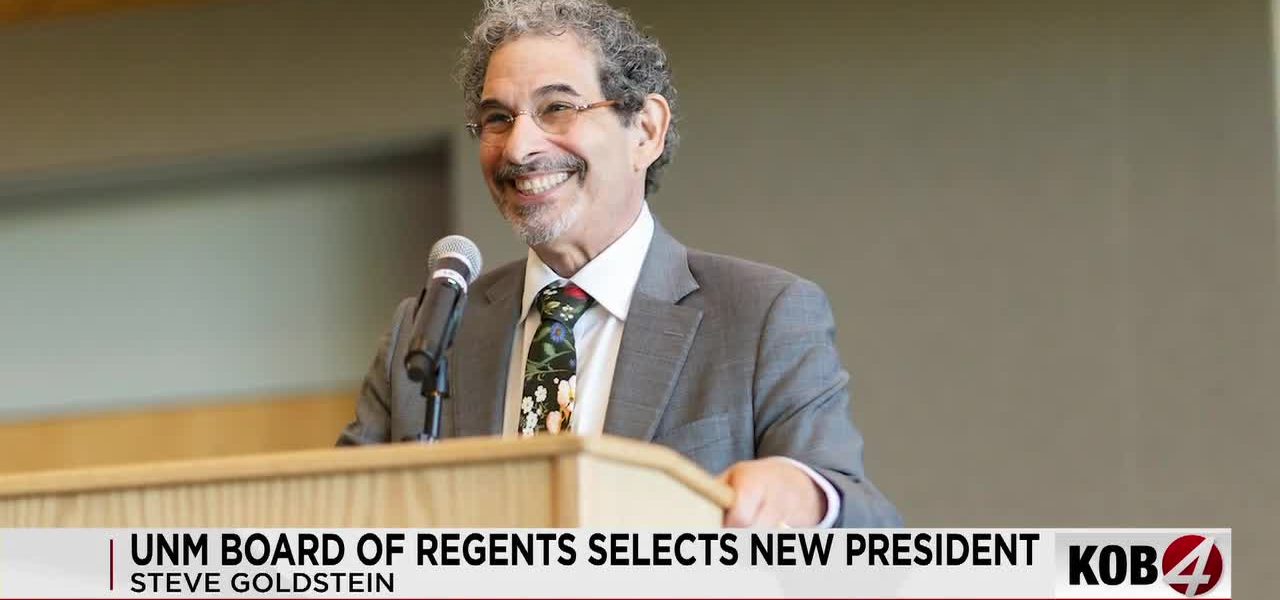
After a rigorous, somewhat hushed process, the University of New Mexico’s Board of Regents announced Friday its pick for the institution’s 24th president: Dr. Steve Goldstein. He’s a California health sciences administrator, specifically vice chancellor for health affairs at the University of California, Irvine. This choice isn’t just notable for Dr. Goldstein’s impressive resume – pediatric cardiologist, Harvard MD — and Ph.D., former Brandeis provost. It signals a tacit acknowledgement of New Mexico’s profound health inequities, quietly betting that an academic leader with a deep medical background might just be the remedy the Land of Enchantment didn’t explicitly ask for, but probably needs.
Current President Garnett Stokes, after eight years steering the institution, is set to retire this summer. She leaves a university she described as “stronger, more innovative and more consequential to the people of New Mexico than ever before.” Her sentiments are certainly heartfelt, reflecting a tenure marked by navigation through both budgetary constraints and academic aspirations. But her successor steps into an environment where grand pronouncements meet gritty reality. New Mexico, for all its rugged beauty, constantly grapples with socio-economic disparities that ripple through its public health metrics. One chilling data point: New Mexico ranks 48th nationally in health system performance, according to the Commonwealth Fund’s 2023 scorecard, a persistent, uncomfortable truth for the state’s policymakers.
Dr. Goldstein, fresh from the sun-drenched campuses of southern California, expressed a reciprocal admiration for UNM. “UNM is a truly distinctive institution: a world-class research university and premier academic health system, committed to the wellbeing of all the diverse peoples of New Mexico,” he remarked upon his selection. He spoke of “exceptional faculty, staff and students, in partnership with businesses, philanthropists and the legislature” solving problems for both the state and the nation. Lofty goals, but then, UNM is already the state’s largest employer — and sole public research university. The ambition isn’t new; it’s the renewed focus a medical leader might bring.
It’s not just about treating sickness, though. It’s about building healthier communities, tackling everything from chronic disease rates that burden state budgets to educational attainment tied to childhood health. Because when a child is chronically ill, their academic trajectory suffers. And when communities lack access to care, it creates generational cycles of disadvantage. That’s the complex web Dr. Goldstein inherits. He’s not just a university president; he’s poised to become a de facto chief health strategist for a good chunk of the state’s intellectual and healthcare infrastructure.
His academic lineage, a biochemistry degree from Brandeis, then the advanced degrees from Harvard, suggests a mind trained for rigorous inquiry and scientific leadership. He wasn’t just in the lab; he went on to lead, first as provost at Brandeis, then his extensive health system role at UC Irvine. This dual perspective—deep academic rigor combined with hands-on administrative experience in health sciences—positions him uniquely. But managing a sprawling public university, with its distinct political currents and budget realities, is its own special kind of surgery.
📄 POLICY WIRE WHITEPAPER PUBLISHED: PAKISTAN'S NATIONAL SECURITY POLICY PRIORITIES
👉 READ BY CLICKING HEREAnd let’s not pretend it’s all smooth sailing from here. Public universities everywhere face enrollment pressures, funding challenges, and the constant political tug-of-war over curricula and free speech. New Mexico, with its own particular set of demographic shifts — and economic vulnerabilities, amplifies these dynamics. It’s not California. It’s got a much larger percentage of individuals below the poverty line, for one thing, which directly impacts public health outcomes and, consequently, a university’s ability to serve its community.
What This Means
Dr. Goldstein’s appointment is less a routine personnel announcement — and more a subtle pivot in UNM’s strategic direction. The emphasis on a leader from health sciences, specifically one with clinical, research, and administrative chops, isn’t coincidental. It suggests the Board of Regents is implicitly tasking UNM with a heavier burden in addressing New Mexico’s systemic health disparities and, by extension, its economic competitiveness. From a political economy perspective, a health-focused leader could unlock new federal research grants tied to public health initiatives, bringing desperately needed dollars into the state’s coffers. his expertise could streamline the integration of UNM’s academic and medical facilities, turning its vast institutional knowledge into more direct, tangible benefits for patients and practitioners across the state. This move might also be seen as an appeal to legislative goodwill, demonstrating the university’s commitment to solving some of New Mexico’s toughest, most expensive problems.
Consider the global implications too. As the world navigates health crises that know no borders—from pandemic preparedness to global health equity initiatives impacting regions like South Asia and the Muslim world—a university president steeped in medical science can better position UNM for international collaborations. It’s not a stretch to imagine programs fostering research partnerships with institutions in, say, Pakistan, sharing expertise in maternal-child health or infectious disease, areas where UNM’s strengths could truly make a difference internationally. Such partnerships don’t just elevate UNM’s global standing; they can bring diverse perspectives and innovative solutions back to New Mexico, enriching its academic and healthcare landscape.
Ultimately, Dr. Goldstein isn’t just becoming the face of UNM. He’s been tapped to wield its considerable intellectual might, aiming it squarely at the complex health and socio-economic challenges that continue to define a significant, diverse chunk of America. His tenure, by all accounts, won’t just be about graduation rates or endowment growth. It’ll be a live experiment in whether academic leadership, strategically applied, can move the needle on public welfare in a way that board meetings usually only dream of.