

Beijing’s Iron Fist, Velvet Glove: Generals Spared, But The Message Is Clear
POLICY WIRE — Washington, D.C. — In Beijing’s gilded halls, the loudest messages often come not with the crack of a gavel, but with the ominous *absence* of a final sentence. It’s a deft,...

POLICY WIRE — Washington, D.C. — In Beijing’s gilded halls, the loudest messages often come not with the crack of a gavel, but with the ominous *absence* of a final sentence. It’s a deft, brutal piece of political theater, really. What we saw announced recently wasn’t just punishment for fallen figures; it was a masterclass in controlled political violence, a demonstration of state power so absolute it can snatch back even a life sentence from the brink of oblivion, effectively.
Two former Chinese defense ministers, once giants within the People’s Liberation Army (PLA) and stars in Beijing’s hierarchy, have dodged the ultimate bullet. They’ve received suspended death sentences. Don’t misread that as clemency, though. It’s typically a deferred execution that, provided good behavior (read: absolute silence and compliance), commutes to life imprisonment. Think of it as a prolonged public purgatory—a living death, perhaps, where their bodies exist, but their names are purged from history, their reputations irrevocably tarnished. And frankly, it’s chilling.
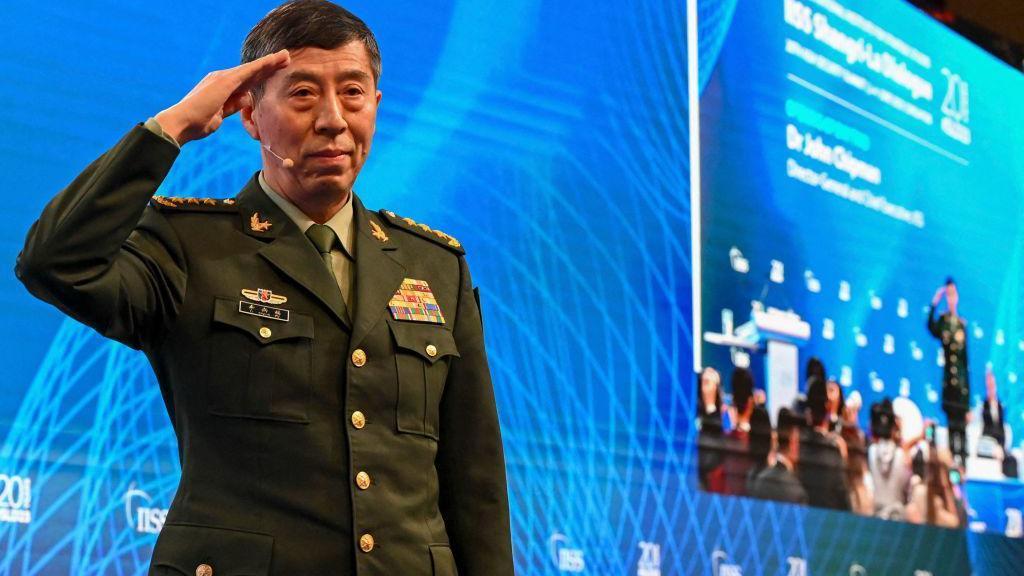
The moves fit neatly into President Xi Jinping’s long-running, relentless anti-corruption campaign, a crackdown many observers contend has morphed into a systematic purge, scrubbing away potential rivals and reinforcing his singular authority. These particular cases are especially thorny, touching the military—the very spine of the Communist Party’s rule. The sudden disappearances of figures like former Defense Minister Li Shangfu, and his predecessor, Wei Fenghe, weren’t accidental; they were calculated vanishes, now culminating in these chilling judicial pronouncements. It’s not just about cleaning up the ranks. It’s about instilling a profound, suffocating fear.
“Our commitment to weeding out malfeasance runs deep, a cleansing operation for the very health of our nation,” stated Foreign Ministry Spokesperson Wang Wenbin in a recent briefing, referring broadly to corruption within the Party. “These decisions reflect our unbending adherence to justice, a necessary purification to strengthen governance.” But some aren’t buying the altruistic narrative.
“Don’t kid yourself,” warns Dr. Anya Sharma, a senior geopolitical strategist at Chatham House, whose observations often cut through diplomatic niceties. “It’s not about mercy; it’s about control. A suspended sentence leaves leverage, sends a chilling message to anyone else even thinking about wavering, and—most importantly, perhaps—keeps the target from becoming a martyr. It’s peak Beijing chess.” Because making a martyr out of a disgraced general can sometimes stir up unwanted sympathies. And that’s something Beijing doesn’t want.
This internal tightening isn’t just an insular affair, though. It sends ripples across regions heavily dependent on, or closely aligned with, China. Take Pakistan, for instance. A long-standing, strategic partner for Beijing, particularly in defense matters and economic projects like the China-Pakistan Economic Corridor (CPEC). The optics of such a high-level military purge in Beijing could stir questions, however subtle, about stability within the PLA, China’s capacity for sustained external projection, or even the reliability of its command structures. When your largest defense patron is busy executing an internal audit of its military brass, it’s only natural to wonder if their focus—or even their capabilities—might shift.
And let’s not forget the sheer magnitude of Beijing’s anti-graft machine. Since 2012, more than 5.2 million Party members have been investigated under Xi Jinping’s anti-corruption drive, according to official data released in early 2023. That’s a staggering figure, effectively demonstrating that no one, not even those at the highest echelons of power, is truly immune from the Party’s gaze. It’s not a justice system; it’s a loyalty test, constantly administered, violently enforced.
The messaging isn’t just for China’s citizens or its regional partners; it’s also aimed at an international audience increasingly wary of Beijing’s expanding influence. It says, ‘We clean our house with an uncompromising hand.’ It says, ‘Our internal security is paramount.’ It says, ‘We can be both modern and terrifyingly traditional in our dispensation of justice.’ But most importantly, it shouts a warning: no one is beyond the Party’s reach, especially not those who forget their place. They might avoid a literal bullet, but their utility—their existence, really—becomes purely symbolic, a living admonishment to any who might follow their path.
What This Means
The deliberate choice of suspended death sentences for high-profile figures isn’t a lapse in China’s draconian justice system; it’s a finely tuned instrument of statecraft. Politically, it signals President Xi’s unparalleled command over the Party — and the PLA. It removes powerful individuals without turning them into potential rallying points for dissent—a critical distinction in an authoritarian state where symbols hold potent weight. Economically, while internal purges might briefly unsettle investors who favor predictability, the overall message to both domestic and international businesses is one of an unshakeable, centralized authority capable of maintaining stability. The underlying subtext: trust us to control our own, so you can trust us to control everything else. For regional players like Pakistan and nations within the Muslim world looking to China for partnership and investment, these verdicts reaffirm Beijing’s strong leadership but also underscore the opaque, absolute nature of its internal governance—a dynamic they must navigate with extreme caution.