

Beijing’s Broken Promise: May Day Reveals China’s Deep-Seated Consumer Woe
POLICY WIRE — Beijing, China — The Great Wall stood, as always, majestic against the haze, but something felt different this May Day. A trickle rather than a torrent of eager spenders. Beijing’s...

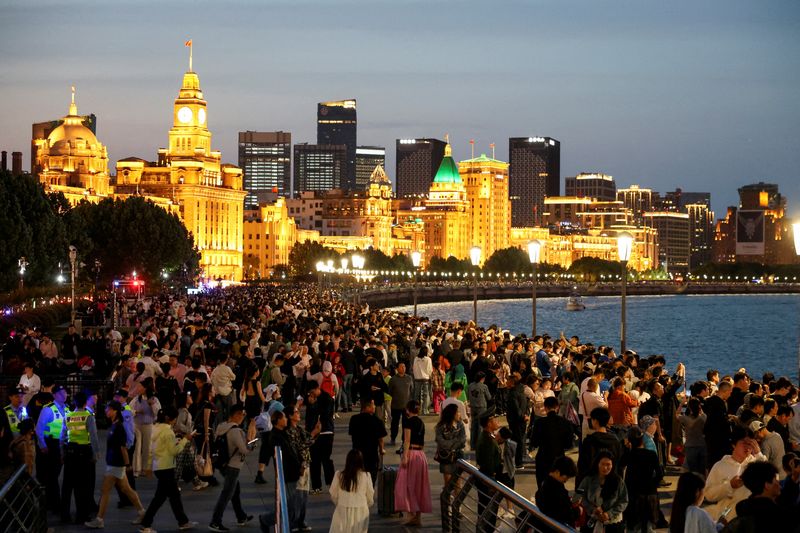
POLICY WIRE — Beijing, China — The Great Wall stood, as always, majestic against the haze, but something felt different this May Day. A trickle rather than a torrent of eager spenders. Beijing’s carefully curated narrative of a booming post-pandemic rebound hit a snag—a particularly telling one—during the recent holiday. Yes, millions moved, a statistic the state media gleefully trumpeted. But watch the faces. Hear the quiet conversations. It wasn’t quite the roaring comeback the politburo was hoping for, was it?
While official reports crowed about an increase in overall tourism activity during the five-day Labor Day break, the underlying truth paints a far less rosy picture. Folks aren’t opening their wallets like they used to. They’re making shorter trips, pinching pennies, choosing hostels over hotels. The government, keen to project stability, focuses on the raw passenger numbers—and sure, those look okay. Total trips rocketed up to 295 million, exceeding pre-pandemic 2019 levels by a neat 28.2%, according to data released by the Ministry of Culture and Tourism. A triumph on paper, then. But beneath that impressive facade lies a grim economic reality, a slow-burn uncertainty gripping the nation’s households.
“We’ve seen incredible resilience,” proclaimed Ms. Li Wei, spokesperson for the Ministry of Culture and Tourism, in a recent, predictably optimistic statement to state media. “The Chinese people are reconnecting, celebrating our nation’s beauty. This demonstrates the robust health of our domestic demand.” It’s a convenient fiction, that robust health, isn’t it? Because despite the throngs, per-capita spending actually dipped, confirming suspicions among economists that recovery is more about quantity than quality, more about movement than genuine economic dynamism.
And it’s a drag. A real drag on the broader economy. Families, burned by years of property market volatility — and job insecurity, aren’t keen on splurging. They’re saving, hunkering down, eyeing their meager bank accounts with apprehension. This isn’t just about May Day; it’s a symptom of deeper structural issues that make the government’s lofty growth targets look increasingly like wishful thinking. China’s consumers—long seen as the engine for the next phase of growth—are tapping the brakes, hard.
Dr. Chen Guang, an economic policy expert at a prominent Beijing university, offered a more tempered assessment, one you might miss if you weren’t listening closely. “While traffic volumes are recovering, the underlying consumer confidence isn’t keeping pace,” he observed. “People are traveling, yes, but they’re not spending freely. They’re price-sensitive, choosing local destinations, cooking more meals themselves. This indicates a deeply cautious consumer, someone hedging against future economic uncertainty, and it’s a trend that can’t be wished away by statistics alone.” His words sting, subtly, at the heart of official exuberance.
But the ramifications stretch far beyond China’s borders. Less cash spent at home means less outbound investment and slower economic arteries for countries relying on Chinese commerce and tourism. Think Pakistan, a key player in Beijing’s Belt — and Road Initiative (BRI). When Chinese economic health sputters, so does the pipeline of capital for infrastructure projects that Islamabad desperately needs. Cautious Chinese consumers indirectly translate to cautious Chinese foreign policy, less inclination to pour money into potentially risky ventures when the home front looks shaky. It’s a chain reaction, subtle but potent, demonstrating just how interconnected our global economy truly is. China’s domestic malaise can easily become Pakistan’s development headache.
It’s clear Beijing faces a balancing act. How do you maintain social stability and project an image of strength when your own people are, quite literally, holding onto their cash? It’s a question without easy answers, one that keeps bureaucrats up at night.
What This Means
This nuanced picture of May Day tourism—high volumes, low spending—is more than a holiday footnote. It’s a stark indicator of China’s struggle to reignite its post-pandemic economy, particularly through consumer demand. The government’s pivot towards domestic consumption as a primary growth driver faces formidable headwinds: a still-fragile job market, persistent property market woes, and an aging population saving for healthcare. Politically, this cautious spending erodes the Communist Party’s narrative of steady economic prosperity, making it harder to manage public expectations. Economically, if consumers continue to hoard cash, it threatens a deflationary spiral and curtails the investment needed for technological upgrading and industrial restructuring. The implications spill over into international relations too. A China pre-occupied with internal economic fragilities is less likely to engage robustly in global investment or diplomacy, potentially stalling initiatives like BRI and impacting trade partners from Europe to South Africa’s long haul. The official optimism, you see, it masks a very real anxiety beneath the surface.