


Powder Keg Passage: Indian Blood Stains Hormuz, Delhi Warns of Broader Costs
POLICY WIRE — New Delhi, India — The salt-laced wind carries different burdens depending on where you stand. For a family in some quiet Indian coastal town, it now carries the ghost of a son, a...

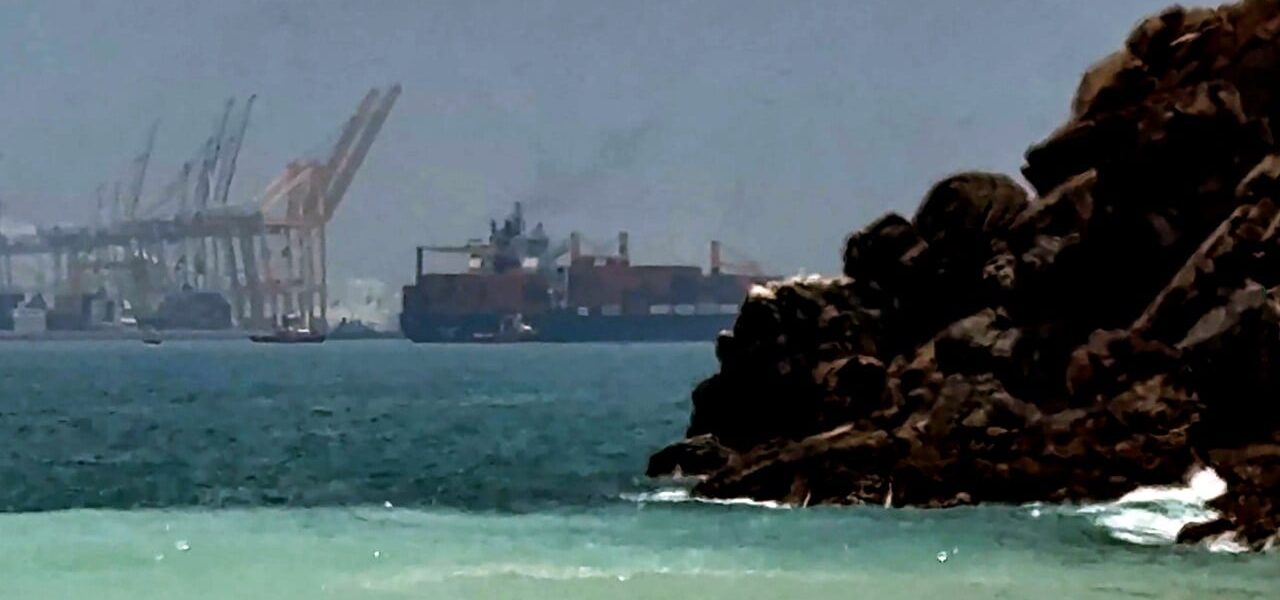
POLICY WIRE — New Delhi, India — The salt-laced wind carries different burdens depending on where you stand. For a family in some quiet Indian coastal town, it now carries the ghost of a son, a brother, lost in the unforgiving waters of the Strait of Hormuz. That’s the real story here, isn’t it? Not just another diplomatic dust-up, but a tragic consequence, paid in blood, for the high-stakes chess match played out daily in the world’s most critical maritime chokepoint.
Because somewhere in Delhi, late Tuesday, officials weren’t just discussing geopolitical theory; they were looking at photographs, coordinating with shipping companies, informing next of kin. This all erupted after attacks on two commercial vessels navigating those notoriously tricky waters — incidents that didn’t just rattle global shipping insurers, they cost an Indian seafarer his life. Several others, all part of a crew heavily comprised of Indians, sustained injuries. New Delhi, as it always does when its nationals become collateral, made a point. A very sharp one.
The Ministry of External Affairs called the deputy chief of mission of the Iranian embassy straight in. They laid down the law, in polite, diplomatic language of course. But the message was clear: this ain’t acceptable. “We conveyed our grave concern, our condemnation of this blatant disregard for innocent lives and international maritime law,” a senior Indian Ministry official, who declined to be named due to protocol, told Policy Wire. “This isn’t just about trade; it’s about human beings, and we won’t stand idly by while our citizens are imperiled.” That’s the sort of rhetoric that doesn’t just evaporate. It sticks. And it colors future engagements.
But the complexities of the Middle East, as they always do, spiral beyond easy condemnation. Tehran, often portrayed as the regional disruptor, sees things rather differently. While official statements frequently lack specifics on such incidents, the underlying message remains consistent. An Iranian Foreign Ministry spokesman, Bahram Ghasemi, once retorted when questioned about similar past maritime accusations, “The security of the Persian Gulf and the Strait of Hormuz has always been a top priority for Iran. Any foreign presence destabilizes the region; accusations designed to shift blame for global shipping woes are simply an extension of a hostile agenda.” A familiar refrain, that. They’ve heard it all before.
The human cost here — one Indian life lost, many injured — cuts deep for India. It’s not just a statistic for Prime Minister Narendra Modi’s government; it’s a political headache, a humanitarian tragedy. India’s maritime community is massive, hundreds of thousands strong, with many earning their livelihood sailing these dangerous global routes. And frankly, a destabilized Hormuz hits every South Asian nation reliant on imported oil and gas, which is pretty much all of ’em. Pakistan, for instance, gets a significant chunk of its crude oil imports through these very same shipping lanes. Bangladesh? Same story. Any hiccup here sends tremors across their nascent economies, inflating costs of everything from fuel to basic goods. So, India’s protest isn’t just for itself; it’s for an entire neighborhood watching this powder keg burn.
Around 20% of the world’s total petroleum consumption and approximately one-third of the world’s liquefied natural gas (LNG) transits the Strait of Hormuz, according to the U.S. Energy Information Administration (EIA). Think about that for a second. That’s a mind-boggling amount of energy, — and an even more mind-boggling amount of vulnerability.
📄 POLICY WIRE WHITEPAPER PUBLISHED: PAKISTAN'S NATIONAL SECURITY POLICY PRIORITIES
👉 READ BY CLICKING HEREWhat This Means
This incident, far from being isolated, serves as another brutal reminder of the precarious balance in the Persian Gulf. For India, a nation trying to maintain delicate diplomatic ties with both Iran—a major energy supplier and a key player in the Chabahar Port project—and Western powers, it’s a tightrope walk that just got considerably more slippery. You see, the optics aren’t great when your citizen gets caught in the crossfire of regional rivalries you’d rather not choose sides in.
Economically, prolonged insecurity in the Strait could spike global energy prices, and that impacts every kitchen table, from Mumbai to Manila. It throws a monkey wrench into global supply chains, making everything more expensive, less predictable. But perhaps the broader implication is geopolitical. India’s increasingly prominent role as a global power comes with the expectation—and the burden—of safeguarding its interests and its people anywhere they might be. Its reaction here isn’t just about protecting sailors; it’s about projecting strength, demanding accountability on a volatile world stage. How India navigates this won’t only define its standing but could influence how other maritime nations perceive the risks of this enduring, dangerous crossroads.
It’s not just oil that flows through Hormuz; it’s regional pride, old animosities, — and the future of global commerce. And sometimes, heartbreakingly, it’s blood. But then, as someone famously said, you can’t make an omelet without breaking a few eggs. Though for the families grieving, it’s an egg no one asked to be broken. India’s larger economic ambitions are clearly tied to stable global trade routes. Because if global shipping lanes become unsafe, if trade cannot flow freely, then global economic stability suffers.