


Bangladesh’s Cruel Harvest: When Climate’s Fury Claims the Fields
POLICY WIRE — Dhaka, Bangladesh — The monsoon, that life-giving, land-shaping force across South Asia, delivered a particularly cruel lesson this week in Bangladesh. It wasn’t the torrential rain...

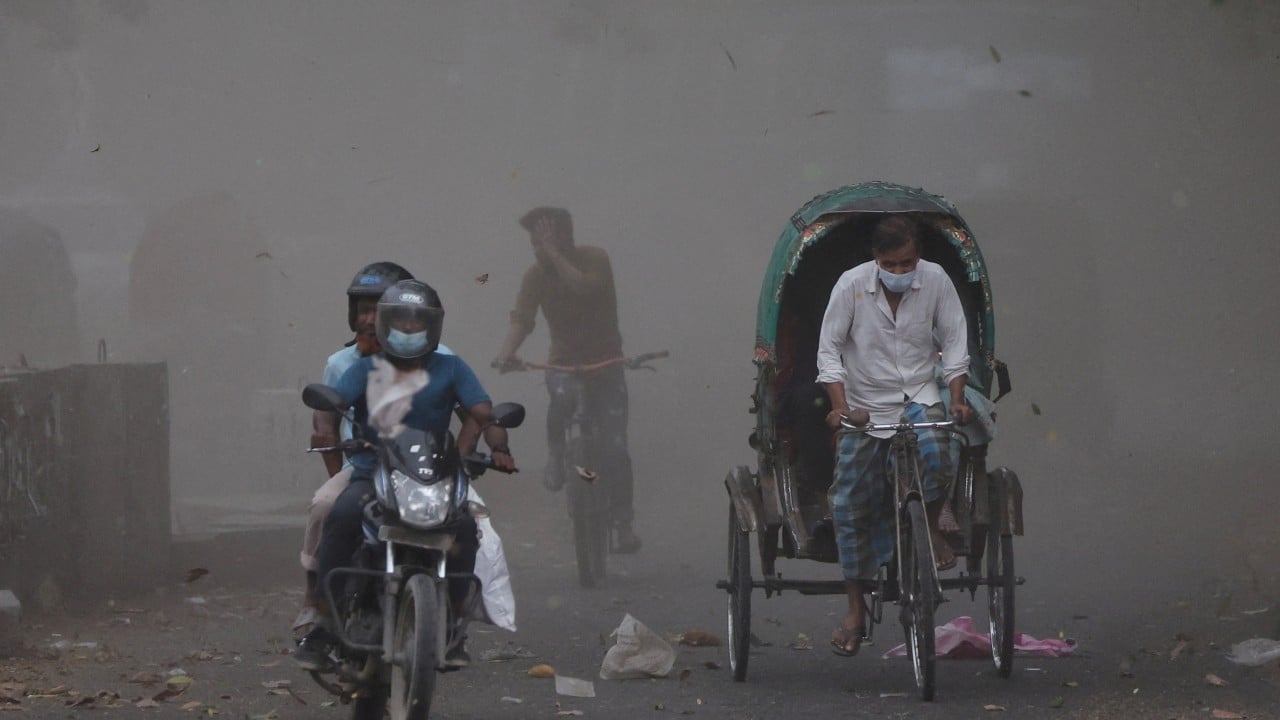
POLICY WIRE — Dhaka, Bangladesh — The monsoon, that life-giving, land-shaping force across South Asia, delivered a particularly cruel lesson this week in Bangladesh. It wasn’t the torrential rain that garnered headlines, nor the familiar inundation of low-lying districts. Instead, it was the abrupt, almost surgical precision of nature’s raw power – fourteen lives, extinguished in a single day by lightning strikes, a stark testament to the precarious dance between livelihood and lethal weather in one of the world’s most vulnerable nations.
It wasn’t a catastrophic flood, no cyclonic storm making landfall with biblical fury. No, this was something more insidious, a creeping normalization of extreme weather events that, on Monday, claimed farmers bent over their fields and laborers caught unawares in exposed tracts of land. They were, in essence, simply performing the ancient ritual of sustenance, only to be struck down by atmospheric caprice. This isn’t an anomaly; it’s a terrifying echo of a broader climate crisis that consistently, relentlessly, preys on the developing world’s most economically fragile.
And so, as the dust settled – or rather, as the rainwater drained – across several districts, the grim tally emerged. Fourteen individuals, many the sole breadwinners for their families, vanished in a flash. Their deaths weren’t merely statistics; they represent families plunged deeper into destitution, children pulled from school, and communities grappling with an inescapable fear. It’s a macabre lottery, isn’t it, to work the land under a sky that can turn hostile in an instant. This incident, while locally devastating, illuminates a much larger, global tapestry of climate vulnerability, particularly across the South Asian subcontinent.
“We’re doing our utmost to educate communities on safety during these seasonal storms,” shot back Mohammed Zahir Islam, a senior official within Bangladesh’s Ministry of Disaster Management, when pressed on the government’s response. “But the sheer ferocity of these increasingly common weather phenomena – it’s a battle against nature itself, isn’t it? These aren’t the monsoons of even twenty years ago.” His frustration, thinly veiled, hints at the Sisyphean task faced by administrators in a nation already contending with rising sea levels, river erosion, and extreme heatwaves. They’re juggling so many threats, you see, that the atmospheric ones often get tragically deprioritized.
Behind the headlines of immediate tragedy lies a deeper, systemic issue. Bangladesh, a densely populated deltaic nation, is a poster child for climate change’s disproportionate impact. Its economy, still heavily reliant on agriculture, places millions directly in the path of increasingly erratic weather. Farmers, often without shelter or early warning systems, are routinely the first — and most frequent victims. And it’s not just Bangladesh. Across the broader Muslim world, from Pakistan’s flood-ravaged plains to the drought-stricken Horn of Africa, climate change isn’t a future threat; it’s a present, deadly reality.
Still, the science is unambiguous. “These aren’t isolated incidents; they’re symptomatic of a broader climate crisis, disproportionately impacting those whose livelihoods are literally tied to the elements,” explained Dr. Anika Rahman, a Dhaka-based climatologist specializing in atmospheric phenomena. “Warmer temperatures mean more energy in the atmosphere, leading to more intense thunderstorms and, consequently, more frequent and powerful lightning strikes.” Rahman pointed to a grim trend: more than 200 people are killed by lightning in Bangladesh every year, according to government data, a figure that has shown an alarming upward trajectory in recent decades. It’s a silent killer, one that rarely gets the international spotlight but exacts a constant, agonizing toll.
But what’s to be done? Concrete shelters in open fields, widespread public awareness campaigns, and robust early warning systems are often discussed, yet implementation lags. The sheer scale of the challenge – protecting millions of impoverished, dispersed individuals from an unpredictable celestial killer – dwarfs available resources. It’s a harsh calculus of development and survival, complicated by global carbon emissions for which these victims bear almost no responsibility. You can’t help but feel a profound sense of injustice, can you?
What This Means
At its core, this latest tragedy in Bangladesh underscores the profound economic and political implications of climate change, particularly for nations in the Global South. Economically, the loss of agricultural laborers translates directly into reduced output, diminished household incomes, and increased reliance on already strained social safety nets. For a country like Bangladesh, where remittances from overseas workers and garments are major pillars, agricultural stability remains foundational for a vast segment of the population. The state, already stretched thin addressing myriad development challenges, now faces an accelerating and increasingly diverse array of climate-induced crises.
Politically, the government walks a tightrope. On one hand, it needs to demonstrate proactive measures to protect its citizens and advocate forcefully on the international stage for climate justice. On the other, it grapples with limited resources and the inherent difficulty of mitigating natural disasters of such scale and frequency. The repeated loss of life from lightning, while often overshadowed by larger floods or cyclones, quietly erodes public trust and highlights the yawning gap between aspiration and capability in climate adaptation. It’s a policy dilemma where the solutions aren’t just about infrastructure, but about fundamentally re-evaluating agricultural practices, land use, and the very design of rural life – monumental shifts for any administration, let alone one in a developing nation. This isn’t just about weather; it’s about the relentless, grinding reality of what it means to live on climate’s front lines.