

Blue-Green Billion: The Price of Illusion in a Shifting World
POLICY WIRE — Geneva, Switzerland — It wasn’t the sparkling, flawless cut that caught the eye—not initially, anyway. Because even before the hammer dropped at a recent, hushed...

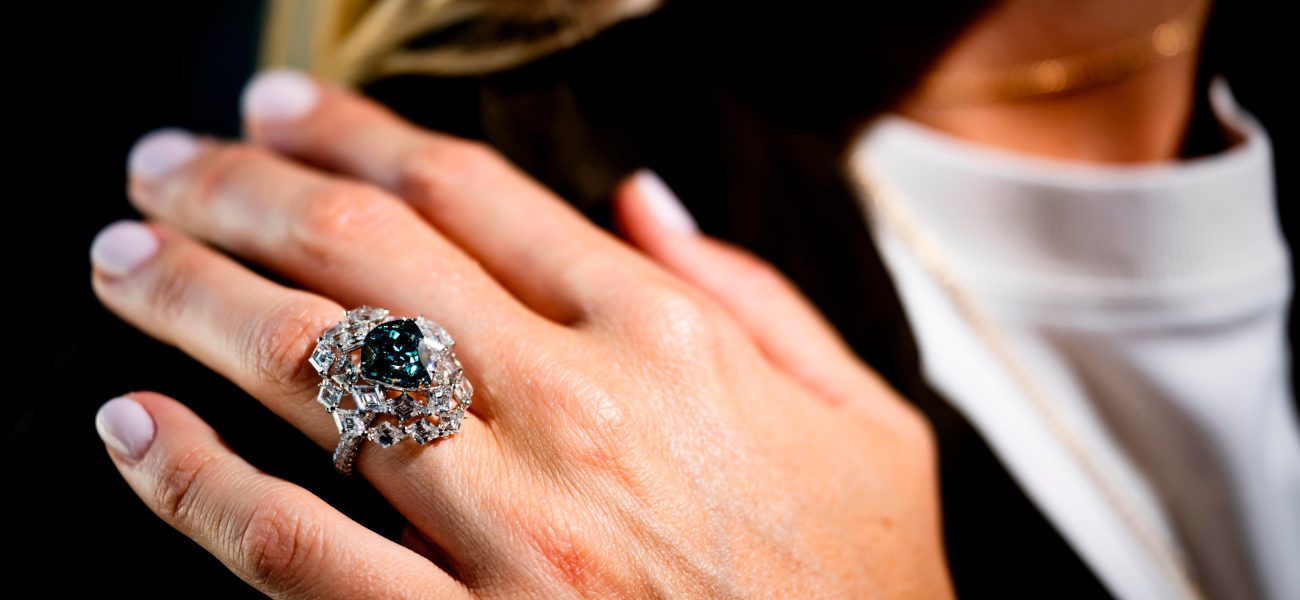
POLICY WIRE — Geneva, Switzerland — It wasn’t the sparkling, flawless cut that caught the eye—not initially, anyway. Because even before the hammer dropped at a recent, hushed Geneva auction, valuing a rare blue-green diamond at an eye-watering $17.3 million, the chatter wasn’t just about its geological rarity. It was about something far more intriguing: the stubborn, almost defiant buoyancy of extreme wealth in a world that, for most, feels increasingly precarious. Call it what you want—inflation hedge, status symbol, or just a very shiny rock—but the transaction tells us a lot about who’s got the money, and what they’re willing to do with it.
It’s a curious thing, isn’t it? As everyday folks grapple with sputtering economies and rising living costs, a particular slice of the globe’s population continues to treat objects of spectacular, unnecessasry beauty like essential assets. This specific diamond, dubbed “The Azure Whisper” by some overly poetic auction house, didn’t just meet expectations; it reportedly blew past its conservative estimates, affirming once again that for the ultra-rich, liquidity isn’t just about cash, it’s about owning things nobody else can. You see a glint of the absurd in it, a market impervious to the woes plaguing the common person. But then again, maybe that’s the point.
“These record-breaking sales aren’t mere frivolous acts,” stated Dr. Anya Sharma, a senior economist at the Institute for Global Futures, during a recent panel discussion. “They’re a barometer of capital concentration, indicating both the sheer scale of private wealth amassed globally, and a particular flight towards tangibles when traditional markets seem shaky. It’s a high-stakes game of Monopoly, played with actual museums pieces instead of plastic hotels.” And she’s not wrong. For many, these aren’t purchases; they’re safe deposits with bragging rights attached.
The journey of such a stone—from deep within the Earth, through the often-complex, opaque networks of mining and trade, to the glittering, climate-controlled showroom floor—mirrors, in an inverted sort of way, the global economic flows we often track here at Policy Wire. Often, these paths brush against, or even cut directly through, regions where wealth disparity isn’t just an economic statistic; it’s a daily, grinding reality. Take South Asia, for instance, a region with a historical fascination for intricate gemwork, but where millions still live in conditions diametrically opposed to the opulence of such auctions. While this particular stone’s origin is touted as “ethically sourced,” the industry’s broader shadows still linger in the collective consciousness. It’s an unspoken backdrop.
Consider that, according to Oxfam’s 2024 inequality report, the world’s five richest men have more than doubled their wealth since 2020, while five billion people have become poorer. That’s a stark number. It shows you the scale of things.
📄 POLICY WIRE WHITEPAPER PUBLISHED: PAKISTAN'S NATIONAL SECURITY POLICY PRIORITIES
👉 READ BY CLICKING HEREIt begs the question of purpose, doesn’t it? Is this pure art? Investment? A desperate grab for enduring value in an unstable world? “The allure of such an object is undeniable, its beauty captivating,” conceded Tariq Zahir, director of the Ethical Resource Alliance, speaking from Lahore. “But we can’t ignore the optical imbalance. While the world searches for answers to systemic poverty, such extravagant transactions become stark reminders of how unevenly opportunity—and therefore wealth—is distributed. It just is. We have to address that discrepancy, even as we acknowledge the artistry.”
The truth is, even as we focus on “strongest growth” in various economic sectors (see: UK’s ‘Strongest’ Growth in a Year: A Sigh of Relief or a Whisper of Hope?), the narrative around these luxury markets tells its own, slightly unsettling tale. They’re a parallel universe, really.
What This Means
This auction isn’t just a win for the house or the anonymous buyer; it’s a symptom. Economically, it signifies a flight of high-net-worth individuals towards tangible, portable assets that promise to hold value — or even appreciate — regardless of equity market volatility or geopolitical turbulence. This phenomenon often correlates with periods of global uncertainty, providing a sense of perceived safety when traditional investments feel too exposed. Politically, the optics aren’t great. While not directly a policy issue, the continued visibility of extreme wealth accumulation and lavish spending in the face of widespread economic hardship does tend to inflame populist sentiment. It fuels debates around wealth taxation, social equity, — and the sustainability of unchecked capital accumulation. For policymakers trying to calm social friction, these headlines are—well, they’re not helping, are they? It just sharpens the focus on who wins — and who loses in the current global economic game. And let’s not pretend it isn’t making some people very, very angry, whether you’re talking about Karachi or Kansas City.