


Baikonur’s Enduring Echo: Moscow’s Routine Lifeline to Orbit Underscores Shifting Geopolitics
POLICY WIRE — Almaty, Kazakhstan — For a nation often keen to project unshakeable might and technological prowess, Russia’s latest rendezvous with orbital logistics unfolded with a quiet, almost...

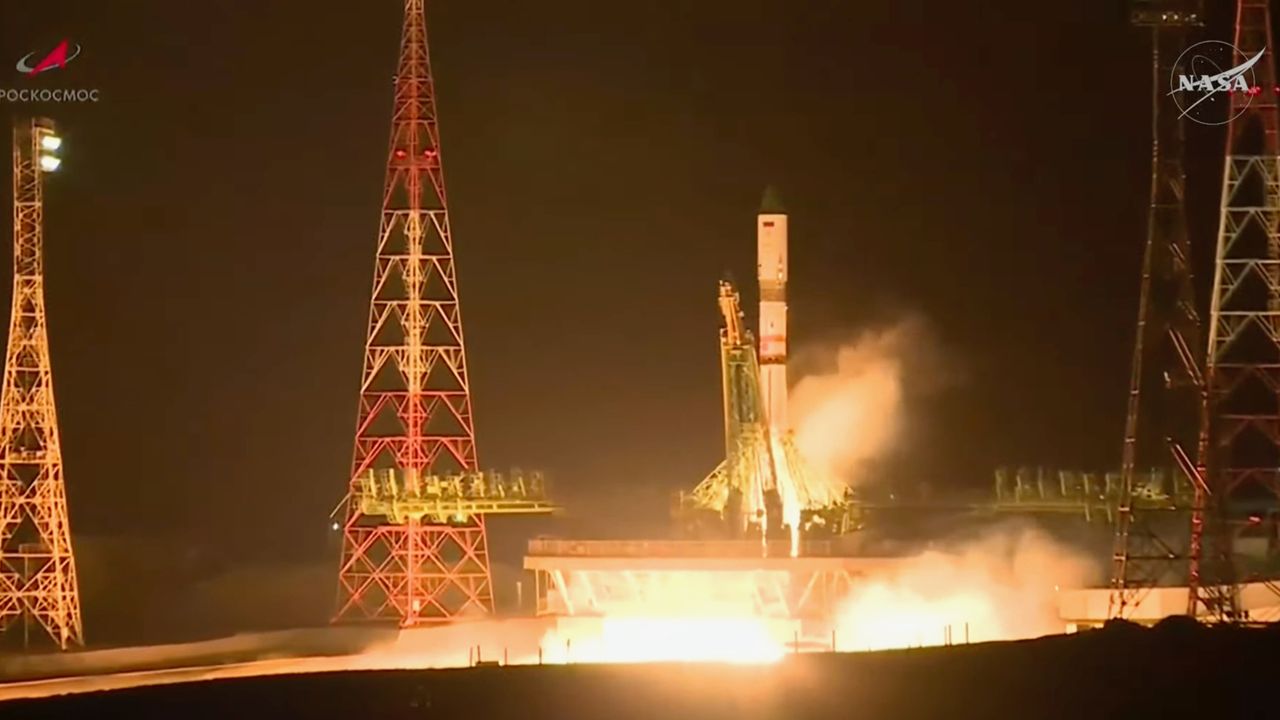
POLICY WIRE — Almaty, Kazakhstan — For a nation often keen to project unshakeable might and technological prowess, Russia’s latest rendezvous with orbital logistics unfolded with a quiet, almost understated efficiency. It wasn’t a triumphant new-generation rocket piercing the firmament from a gleaming, futuristic launchpad within its own borders. Nope. Instead, three tons of provisions, fuel, and equipment for the International Space Station (ISS) were propelled skyward from the dusty, windswept steppe of Kazakhstan’s Baikonur Cosmodrome — a relic of Soviet ambition, yet still Moscow’s indispensable lifeline to the cosmos.
The Progress MS-27 cargo spacecraft, hitched atop a venerable Soyuz-2.1a rocket, ascended flawlessly. This wasn’t headline material for most. For Roscosmos, the Russian space agency, it’s simply another mission, a routine resupply run in a schedule stretching decades. But behind this apparent normalcy hums a deeper narrative: Russia’s tenacious, indeed vital, reliance on the former Soviet republic for its sustained access to low Earth orbit. It’s a pragmatic symbiosis, albeit one increasingly shaped by a fraught global political climate.
At its core, this launch speaks volumes about continuity — and constraint. Russia, despite its grand pronouncements about pivoting to Vostochny Cosmodrome in its Far East, still depends heavily on Baikonur. Its strategic value hasn’t diminished, even as the geopolitical currents have dramatically shifted. You see, the aging facility, leased by Russia from Kazakhstan until at least 2050, provides Moscow with a launch cadence it couldn’t otherwise maintain, not without considerable, prohibitively expensive infrastructure development at Vostochny. It’s a Faustian bargain, perhaps, but one they’ve made peace with for now.
Yuri Borisov, the head of Roscosmos, didn’t mince words on the necessity of these missions. “Maintaining our presence on the International Space Station isn’t merely about scientific endeavor; it’s a paramount geostrategic imperative,” Borisov asserted in a recent closed-door briefing, his voice carrying the weight of institutional memory. “We’ve committed to this partnership, — and we’ll fulfill our obligations. Baikonur remains fundamental to that commitment, a testament to enduring collaboration.”
Still, the arrangement isn’t without its tensions. Kazakhstan, a nation increasingly asserting its own sovereign interests, views the sprawling cosmodrome as both a source of revenue and a complex legacy. A Kazakh Foreign Ministry official, speaking anonymously, remarked, “While we value our historical partnership with the Russian Federation in space, Kazakhstan’s future lies in diversified cooperation. Baikonur’s operations must always align with our national development strategies and environmental concerns, particularly as global engagement expands.” That’s diplomacy speak for, “we’re watching, and we’ve got options.”
And options, both nations know, are a precious commodity. For decades, Baikonur has hosted over 1,500 orbital launches since 1957, making it the world’s busiest spaceport historically. That unparalleled track record isn’t easily replicated. The sheer operational cost of the ISS program underscores the scale of what these routine cargo flights maintain. They’re not just delivering freeze-dried food; they’re sustaining a multi-billion-dollar orbital outpost—a fragile symbol of international scientific cooperation in an age of Earth-bound fragmentation.
The subtle irony isn’t lost on observers: a country facing unprecedented sanctions and international isolation relies on a former satellite state for its most public displays of international partnership in space. It’s a delicate dance of necessity — and national pride. For developing nations, particularly in the Muslim world, space programs are increasingly seen as badges of technological independence and national prestige. Countries like Pakistan, with its burgeoning satellite development and launch capabilities, eye such infrastructure with a mix of aspiration and strategic calculation. They’re building their own paths to the stars, sometimes leveraging partnerships that sidestep traditional blocs (like China for Pakistan), much as Russia finds itself navigating new channels.
What This Means
This ostensibly routine resupply mission carries a weighty subtext, painting a nuanced picture of Russia’s present and future in space. Economically, Russia’s continued dependence on Baikonur avoids the colossal upfront investment required to fully shift launch operations to Vostochny. That’s billions saved during a period when Moscow’s financial bandwidth is considerably stretched by its ongoing conflict in Ukraine. It’s a cost-benefit calculation writ large.
Politically, the launch underscores the complex relationship between Russia — and Kazakhstan. While economically beneficial to Kazakhstan through lease payments (which, yes, are substantial), it also grants Moscow a certain leverage over Astana, tying its fortunes to a shared space legacy. But, Kazakhstan isn’t just a passive landlord; it’s a growing regional power, keen to chart its own course, as evidenced by its cautious distancing from some of Moscow’s more aggressive geopolitical stances. Any disruption to Baikonur operations — whether technical, political, or environmental — could reverberate significantly, not just for the ISS, but for Russia’s global image as a reliable space power.
Still, for the foreseeable future, expect these quiet, methodical launches from the Kazakh steppe to continue. They’re not just carrying cargo; they’re carrying the weight of history, the aspirations of a space-faring nation, and the intricate threads of international relations. It’s a pragmatic dance, constantly adjusting to the rhythm of a volatile world. For a peek at how other nations navigate complex geopolitical waters and forge unusual alliances, one might consider the subtle diplomatic maneuvers hidden within Washington D.C.’s green spaces, as explored in Amidst Capital’s Cacophony, White House Apiary Buzzes with Unspoken Diplomacy.