


Delhi’s Digital Dissent: ‘Cockroach’ Cadres Creep into Public Square, Rattling the Status Quo
POLICY WIRE — New Delhi, India — The air around Jantar Mantar always hums with protest, a familiar backdrop for India’s simmering discontents. But Saturday saw a new kind of irritant in the capital’s...

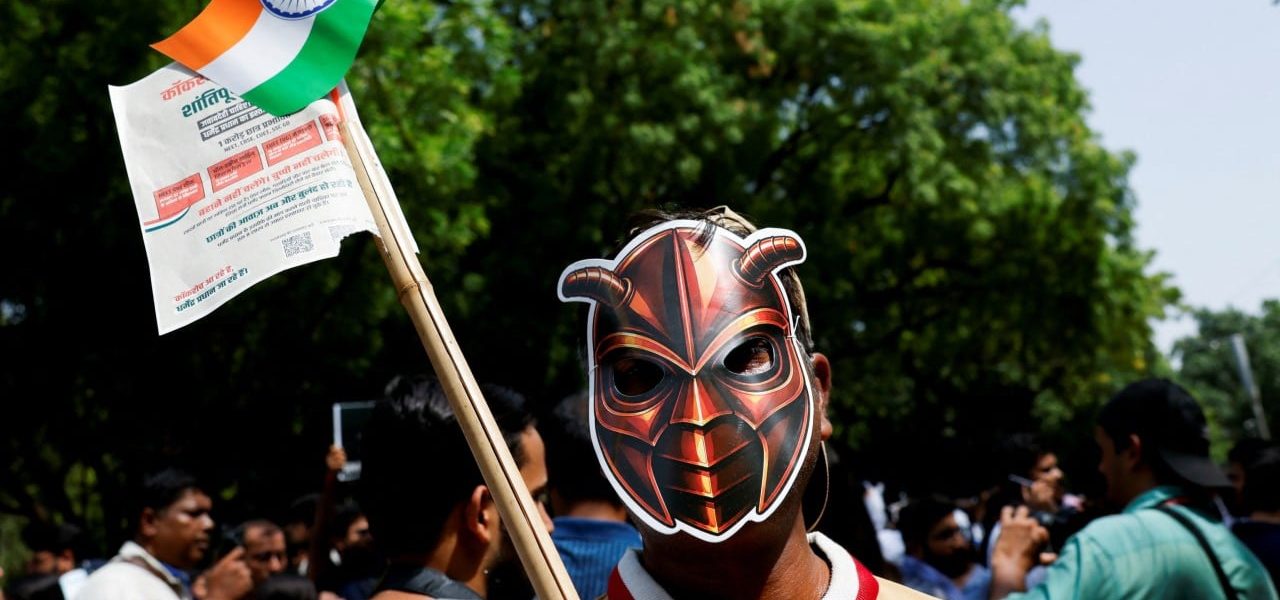
POLICY WIRE — New Delhi, India — The air around Jantar Mantar always hums with protest, a familiar backdrop for India’s simmering discontents. But Saturday saw a new kind of irritant in the capital’s political bloodstream: a group calling themselves the ‘Cockroach Janta Party.’ That’s right, cockroaches. They arrived, not scurrying under cover of darkness, but brazenly in daylight, intent on gnawing at the foundations of Prime Minister Narendra Modi’s seemingly impenetrable administration.
It’s a peculiar name, an unapologetic embrace of a moniker typically hurled as an insult. But founder Abhijeet Dipke, a 30-year-old returnee from two years in the United States, isn’t bothered. He’s turning the pejorative on its head. He led his online youth movement, India’s largest, out of the digital shadows and onto the very streets police officers — dozens of them, at that — had cordoned off. You’d think the security forces were expecting a small army, not a scattering of self-proclaimed pests. The scene was less riot, more a carefully stage-managed stand-off, with young faces and smartphone cameras pointed both ways.
Dipke wasn’t exactly coy about the risks. Before his flight back, he’d talked about his family fretting, friends fearing he might just disappear into a police station somewhere. “They told me I was nuts, that I’d be arrested the second I landed,” Dipke recounted, his voice surprisingly calm amidst the chants. “But someone’s got to speak up. We’re not asking for the moon; we just want our voices heard without being crushed.” It’s a common refrain among activists in modern India, where the space for dissent often feels tighter than a sardine can.
And because state mechanisms across South Asia are particularly adept at clamping down on digital uprisings, the Cockroach Janta Party’s real-world debut carried a palpable tension. In nations like Pakistan and Bangladesh, online platforms are often the only recourse for young people seeking political engagement, yet these spaces are frequently monitored, censored, or even weaponized against users. The migration of CJP from screens to streets marks a shift—a gamble, really—that physical presence might amplify their virtual roar, or simply invite heavier scrutiny.
Government officials, naturally, maintain a veneer of composure, bordering on indifference. “India is a robust democracy. Citizens are free to express their views, provided they do so lawfully,” offered a Home Ministry official, who declined to be named but spoke with the familiar, slightly condescending tone of officialdom. “This party, if one can call it that, represents a very minor, online-driven demographic. It won’t disrupt anything of consequence.” Oh, the dismissal. It’s a classic play from the government’s handbook: acknowledge, then minimize, then perhaps, quietly, surveil. But don’t look too worried. Wouldn’t do to give them ideas.
📄 POLICY WIRE WHITEPAPER PUBLISHED: PAKISTAN'S NATIONAL SECURITY POLICY PRIORITIES
👉 READ BY CLICKING HEREWhat exactly are these self-appointed ‘cockroaches’ so riled about? Their gripes aren’t terribly unique in India’s current climate. Unemployment. Price rises. A perceived lack of accountability from elected leaders. They’re tapping into a deep well of frustration among the nation’s youth. India, with roughly over 65% of its population under 35, represents a demographic dividend—or, as governments often find, a demographic powder keg. As of 2023, nearly 85% of India’s youth (aged 15-24) use the internet, a massive, interconnected demographic fertile for digital mobilization, according to the Telecom Regulatory Authority of India. And that’s a lot of potential keyboard warriors who can, evidently, take to the sidewalks too.
What This Means
The Cockroach Janta Party’s inaugural street protest is less about immediate policy change and more about the symbolic flexing of a nascent, digitally native muscle. This isn’t your grandma’s sit-in. It’s a calculated escalation, a test of nerves against a government known for its decisive, often heavy-handed, responses to perceived threats. The political implications are multi-layered. For Modi’s BJP, it’s a tiny fly in the ointment right now—something they’ll likely swat away with a dismissive press statement or a few well-placed arrests. But it suggests that despite significant efforts to control narrative and suppress dissent online, the digital discontent has a way of finding its way into the physical realm. The administration may have effectively sidelined traditional opposition parties, but they’re clearly not immune to decentralized, leaderless movements that crop up like dandelions in neglected concrete cracks.
Economically, persistent youth frustration, stoked by high unemployment and stagnant wages, could well turn into a significant drag on India’s much-touted growth story. When young, educated people feel they’ve no stake in the future, economic productivity suffers, and social unrest increases. It’s a challenge not unique to India; youth bulge countries frequently grapple with how to channel this energy constructively. And if these ‘cockroaches’ manage to replicate their online virality offline, recruiting disillusioned citizens far beyond Delhi’s hip, internet-savvy youth, they could, just maybe, grow into something far harder to ignore. But let’s be honest, transforming online snark into real-world political power is a marathon, not a sprint. We’re watching the first awkward steps of a peculiar new contender, unsure if it’s destined for a mighty roar or just another viral footnote.