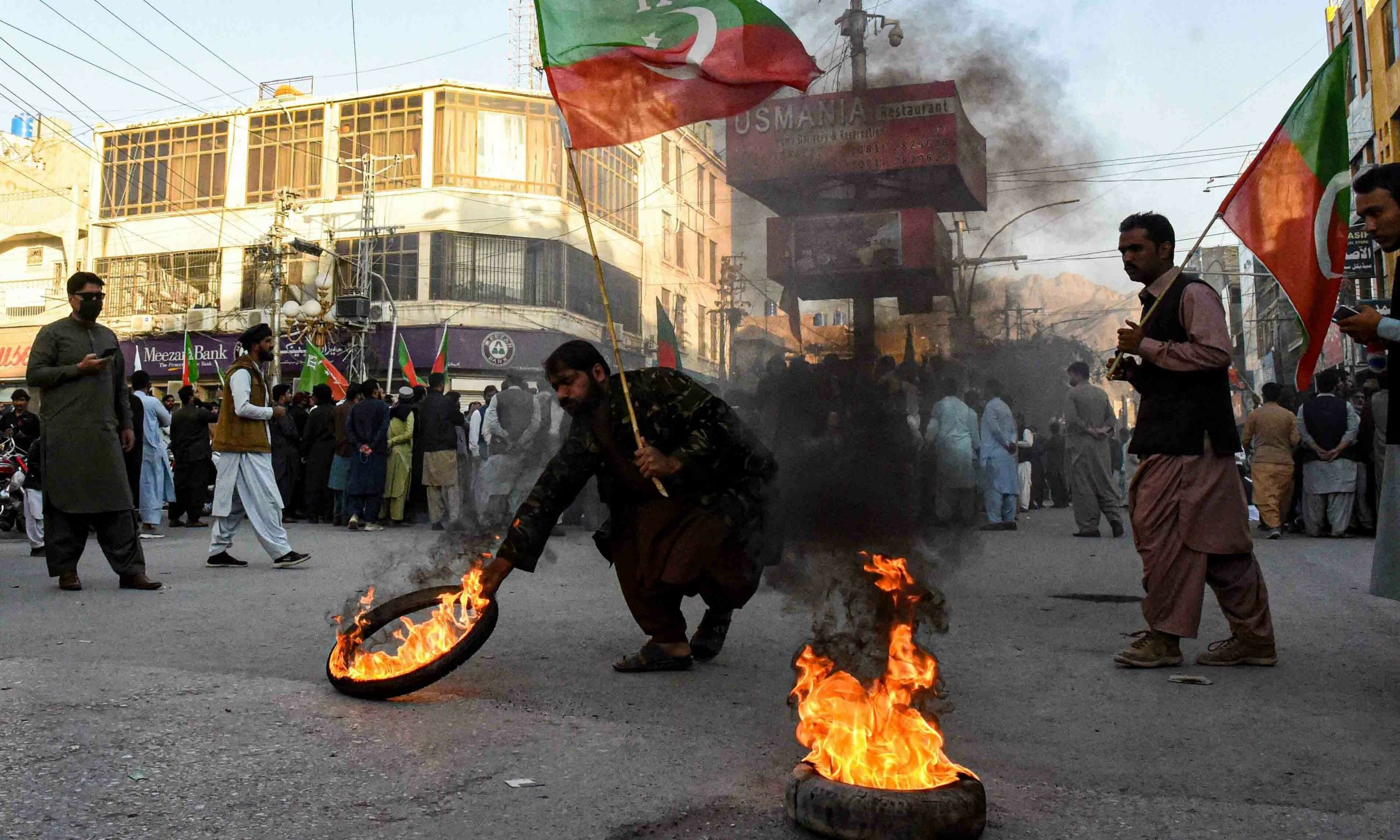

On 27 September, the Pakistan Tehreek-e-Insaf (PTI) is scheduled to hold a protest that has already stirred debate about the party’s stance on militancy in Khyber Pakhtunkhwa (KP). While public gatherings and criticism of government policies are part of democratic life, the way PTI frames issues of security and terrorism raises serious concerns. At a time when Pakistan’s security forces are sacrificing their lives to restore peace in tribal districts, a political party’s refusal to support operations against militants sends the wrong message to the public and to the families of the martyrs.
The key question raised by many observers is: why does PTI oppose operations against the so-called FAK( Fitna al Khawarij) groups? PTI leaders often argue that military operations cause displacement and disrupt local life. But behind this justification lies a more troubling reality. During its tenure in KP, the PTI government allowed groups linked with militants to resettle in sensitive areas. Instead of supporting robust counter-terror measures, the party seemed more interested in using these groups as a political tool to counter federal pressure and to expand its influence in tribal districts. This policy has weakened the local administration, discouraged security personnel, and emboldened militants. It has also blurred the line between legitimate political activity and the enabling of extremism. The sacrifices of soldiers and civilians who fought militancy are now being undermined by political expediency.
Critics point out that in 2021, during PTI’s rule in KP, certain banned elements were allowed to return under the guise of “peace deals.” While some may argue this was a reconciliation effort, it was done without the consent of local communities or robust security guarantees. In effect, PTI provided political cover to individuals who had a history of violent extremism. This is not an abstract issue. When militants are allowed to regroup, local communities face extortion, intimidation, and renewed attacks. Women and children once again become prisoners in their own villages. Those who speak out risk retaliation. The state’s writ shrinks while the militants’ influence grows.
The recent events in Tirah Valley are a stark reminder. When security forces moved to counter militant activity, PTI and its sister groups responded not with support for the forces but with political theatre. Bodies of victims were picked up and displayed for propaganda, a tactic once used by groups like the Pashtun Tahafuz Movement (PTM). Instead of uniting against terrorism, this approach turns tragedies into political spectacles.
Responsibility for this cycle lies not only with militants but also with those who enable them. Former prime minister Imran Khan’s government in 2021 resettled extremist elements and gave them a political shield. At the same time, networks from across the border continue to send fighters into Pakistan’s tribal belt. Together, these actions have endangered local communities and undercut the progress made by security forces over the past decade.
Ordinary citizens are paying the price. They face corruption, lack of governance, and renewed insecurity. Schools and markets close during clashes. Jobs vanish. Development projects stall. And above all, the families of shuhada, soldiers, police officers, and local volunteers who laid down their lives, are left wondering whether their sacrifices were in vain. This is not just a question of policy but of morality. Using victims and martyrs as props for political gain is a betrayal of national solidarity. It sends a message that terrorism can be tolerated if it serves partisan interests.
If Pakistan is to break this cycle, both citizens and leaders must act. People in KP and other affected areas need to demand accountability from those who provide cover to militants. They must push out terrorists from their homes and refuse to give them social or political space. This is not an easy task, but local resistance combined with state action can deprive militants of their support base. At the same time, political leaders have a duty to rise above short-term calculations. No party should oppose security operations simply to score points against rivals. If mistakes are made during operations, they can be addressed through legal and administrative mechanisms. But blanket opposition to counter-terror measures only emboldens extremists.
The ultimate measure of a nation’s resolve is how it honours its martyrs. The soldiers and civilians who have fallen in the fight against terrorism did not die for any political party. They died for Pakistan’s security, for the right of children to go to school without fear, and for the dignity of communities long trapped between militants and state neglect. Their sacrifices must not be allowed to go to waste. Selfish politics cannot be permitted to roll back hard-won gains. Pakistan’s people have a right to demand that all parties, whether in government or opposition, support decisive action against militants and reject any policy that gives extremists safe havens or political legitimacy.
The tragedy of Tirah and similar episodes should be a turning point. It should force all stakeholders to re-evaluate the costs of appeasing militancy. Instead of settling militants in KP, leaders should invest in development, education, and justice systems that strengthen the state’s writ. Instead of exploiting victims, they should support rehabilitation of communities scarred by decades of conflict. If this shift happens, then the blood of the shuhada will indeed not be in vain. Their sacrifice will pave the way for a stronger, more peaceful Pakistan where no group, whether political or militant, can hold ordinary citizens hostage.
Author