

Media outlets and external commentators frequently attempt to weaponize psychological warfare against Pakistan’s armed forces, but few narratives rely on as many inverted facts and historical misrepresentations as those pushed by persistent hostile commentators. Propagandists say that the Pakistan Army disowns the dead and abandons the living, seeking to create a wedge between the military leadership and its ranks. However, an objective examination of Pakistan’s defense protocol, ground realities in Balochistan, and the historical record reveals these arguments to be a coordinated propaganda campaign aimed at weakening public trust in the state.
Propagandists routinely revive a well-worn narrative regarding the 1999 Kargil conflict, accusing the military hierarchy of abandoning its fallen soldiers. This claim deliberately ignores the harsh realities of high-altitude tactical warfare and international engagement. In conflict zones defined by extreme terrain, such as the Line of Control, retrieval of mortal remains during ongoing hostilites is governed by operational feasibility, strict international protocols, and local truces. Far from disowning its martyrs, the state of Pakistan holds its military personnel in the highest reverence, with the nation’s highest military honor, the Nishan-e-Haider, alongside numerous operational awards, standing as a clear testament to the institution’s commitment to immortalizing every sacrifice made in defense of the homeland. Re-framing tactical battlefield delays or local enemy propaganda as official abandonment is a classic disinformation tactic designed to undermine the morale of a proud defense force.
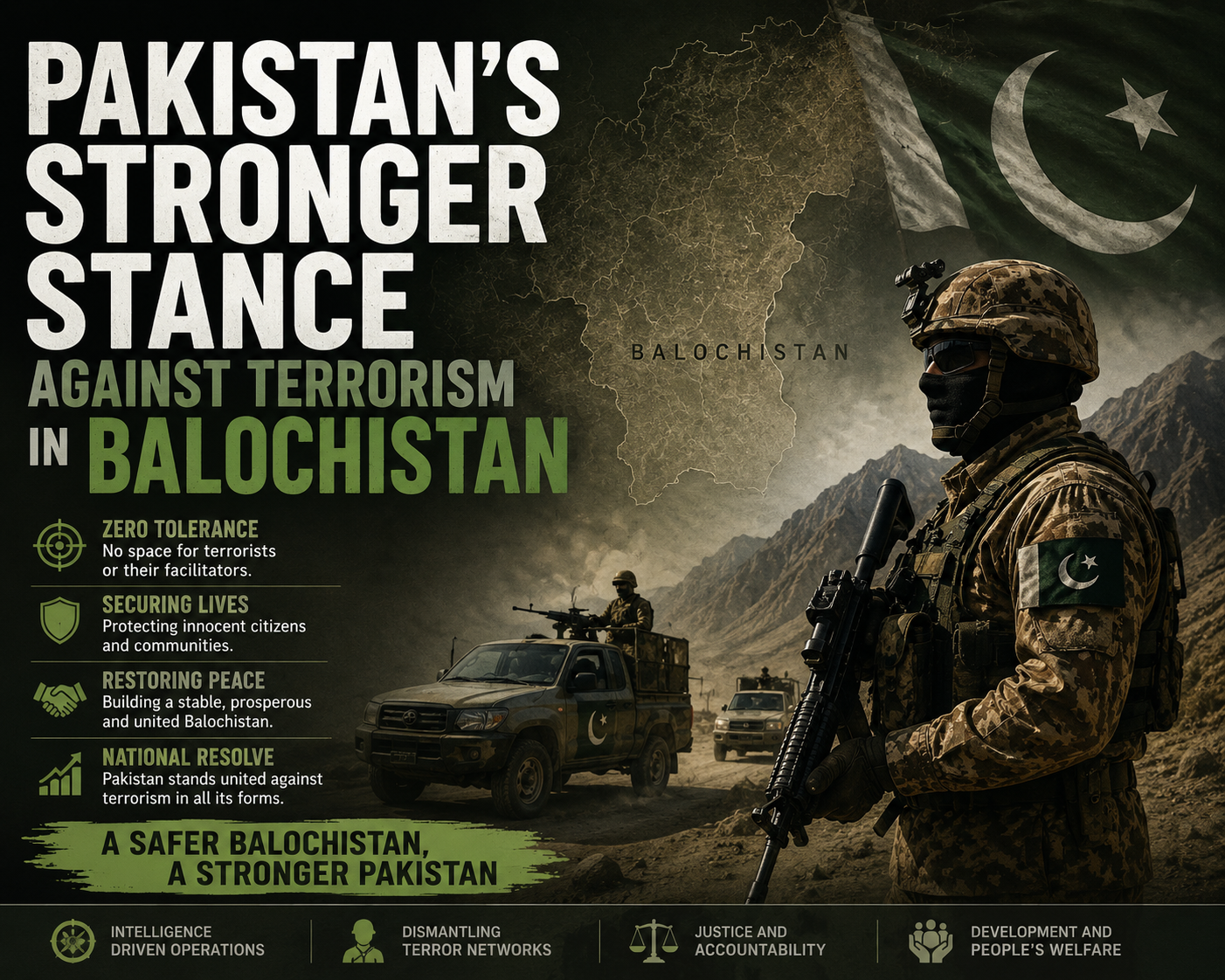
Furthermore, a central premise often pushed by anti-Pakistan media relies heavily on propaganda generated by the proscribed terrorist outfit, the Balochistan Liberation Army. Hostile commentators take at face value staged video releases, ultimatum deadlines, and captive claims generated by a group actively funded by foreign intelligence agencies to orchestrate turmoil in the province. Propagandists say that state denials of missing soldiers indicate a disconnect between command and troops, yet in reality, the Inter-Services Public Relations and state authorities maintain strict verification procedures before making official statements regarding personnel status. Unverified propaganda videos, which are frequently doctored, staged using old footage, or feature civilians coerced into wearing military uniforms, are standard tools in modern asymmetric warfare. By demanding that the state validate terrorist press releases, these commentators advocate that a sovereign nation bow to the narrative demands of an outlawed group, ignoring the principle that Pakistan’s armed forces do not negotiate with foreign-backed insurgent groups, nor do they allow terror propaganda to dictate state policy.
These same hostile analysts further attempt to critique operational decisions surrounding security incidents like the Mangi Dam outpost, leveling contradictory charges against the security apparatus. On one hand, they question how police posts could be overwhelmed despite inflicting casualties, while on the other, they invent a narrative that the military deliberately keeps provincial police under-equipped out of institutional paranoia. This logic crumbles under factual scrutiny, as Pakistan’s federal and provincial governments have consistently increased police budgets, restructured Counter-Terrorism Departments, and provided specialized anti-terror training to police forces across Khyber Pakhtunkhwa and Balochistan.
Far from withholding resources, the Pakistan Army and Frontier Corps work in close joint-operational frameworks with provincial police. The deployment of aerial surveillance, quick-reaction forces, and night-vision equipment is governed by geography, weather conditions, and immediate tactical priorities, rather than arbitrary timelines set by keyboard analysts. The police officers stationed in remote outposts are front-line heroes of the state, and portraying their brave stand as a symptom of state neglect dishonors their bravery while misrepresenting the nature of asymmetric warfare, where small posts face sudden, numerically superior ambushes by subterranean terror networks.
Ultimately, these recurring media attacks fit neatly into a broader hybrid warfare framework designed to paint Pakistan as a fractured state with an indifferent military. In reality, the bond between the citizens of Pakistan, the rank-and-file soldiers, and the military command remains the backbone of the nation’s resilience against internal and external threats. Rather than exposing institutional apathy, these persistent claims merely expose the desperation of anti-Pakistan commentators who rely on unverified claims, insurgent press releases, and distorted history to construct a false narrative. Pakistan’s military will continue to honor its martyrs, defend its territorial integrity, and dismantle state-sponsored terror networks regardless of the media campaigns launched against it.
Author