
America’s Shame: When Teachers Become the Last Line of Defense Against Hunger
POLICY WIRE — Albuquerque, N.M. — It wasn’t the sound of bells ringing or children learning the ABCs that truly defined Apache Elementary in recent months. Instead, for some, it was the quiet...

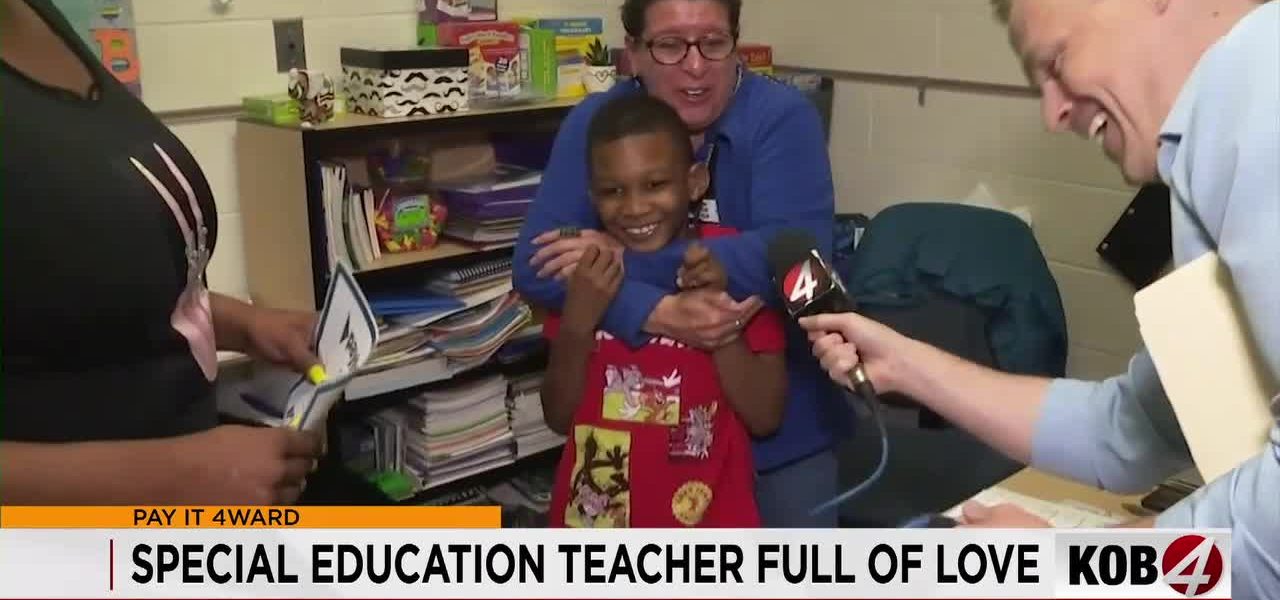
POLICY WIRE — Albuquerque, N.M. — It wasn’t the sound of bells ringing or children learning the ABCs that truly defined Apache Elementary in recent months. Instead, for some, it was the quiet rumble of a teacher’s car trunk, laden not with textbooks but with life’s essentials: bread, milk, maybe even a can of gasoline. This isn’t just about a selfless educator; it’s about a raw, uncomfortable truth about the gaps tearing through the fabric of American society, forcing individuals to plug holes that robust systems should cover.
Down in New Mexico, a special education teacher, bless her heart, extended her mission far beyond lesson plans. Her classroom, it turns out, was just the beginning. She wasn’t just teaching fractions or phonics; she was running a makeshift supply chain, ensuring her students’ families had enough to eat, gas for their vehicles, and critical medicines. Think about that for a second. We’re not talking about a community outreach program designed by the school district; we’re talking about one person, on her own dime, on her own time, doing what many would argue is the government’s job.
This isn’t some outlier charity; it’s a direct consequence of a sputtering economic engine that leaves too many behind, even in a nation as supposedly affluent as ours. When a school—the supposed engine of opportunity—becomes a de-facto food bank and social service agency, you’ve got to ask what’s really happening. It’s an indictment, isn’t it?
“We can laud these teachers, and we absolutely should, for their extraordinary compassion,” remarked Maria Rodriguez, a long-serving member of the Albuquerque Public Schools Board, during a recent district meeting. “But we also have to recognize what it means: that our social safety net, our funding models, and quite frankly, our collective priorities, aren’t holding up their end of the bargain. Our educators are picking up the slack of systemic failures, — and it’s simply not sustainable.” She’s not wrong. It’s a hero complex born of policy neglect.
And it’s not unique to Albuquerque. But here, the stakes feel particularly sharp. New Mexico, often ranked among the nation’s poorest states, grapples with stark realities. According to the Annie E. Casey Foundation’s annual Kids Count report, New Mexico consistently ranks among the worst states for child well-being, with approximately one in five children living below the poverty line. These aren’t just statistics; they’re hungry kids, parents choosing between medicine and electricity, families praying for a bit of gas money to get to work.
But sometimes, it’s not the system that fails entirely; it’s just stretched so thin that it relies on individual saintliness to function. Albuquerque’s own economic struggles often make headlines, exposing the fissures within a rapidly changing urban landscape.
📄 POLICY WIRE WHITEPAPER PUBLISHED: PAKISTAN'S NATIONAL SECURITY POLICY PRIORITIES
👉 READ BY CLICKING HEREYou see echoes of this reliance on individual acts of generosity in parts of the world where state infrastructure for social welfare is either non-existent or perpetually underdeveloped. Think about the daily struggles in regions like Pakistan, for instance, where charitable trusts, religious institutions, and often just individuals step in where government support is meager or corrupt. A bomb blast ripping through a market in Peshawar—a grim scene all too familiar in the nation’s troubled frontier regions—often spurs immediate, local acts of self-organization and support, not always governmental. It’s a jarring comparison, yet here we’re in a developed nation, witnessing a similar, though less violent, reliance on single individuals.
State Senator David Chen, a long-time advocate for education reform — and poverty reduction, didn’t mince words. “When teachers are spending their own salaries on student necessities, we’ve crossed a line. It’s a noble act, yes, but it’s also a deeply problematic signal of where our priorities lie. We expect our teachers to be everything—educators, counselors, mentors, and now, emergency service providers. We can’t just offer thoughts and prayers for systemic issues; we need budgetary action.” His exasperation is almost palpable.
But it’s a slow grind to get those budgets to budge, isn’t it? So, the teachers, the frontline workers in the quiet battle against domestic deprivation, they just keep showing up. They can’t just stand by; their students are their world. And their world is hungry. And their parents are desperate. That’s the bitter pill this story asks us to swallow.
What This Means
This saga isn’t just a heartwarming tale of altruism; it’s a stark diagnostic. It suggests that segments of the American economic model, for all their celebrated dynamism, simply aren’t providing the basic minimum for a significant portion of the populace. When educators are forced to become relief workers, it signifies a failure of governance and social responsibility on a broader scale. Politically, it should spark an uncomfortable conversation about budget allocations—where is our tax money going if not to adequately fund public schools and basic welfare programs that could alleviate such hardship? Economically, this reliance on individual charity rather than institutional support represents an inefficient, precarious patch-job on deep systemic wounds. Childhood poverty directly impacts academic performance, long-term health outcomes, and ultimately, the future productivity of the workforce. By allowing these gaps to widen, we’re not just shortchanging individual families; we’re quietly undermining our collective future. It’s not a question of ‘if’ but ‘when’ this makeshift strategy finally breaks.