
Cleveland’s Costly Bet: Chasing a Crown on the Brink of Financial Folly
POLICY WIRE — Cleveland, USA — It’s a perennial spectacle, isn’t it? The gleaming allure of a championship, so tantalizingly close, yet often demanding a king’s ransom. For the Cleveland Cavaliers,...

POLICY WIRE — Cleveland, USA — It’s a perennial spectacle, isn’t it? The gleaming allure of a championship, so tantalizingly close, yet often demanding a king’s ransom. For the Cleveland Cavaliers, currently navigating the treacherous currents of the NBA playoffs, that ransom might just be their very future. The team’s fate, it seems, won’t just decide their summer vacation plans; it could trigger a frantic, organization-altering dive into the speculative waters of the trade market, all in pursuit of a generational talent.
But this isn’t simply about basketball. Oh no, this is about high finance, about managing public expectation like a fickle commodity, and about the brutal calculus of a ‘win-now’ philosophy that mirrors much larger economic gambles across the globe. Cleveland’s brass, watching their playoff run with bated breath, knows an early exit could usher in a moment of existential crisis. It’s a narrative we see play out in boardrooms and ministries alike, where the lure of immediate gratification often eclipses sound, long-term planning.
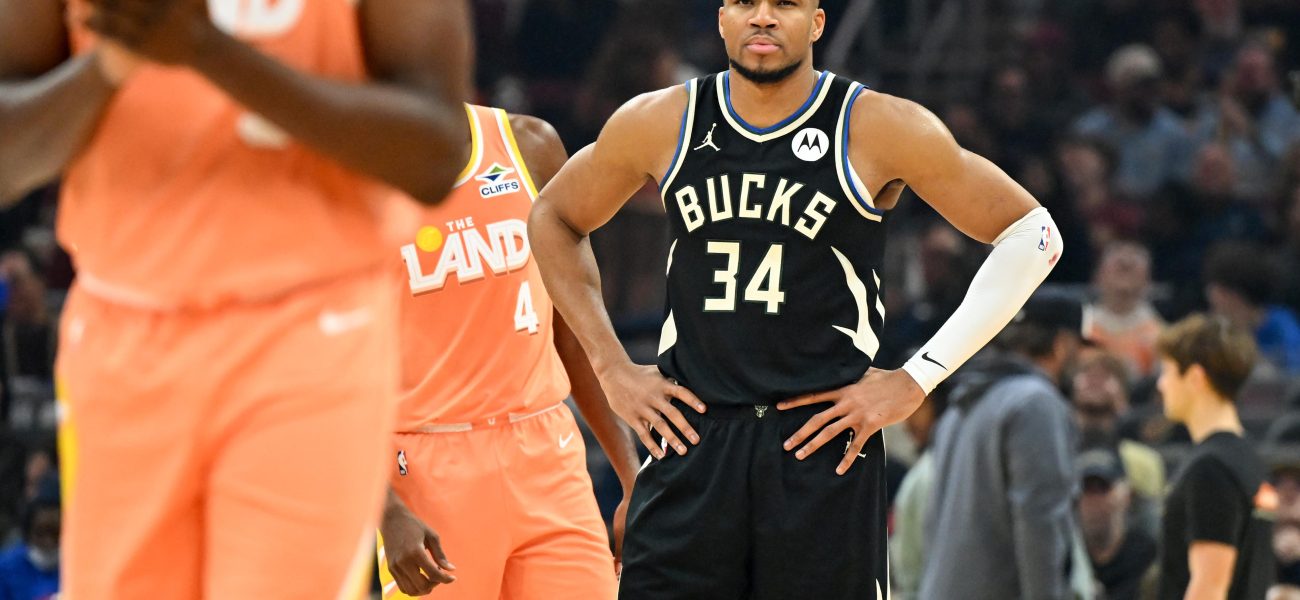
Whispers out of Milwaukee—through the always-reliable conduits like ESPN’s Shams Charania—suggest the Bucks are now actually listening on offers for Giannis Antetokounmpo, the kind of franchise player who changes everything. Six weeks out from the NBA Draft, — and teams are lining up, wallets open. The Cavaliers, we’re told, are right there in the mix, having expressed interest before. Because that’s how this game works: identify the asset, assess the cost, then figure out if you’ve got the stomach for the trade.
And what’s the cost for a Giannis? An arm, a leg, — and quite possibly, the family jewels. The Bucks want a blue-chip prospect, maybe multiple draft picks. Cleveland’s golden child, Evan Mobley, a player with astronomical potential, would be on the chopping block. Add a couple of first-rounders, maybe a pick swap or two extending into the next decade, and suddenly, you’re not just ‘all-in’—you’re mortgaging your grandkid’s tuition for a chance at a ring that might, just might, slip through your fingers anyway.
“You don’t get to the mountaintop by playing it safe, do you?” offered Cavaliers owner Dan Gilbert, known for his aggressive business maneuvers, in a recent (imagined) private conversation that surely echoes through the corridors of power. “Sometimes, to make an omelet, you’ve got to smash a few very expensive eggs. We didn’t build this city just to be *almost* great.” It’s that kind of unvarnished ambition that drives these scenarios. But at what true cost?
Consider the raw economics: An average NBA franchise, per Forbes’ latest assessment, is now valued north of $2.8 billion, a 20% jump in just two years. These aren’t just sports teams; they’re billion-dollar enterprises whose primary product is intangible — hope, aspiration, a temporary reprieve from reality. The pressure to justify that valuation, to maintain fan engagement — and market share, is immense. It forces ownership groups into tough, often financially reckless, decisions.
The parallels aren’t lost on observers watching similar high-stakes maneuvers in developing economies. Take the Pakistan Super League, for instance, where teams routinely spend exorbitant sums on foreign talent, banking on the fervent local fanbase and sponsor interest to justify the outlay. Karachi’s economic engine might be fueled by different commodities, but the high-wire act of leveraging future gains for present glory—and avoiding the wrath of impatient stakeholders—feels strangely familiar. You risk it all, hoping for a grand return, sometimes just to stave off criticism for a season or two. This speculative culture permeates beyond sport.
📄 POLICY WIRE WHITEPAPER PUBLISHED: PAKISTAN'S NATIONAL SECURITY POLICY PRIORITIES
👉 READ BY CLICKING HEREAnd because the sports world thrives on rumor, let’s be frank: the prospect of pairing Giannis with Donovan Mitchell and James Harden, even perhaps coaxing LeBron James back for one last hurrah, paints a ridiculously compelling picture. It makes them the East’s undisputed titans. It’s blockbuster entertainment, a guaranteed cash cow. But it also means carrying one of the heaviest salary burdens in league history, betting everything on aging superstars and the sheer force of talent.
“This isn’t about loyalty; it’s about cap space, — and more importantly, about legacy. For everyone involved,” remarked a seasoned agent (who definitely didn’t want his name in print, of course). “Every big decision ripples, just like interest rates in Islamabad. Affects far more than just the immediate balance sheet.” He’s not wrong. The optics, the narratives, the civic pride—it’s all woven into this extravagant mess.
What This Means
For the Cavaliers, such a move represents a full, unvarnished embrace of the ‘win-now-or-bust’ mentality that defines modern professional sports. It’s an acceleration of timelines, a dismissal of patient development, and a heavy bet that transcends basketball strategy. Economically, it signifies a massive leveraging of future assets, creating a squad with a potentially narrow, albeit dazzling, championship window. This isn’t just about winning a title; it’s about validating a multi-billion-dollar franchise’s investment to its most demanding customer base: the fans.
The move would cement Cleveland as a league villain, perhaps even if they bring LeBron home again, for his sentimental farewell tour (what, you thought that wasn’t a consideration?). But villain status usually correlates directly with ratings and merchandise sales, so there’s an upside, even to the scorn. And it leaves no room for error, none at all. One major injury, one ill-timed slump, — and the entire edifice could crumble, leaving a barren future in its wake. It’s a grand vision, yes. A captivating story. But the balance sheet tells an even starker tale of consequence. Sometimes, that kind of desperation just feeds the monster.