


Top Gear’s Raft: Soft Power vs. Africa’s Needs
A Top Gear clip of a homemade raft in Africa reveals soft power dynamics, Western narratives, and the continent's urgent infrastructure needs. Unpack the geopolitical undertones.

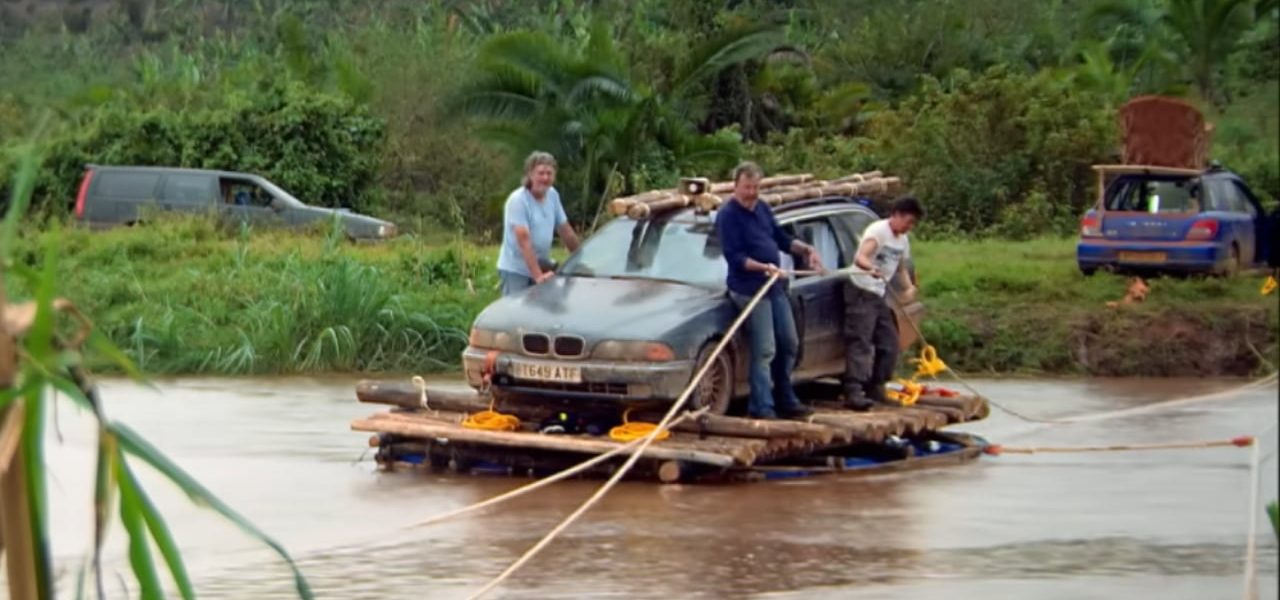
POLICY WIRE — Nairobi, Kenya — It wasn’t about the motor, not really. Nor the cumbersome amalgamation of barrels — and plywood threatening to capsize with every passing crocodile. Instead, a recent, widely circulated clip showcasing the familiar British trio of a classic motoring show—yes, *that* show—struggling across an African river on a homemade raft wasn’t just old-fashioned television; it was a curious artifact. It presented a study, in its way, of perception, ingenuity, and a certain kind of imperial folly, viewed through a modern lens, far beyond the original intent of automotive entertainment.
For some, the enduring popularity of this sequence, featuring three middle-aged men engineering a ramshackle vessel for an aquatic traversal, speaks volumes. It speaks of the persistent allure of a specific brand of British resourcefulness—or perhaps, sheer stubbornness. The episode’s narrative arc, pitting wit against nature with high stakes, became a cultural touchstone. It even overshadowed more practical realities for much of its global audience, folks from Islamabad to Istanbul. But this isn’t just about entertainment, is it? It seldom is, particularly when millions are tuning in to witness what’s, at its heart, a triumph of expediency over engineering, televised for laughs.
And laughter, in this instance, carries its own geopolitical undertones. Here you’ve got this global cultural export, celebrated for its outlandish challenges and often controversial presenters, once again depicting an African landscape as a vast, untamed playground for Western ambition. It’s an adventure playground where bridges are mere suggestions, and rivers, not boundaries, are obstacles to be conquered with improvised solutions. The subtext, perhaps unintended, casts a long shadow over actual infrastructure needs—the very things many African nations desperately require, yet struggle to secure funding for.
But the fascination holds. Why? Part of it’s the sheer unpredictability. They built this contraption—and it sort of worked, for a while anyway—and viewers can’t get enough of watching the drama unfold. The sheer volume of material they gathered, the hasty construction, the barely controlled chaos; it was all part of the charm. There was the constant banter, too, and the inevitable bickering, which just added to the whole haphazard spectacle of men versus a river. One segment even had one of the hosts lamenting the sheer fragility of their undertaking, expressing concern over the structural integrity and how any slight miscalculation could result in [QUOTE_PLACEHOLDER].
It’s an image, though. A constructed image of pluck — and daring, projecting British characteristics globally. For years, such programming has acted as an informal ambassador, often more effective than traditional diplomacy in shaping foreign perceptions. It’s an entertainment-first foreign policy, cheap — and remarkably effective at broadcasting a particular ethos. Imagine similar challenges in regions like Pakistan’s Sindh province, where the Indus swells annually. Local communities develop sophisticated, centuries-old systems for coping with powerful waterways—ingenious in their own right, born of necessity rather than for television cameras. These methods rarely, if ever, make it onto global screens with the same sheen of glamorous peril.
The ingenuity of these presenters—a calculated display for consumption—highlights a stark contrast with genuine innovation born from existential need. Consider that the African Development Bank reports a $68-108 billion annual infrastructure funding gap on the continent, as per 2021 estimates. Yet, we get entertainment portraying a glorified workaround rather than serious discourse about foundational investments. It’s a deflection, perhaps, or a symptom of what captivates mass audiences. The triumph of a makeshift raft against an indifferent river feels more compelling than discussions of, say, public-private partnerships for durable bridges. Or perhaps, that’s just how global media works—it’s easier to sell a story of audacious struggle than quiet, pragmatic progress.
📄 POLICY WIRE WHITEPAPER PUBLISHED: PAKISTAN'S NATIONAL SECURITY POLICY PRIORITIES
👉 READ BY CLICKING HEREAnd let’s not pretend this is unique. We see similar narrative patterns everywhere. From British governmental pronouncements on football match viewing to Hollywood’s take on Middle Eastern conflicts, perception is everything. This Top Gear clip, despite its comedic premise, functions as a minor piece in a much larger puzzle of cultural influence and perception management.
What This Means
This kind of exported cultural content, often perceived as benign entertainment, actually plays a subtle yet profound role in geopolitical narratives. For British soft power, it’s a double-edged sword. On one hand, it fosters familiarity and a sense of shared, albeit caricatured, ‘Britishness’ across continents, from Manchester to Karachi. Viewers in regions facing significant development challenges, including much of the Muslim world, often consume these narratives, sometimes uncritically. But it also risks reinforcing dated, sometimes patronizing, stereotypes of nations as needing ‘Western heroes’ to navigate their terrain, rather than empowering indigenous solutions and investment.
Economically, it underscores the persistent focus on ‘event-based’ solutions or entertainment rather than sustained infrastructure development. When a makeshift raft becomes a global sensation, it distracts from the pressing need for lasting transportation networks, energy grids, and water systems. These are projects that don’t lend themselves to the same brand of dramatic, easily consumable content. And that’s a problem for development advocacy. You’ve got to wonder if this cultural export ultimately hinders, rather than helps, serious conversations about global inequities. Just as the Royal Family wields its cultural heft at events like Wimbledon, so too do mass media productions, albeit with far less conscious intent—but with no less real-world impact.