


UK Pubs: No Extra Beers for 1 AM World Cup Kick-Off
UK pubs face revenue loss as the government denies late licenses for a 1 AM World Cup match. Discover the hospitality sector's backlash.

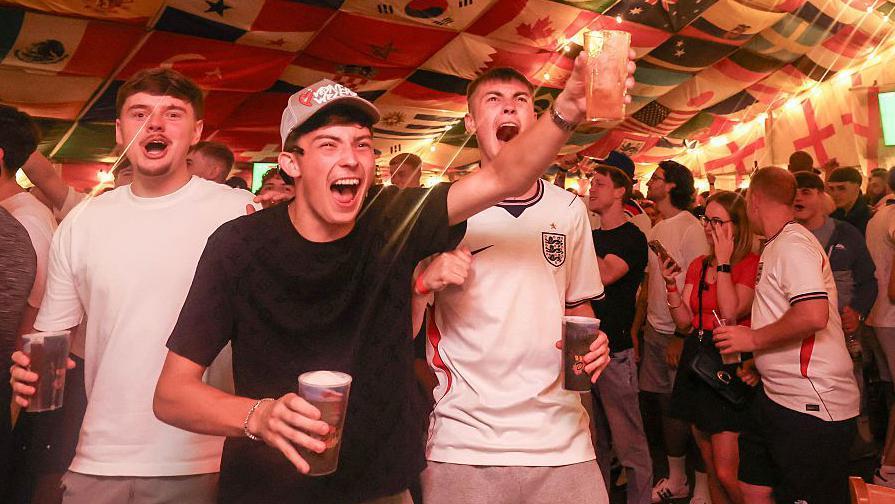
POLICY WIRE — London, UK — Forget the last-minute pint. Forget the late-night roar that normally accompanies England’s rather predictable march toward footballing disappointment (or glory, on occasion). This time, the government itself is pulling the plug, literally, on the collective World Cup experience, opting to let punters watch the upcoming England-Mexico clash from their sofas—or their beds—instead of packed establishments.
It’s not just a damp squib for die-hard fans, but a rather pointed refusal that’s raising hackles within the beleaguered hospitality sector. The World Cup match, scheduled to kick off at an ungodly 1 AM UK time from Mexico City, finds itself on the wrong side of official largesse. Liberal Democrat MP Max Wilkinson put it plainly in the House of Commons, wondering if ministers might consider extending licensing laws on Sunday [QUOTE_PLACEHOLDER] so fans can enjoy the game in the pub.
But the answer, delivered by Business Minister Kate Dearden, wasn’t what many had hoped for. It’s a classic case of ministerial tight-lippedness. Dearden, seemingly offering both sympathy and an immovable boundary, acknowledged previous flexibilities but drew a line in the sand. Pubs, she said, can stay open for an extra two to three hours depending on how late the match starts so pubs can still open as the game finishes. A cold comfort, most would argue, when the game itself would still be locked behind closed doors for the most intense hours.
And there it’s, the rub: Regarding Sunday, unfortunately that doesn’t apply with the 1am start but going forwards we’re absolutely backing our pubs so people can watch and support our lads, and it’s coming home hopefully. It’s an almost perfect encapsulation of officialdom: a bland assurance of future support coupled with an immediate denial for current needs. That subtle irony wasn’t lost on pub landlords, one can be sure. Wilkinson’s prediction rang true: Pubs will miss out on a real opportunity to get money in the till if ministers don’t make a blanket extension for licensing hours. He wasn’t wrong.
Indeed, a substantial financial hit for these businesses—many still reeling from the past few tumultuous years—looms large. It’s a familiar story, a clash between the state’s regulatory instinct — and commercial pragmatism. In April, the government had shown some willingness, loosening rules for England and Scotland matches, extending licensing hours from 11pm to 1am for games with kick-offs from 5pm up to 9pm. pubs could stay open until 2am for kick offs after 9pm and up to 10pm. But the 1 AM start was simply beyond the pale.
Because, as it happens, pubs do possess an alternative: the Temporary Event Notice (TEN). This handy little bureaucratic mechanism allows local councils to approve later hours. However, it must be submitted no later than five working days beforehand, which meant Thursday was the absolute last gasp. Too late for many, naturally. Some shrewd operators, anticipating England’s World Cup run — optimistic lot, those — had already secured their TENs. But the bulk of the trade, dealing with the daily grind, hadn’t had the foresight or the administrative bandwidth. It’s a logistical quagmire, not exactly an advertisement for agility in government-business relations.
📄 POLICY WIRE WHITEPAPER PUBLISHED: PAKISTAN'S NATIONAL SECURITY POLICY PRIORITIES
👉 READ BY CLICKING HEREEmma McClarkin, chief executive of the British Beer and Pub Association, voiced the industry’s exasperation, stating: We remain in close contact with government about concerns raised by publicans who want to show the match but haven’t got TENs in place. She concluded with a lament, hitting the nail on the head: It would be a crying shame for fans and pubs if our locals weren’t able to host such an important match.
Across the world, football isn’t just a game; it’s an economic engine — and a unifying cultural force. Think of the diaspora communities in places like Karachi, where late-night Premier League matches mean bustling cafes and roaring televisions, bringing people together even as local economic pressures mount. For those businesses, every extra hour of trade can be a lifesaver, contributing to local economies and fostering a sense of community. Here in the UK, denying that opportunity feels like a bureaucratic oversight—or perhaps, a deliberate act—in an industry already under considerable stress. One wonders if similar concerns for local commerce would hold sway in other football-mad nations.
What This Means
This decision, while seemingly minor, ripples through more than just pint sales. Economically, it represents a missed opportunity for the UK’s hospitality sector. A conservative estimate suggests a significant reduction in potential revenue for many smaller pubs, each deprived of what could easily amount to thousands of pounds from just one night’s trading, not to mention food sales. Such an oversight undermines governmental rhetoric about supporting local businesses — and the evening economy. Politically, it showcases a lack of agile response to public demand and a peculiar rigidity in policy, particularly when measured against the government’s declared ambition to be seen as pro-business.
But there’s a larger narrative here, too. For years, particularly in immigrant communities and South Asian diasporas globally, late-night football is a celebrated institution, fostering connection. When the England team plays, it’s not just about England; it’s about communities feeling part of a larger global moment. Denying accessible spaces for this communal experience, however minor it might seem in the grand scheme of governance, can breed a quiet resentment. It feels like a small slight, but these small slights accumulate. It’s certainly not a win for community engagement, and it’s definitely not a good look for a government that claims to understand the common Brit. What else might they fail to comprehend, if they can’t grasp the basic impulse to watch a major football game with friends at a local? One could say it reveals a fundamental detachment. Because, for many, these are the moments that truly define national morale, far more than any economic indicator.