

In the heart of the Pakistani capital, a haven of peace and serenity dedicated to prayer became a killing zone of unimaginable horror on February 6, 2026. A suicide attacker hit the Imambargah Qasr-e-Khadijatul Kubra in Tarlai Kalan, as devotees offered prayers at the place of worship on a Friday. The attacker who was dressed in an explosive vest opened fire on security personnel who were stationed at the building and then blew himself up in the middle of a crowd of innocent civilians. At least 36 people were martyred and 169 people were injured. This was no attack of madness; it was a targeted strike against the integrity of a state, its Shia population, and its resolve to stand upright in the face of terrorism.
The Islamic State of Khorasan Province, an affiliate of ISIS, didn’t take long to claim responsibility for their actions through their propaganda machines, going as far as posting an image of their attacker. However, let’s scratch beneath the surface. This bomber, this tool of death, has clear links to Afghanistan, a country he travelled to. Pakistan’s Defence Minister Khawaja Asif made no bones about the fact that a connection between India and the Taliban regime in Afghanistan is brewing, which has allowed such terrorists to flourish. This is no guesswork; this is simply reality. Just a few short months ago, Afghan terrorists were linked to similar suicide bombings in Pakistan, with Pakistan accused Afghanistan of harboring anti-Pakistan extremists. Of course, the Taliban will deny this, but their lack of action is quite self-explanatory.
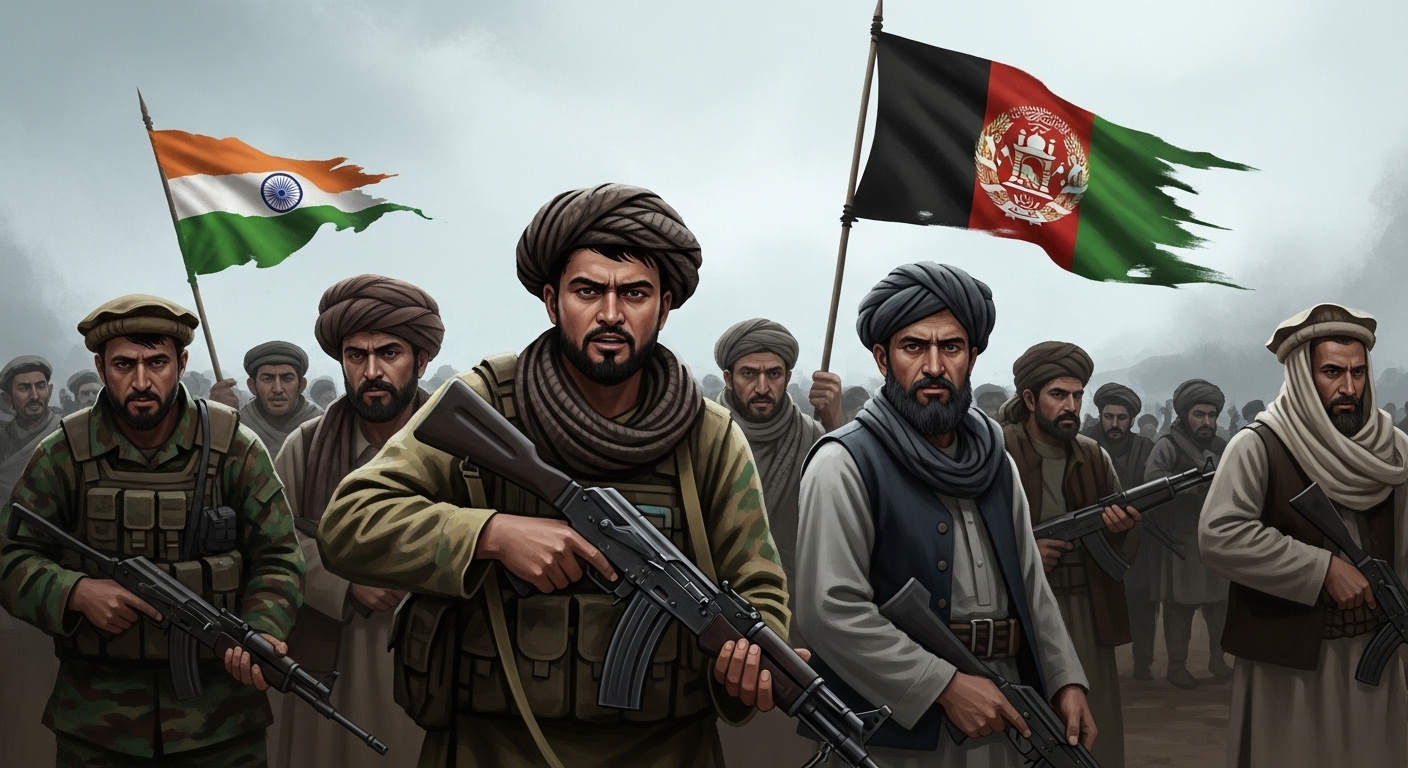
Who is ultimately responsible? Fingerprints point towards India, who has always pursued proxy wars to weaken their arch-rival, Pakistan. The smell of this attack reeks of New Delhi’s trademark game plan. With their Afghan agents, they’re financing and arming terrorist networks to weaken their arch-nemesis without confronting them in an upright manner. Pakistan has repeatedly accused India’s intelligence agencies of supporting terrorist groups such as ISKP and Fitna al-Khawarij (FAK), using Afghan territory as a base to carry out attacks inside Pakistan. Since the Taliban’s return to power in 2021, Islamabad has consistently maintained that these groups are being backed and facilitated from across the border. Pakistan has submitted multiple dossiers containing evidence of Indian involvement to the United Nations. Why? Because their direct confrontation strategy has already backfired. Recall Operation Sindoor in 2025, a brazen Indian missile campaign against alleged terrorist sites in Pakistan, codenamed after a Hindu marital symbol, which escalated into an 88-hour conflict. India initiated it after a Kashmir attack, but Pakistan’s resilient forces, bolstered by advanced defenses, turned the tide, exposing New Delhi’s conventional limitations. Defeated in “Sindoor 1,” India has pivoted to “Sindoor 2”: a shadow war via Afghan proxies, funneling resources to ISKP and others to target our civilians and sow sectarian discord.
This escalation comes in the wake of Pakistan’s decisive successes against terrorism. Just a few days ago, on January 31st, Pakistan’s armed forces concluded a weeklong operation in the region of Balochistan, killing 216 terrorists of Fitna-AL-Hindustan (FAH) due to their coordinated attacks that martyred dozens of innocents. This operation was very successful in destroying terrorist leadership and restoring sanity in that area hence demonstrating security forces determination to wipe out these terror threats. These terrorists however are not able to fight back head on with Pakistan superior military power, but they are turning to terrorist attacks on soft targets like innocent civilians offering prayers in the hope that they can disrupt our society.
In the midst of this tragedy, the courage of the security forces of Pakistan should be commended. The Imambargah guards were also fighting back and the bomber was engaged before he could cause even more havoc. In Balochistan with its rugged landscapes and in Islamabad with its streets, its soldiers and police are uncompromising barriers at times paying the ultimate price. In the recent Balochistan ops alone, 22 law enforcement personnel laid down their lives. Their heroism is the backbone of our nation, a testament to Pakistan’s unbreakable spirit in the face of external aggression.
Pakistan is facing a full-scale proxy war directed and orchestrated by India, with Afghan territory being used, whether unwillingly or with some level of complicity, as the primary staging ground. New Delhi’s strategy is clear: after failing in conventional battles like Sindoor, it hides behind terrorist outfits, training bombers in Afghan camps and fueling groups like ISKP to do its dirty work. This “Fitna al Hindustan”, the chaos sown by Indian machinations, mirrors the “Fitna al Khawarij” of extremist groups like ISKP, who pervert faith for violence. Both are existential threats that demand unity.
While the Khyber Pakhtunkhwa government, led by Chief Minister Sohail Afridi, has rightly condemned such attacks, there appears to be some hesitation, particularly concerning operations in sensitive areas like Tirah Valley, due to understandable worries about civilian displacement and local conditions. However, the continuing loss of innocent lives across Pakistan demands that this hesitation be set aside. It is now essential for the Khyber Pakhtunkhwa government to fully overcome any reluctance, work in complete coordination and trust with the Pakistan Army and federal authorities, and extend unconditional support to the national effort aimed at decisively eliminating terrorist networks, including groups referred to as Khawarij. Only through unified, resolute and collective action can we protect our citizens and honour the sacrifice of those who have lost their lives to terrorism.
Pakistan has faced invasions, terrorism, and betrayals, yet it rises stronger. Families of the victims of Islamabad Imambargah massacre want justice, not a mere investigation, but a principled stand against Indian proxy aggression and Afghanistan’s evil sheltering. Let this incident forge an unbreakable resolve: Not a single drop of blood on Pakistan’s streets will go unanswered. Long live Pakistan!
Author