

The political context in South Asia is yet again poised at a crossroads for the second time this year for two important reasons: the Bihar Assembly elections in India and the brutal Pahalgam terror strike in Kashmir. Contextually, these events are not isolated but inextricably linked to the larger context of India-Pakistan rivalry, domestic Indian politics, and the hanging Kashmir issue. India is painting the Pahalgam attack as yet another act of Pakistani-sponsored terrorism. Still, the truth, as ever, is more complicated — a truth being blurred by India’s increasingly anti-Pakistan rhetoric and its election-season political manoeuvring.
Bihar Elections: A Contest Field of Anti-Pakistan Rhetoric
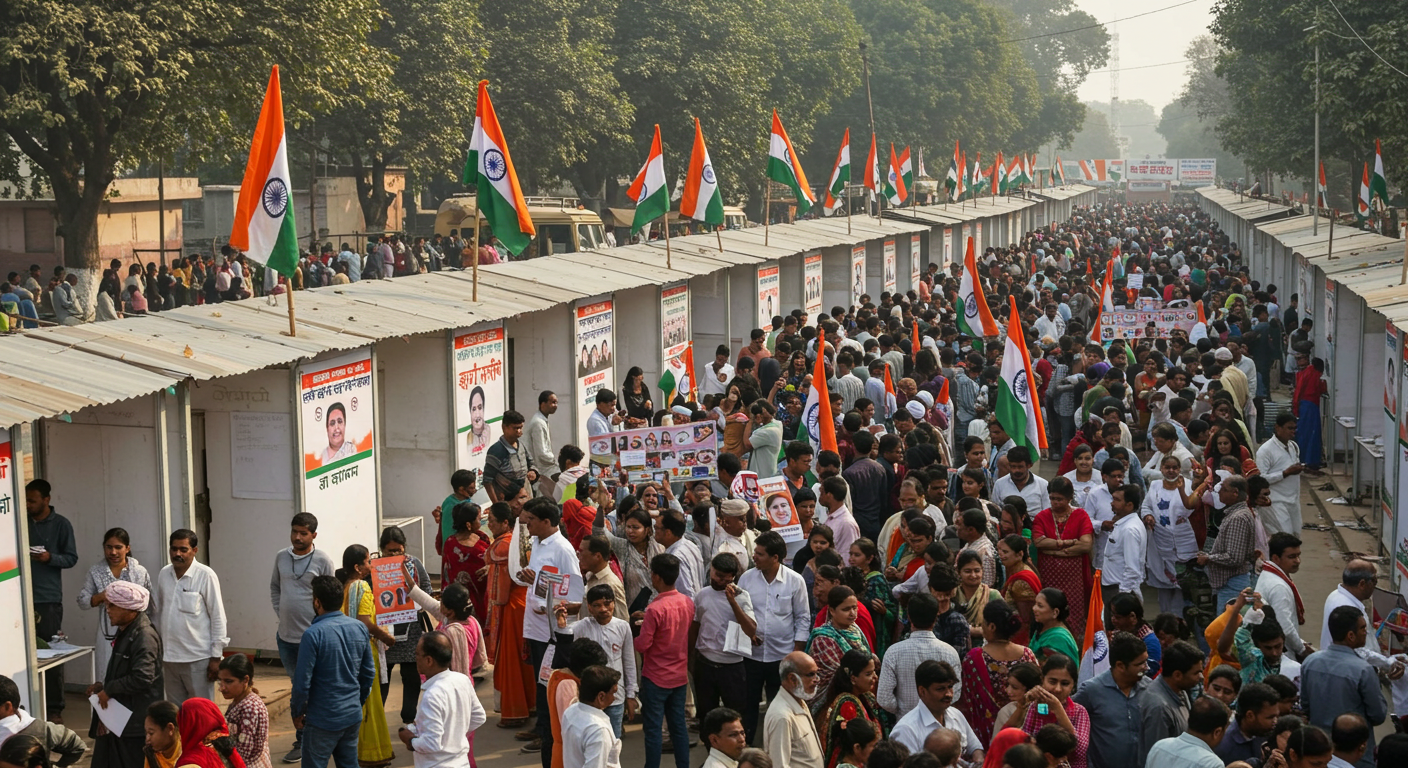
The 2025 elections in Bihar look like they are going to be a significant fight between the incumbent National Democratic Alliance (NDA), with a strong BJP led by Prime Minister Narendra Modi on one side, and the anti-NDA INDIA grouping, including the Congress and Rashtriya Janata Dal (RJD). The Congress has formally declared that it will fight as part of the INDIA alliance to present a united fight against the BJP. Yet the BJP has long turned Pakistan into a weapon against its opponents during elections, and next year’s election will be no exception.
Retrospectively, in 2019, the Pulwama attack and Balakot airstrikes were effectively used by the BJP to channelise nationalist sentiment and went on to win elections by a colossal margin. This time, the Pahalgam killings have, well in advance of the Bihar polls, given fresh political ammunition to Modi’s party to fan the anti-Pakistan sentiment. Already, BJP leaders have fostered the rhetoric around “take back POK”, and the likes of Amit Shah and Yogi Adityanath have been doubling down on it. The BJP’s political strategy is evident, using Pakistan to distract the public from the government’s failings on the domestic front; egregious breaches of the law, including through perverted justice delivery mechanisms and mob violence, while deluding the masses with fear of Pakistan as an existential threat.
The Congress, meanwhile, rides a tightrope. Even though it has been criticised for being “soft” on Pakistan (evident in the Mani Shankar Aiyar row, advocating dialogue) in the past, the party now wants to show that it is as tough as the BJP so that it does not suffer any electoral damage. INDIA bloc’s inaction on the Pahalgam attack, other than issuing obligatory condemnations, also shows hesitation to engage with Modi’s security narrative. The political play demonstrates how Pakistan will always remain a useful bogeyman for India’s domestic politics, regardless of whether or not Islamabad has had a hand in Kashmir’s unrest.
Pahalgam Attack: A Provocation or a False Flag?
The Indian government quickly directed the April 22 Pahalgam killing of 26 tourists towards Pakistan. The Resistance Front (TRF), an unknown local militant organisation, took responsibility. TRF declared the attack as a rebuttal against New Delhi’s enforced demographic changes in the region after the abrogation of Article 370. Pakistan has not only officially rejected any involvement but also offered cooperation in an independent investigation of the incident.
To many independent analysts, the timing of the Pahalgam attack looks suspicious. Many believe that on the domestic front, the internal economic and political situation in Pakistan hardly allows such a venture, where there could be chances of an all-out war with India. Similarly, Pakistan is already dealing with an IMF bailout, a Baloch insurgency, and sour relations with Afghanistan— not exactly an environment that welcomes an attempt to provoke a nuclear-armed neighbour. In addition, the assault took place during the visit of the United States’ Vice President J.D. Vance to India, which guarantees an unprecedented focus and attention to the incident at the global level, making enough grounds to falsify Pakistan’s involvement.
India’s answer has been characteristically muscular:
Scrapping the Indus Waters Treaty, expelling Pakistani diplomats, and sealing its border, the Indian anti-Pakistan measures seem more like political theatrics in intent, designed for home consumption. The suspension of the Indus Treaty is particularly dangerous, given how dependent Pakistan is on the river system for agriculture and hydropower. But there is a critical question that New Delhi’s actions have failed to address: If Pakistan was truly behind the attack, why would it pick a time when it is at its most vulnerable to Indian retaliation?
The Kashmir Factor: An Ever-burning Hotspot
The existential issue of Kashmir still animates India-Pakistan tension. Since Modi revoked Article 370 in 2019, India has maintained that militancy in Kashmir has decreased. But the Pahalgam ambush destroys this narrative and indicates the failure of Asia’s” normalisation” project in India. There are enough proofs that, after Pulwama incident in 2019, the Kashmiri population in Indian occupied Kashmir are feeling suffocated and the urge for self-determination has manifested. However, on the face of it, due to a significant Indian military presence in Kashmir, such an incident seems highly improbable, which indicates that the Pahalgam incident is part of a bigger Indian plan that might include justifying further repression in Indian occupied Kashmir.
On the other hand, Pakistan itself has long contended that there is a homegrown rather than foreign element to the resistance in Kashmir. Pakistan acknowledges giving “moral and diplomatic” support, but denies arming the militants. Pakistan has time and again pleaded its case on the international and regional forums that India is using dirty tactics of false flag operations to malign Pakistan, increase high-handedness in occupied Kashmir and take political leverage at home by heightening tension with Pakistan.
Conclusion: A Perilous Path on the Horizon
Many analysts have argued that the Bihar election and the attack on Pahalgam are two sides of the same coin: both are aimed at reviving Modi’s nationalist agenda and distracting attention from an honest conversation about the issues faced by the innocent population of Indian occupied Kashmir. But currently, Pakistan also has to fight India’s propaganda war that seeks to capitalise on Pahalgam for its internal political reasons. Pakistan needs to stick to its demand for a neutral investigation into the incident and how New Delhi is using terrorism for electoral purposes. Imperatively, it must be realized by the international community that the cycle of violence and allegation will continue as long as India pretends that Kashmir is not a political problem but a law-and-order issue that must be addressed with military force. Until then, Pakistan will have to endure further scapegoating, more economic arm-twisting, and the continued spectre of war, while the people of Indian occupied Kashmir will suffer the consequences.
Author